Tag Archives: Karina M. Szczurek

Book mark: Unsettled and Other Stories by Sandra Hill

UnSettledThe feeling one is left with after reading Sandra Hill’s debut story collection Unsettled is reflected in the title of the book. Hill paints vivid portraits of what it means to be a woman in different places and times. It is a finely layered picture of the everyday and the unusual. The mother of one of the characters insists that one should read poetry “slowly, expectantly, the way you eat oysters”, as the “magic…comes after you swallow.” Although every story is a fully contained piece, read together, they acquire that magic of swallowing oysters. Saturated with local flavours, settings, history, Unsettled offers evocative, intimate glimpses of women’s lives – their dreams, desires, worries and regrets – many readers will find uncannily familiar, sometimes perhaps difficult to acknowledge: “Life can take us away from where we belong, but we don’t lose the longing for it… If we are lucky we get to make our way back.”

Unsettled and Other Stories

by Sandra Hill

Modjaji, 2015

First published in the Cape Times, 25 March 2016.

Book review: Roberto Calasso’s The Art of the Publisher

The Art of the PublisherEvery now and then, a book comes along which changes your life. For me, Roberto Calasso’s The Art of the Publisher is one of them. But you don’t have to be – or, like me, want to become – a book publisher to find this gem an inspiration.

For quite a while now, publishing has been steeped in a pervasive atmosphere of gloom and doom, especially in South Africa. The threat of the internet, the e-book, the retail giant Amazon, and the financial crisis have made life for the printed book difficult. Locally, a seemingly general disinterest in South African fiction and foolish political decisions have made survival tougher for our publishers, and consequently, of course, for us writers. Book sales are not encouraging. Publishers scaling down even less so. Yet, watching developments like the self-publication of Paige Nick’s latest novel, Death by Carbs, or new publishing ventures like uHlanga and Tattoo Press, I have a feeling that some creative and daring people in the country are on to something which gives me many reasons for optimism.

Roberto Calasso’s essays collected in The Art of Publishing attest to the fact that it all comes down to basics. And the basics are vision and quality. It is these two aspects of publishing that readers throughout centuries have best responded to with enthusiasm. These are no trade secrets, just simple rules which those who have been successful in publishing have always followed.

Critic, writer, and a publisher himself, Calasso has been at the forefront of Italian publishing for decades. His love for literature and the book shines through every single paragraph of The Art of Publishing. His passion is one of beauty. His insights are heartening to read.

When it matters, publishing is not about money, although, as with all art forms, moderate financial rewards cannot and should not be excluded. There are enough examples out there to prove the case. All aspects of the form play an integral part in its success: “choice and sequence of titles published…texts that accompany the books, as well as the way in which the books are presented as objects.” Calasso does not deny that this is “the most hazardous and ambitious goal for a publisher, and so it has remained for five hundred years”, but he also reminds that “literature loses all of its magic unless there’s an element of impossibility concealed deep within it.”

He goes into the fascinating history of publishing, asks what constitutes culture, celebrates the great publishers of our times, explores the relationship between the publisher and the writer, demonstrates how crucial the nourishment of writers and the care for the book as an object are to a thriving publishing environment, and most importantly, to our intellectual and emotional lives.

Calasso also shows that even if often unbeknownst to us why a particular publisher attracts our enthusiasm, as readers we understand the value of our “repeated experiences of not being disappointed.” And that is what only a publisher of vision and quality can offer.

The Art of the Publisher by Roberto Calasso

Translated from the Italian by Richard Dixon

Penguin Books, 2015

Review first published in the Cape Times, 22 January 2016.

Two comments:

When I truly enjoy a book I have the need to share it with others. I have already bought several copies of The Art of the Publisher for friends, two more today…

I was attracted to the book in the first place because it appealed to me as an object. I saw it displayed at the Book Lounge in Cape Town and could not walk away from it…

Book review: The Penguin Lessons – A True Story by Tom Mitchell

The Penguin LessonsLast year, I realised that I have a penchant for penguins with foreign names. Midyear, I was enchanted by Misha, the penguin who stars in Andrey Kurkov’s wonderful novel, Death and the Penguin (originally published in Russian in 2002). Towards the end of 2015, I fell in love with Juan Salvado, the protagonist of Tom Michell’s memoir, The Penguin Lessons.

When he was in his twenties, Tom Michell travelled to Argentina to teach at a boarding school during the politically volatile 1970s. In his free time, he explored South America. On one of his trips, he arrived at a Uruguayan beach to discover a massacre: corpses of oil-coated penguins scattered all around on the sand. There was one survivor among them, a Magellan penguin barely moving, covered in oil and tar like all the other birds, but clearly still alive.

“I needed a penguin like a penguin needs a motorbike,” Michell writes, but on the spur of the moment, he resolved to rescue the penguin and took him back to the flat he was staying in. The ensuing story of their initial encounter and the fascinating relationship which developed between the young man and the sea bird is one of most moving books I have read last year.

After a nearly disastrous but hilarious attempt at cleaning the penguin in the pristine bathroom of his hosts’ home, Michell tries to set the bird free, but his new acquaintance is extremely reluctant to be abandoned again. Not knowing what else to do, he names the penguin and devises a plan to smuggle him into Argentina. And so their adventures and a remarkable friendship begin.

Back at the boarding school, Juan Salvado forms the most extraordinary relationships with the students and staff alike, irrevocably changing all their lives. Michell’s commentary on the socio-political situation of Argentina of the time is subtle but highly intriguing. His descriptions of penguin and human natures and how the two can relate to one another are simply beautiful.

Magallan penguins do not live forever and since all of this had happened four decades ago, I assumed that there would be heartbreak at some stage in the book. I was reading the dreaded scene in a coffee shop where another customer became quite concerned about me when she saw my copious tears falling. I was too choked up to articulate my sorrow, but she understood when I pointed at the open book in front of me. I cried again before the last page, but not because of sadness. There are two revelations towards the end of the book which touched me deeply: one concerns the reason why Juan Salvado refused to go back to the sea when Michell first met him, the other is a description of a recent find among Michell’s memorabilia. If there ever was a feel-good book, The Penguin Lessons is it. It goes to show that, occasionally, we all need a penguin in our lives.

The Penguin Lessons: A True Story
by Tom Mitchell
Penguin Books, 2015

First published in the Cape Times, 15 January 2016.

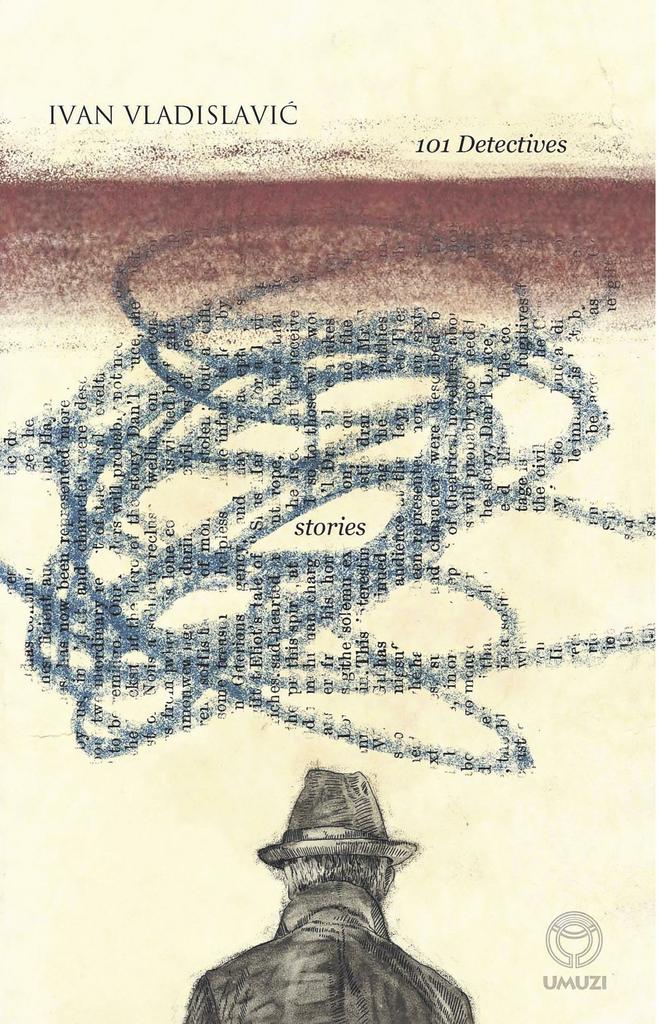
Interview: Ivan Vladislavić and 101 Detectives

101 DetectivesThe FollyMy first encounter with Ivan Vladislavić’s writing took place in a multidimensional construct of language and fantasy that is his remarkable novel The Folly (1993). It must have been around a decade ago when I moved to South Africa. Since then I have always returned to his books with a great sense of anticipation which has never been disappointed. His latest collection of stories, 101 Detectives, is no different, although it baffled me in the beginning. The first three pieces made me think a lot about the intellectual playfulness of The Folly. Some of the stories are set in recognisable and yet shifted or alternative realities which are quite uncanny. In a recent e-interview I asked Vladislavić whether this was his way of avoiding the cliché trap, of challenging the impression of one of his characters that “no matter what I do or say, or how I remember it or tell it, it will never be interesting enough” (“Exit Strategy”)? He hadn’t gone about it “deliberately”, he wrote, and mentioned that in his youth he read “a lot of sci-fi and was taken with writers like Ray Bradbury, who could twist the ordinary into the alien very skilfully through a kind of estranging lyricism”. Of his own early work he says that “the strangeness is more a product of language and imagery than of constructed setting.” More recently he had read speculative fiction again, “which may account for the atmosphere of a story like ‘Report on a Convention’. Many ordinary contemporary spaces are strange. One grows accustomed to it, but the precincts and lifestyle estates often have a weirdly layered, compelling artificiality to them. They’re at such an odd angle to the surrounding world that ‘shifting’ them would make them feel less rather than more peculiar.”

Reading and listening to Vladislavić, the key word I associate with his work is “intellectual”, especially in conjunction with “stimulation”, and it is the main reason why I read him. He challenges me, inspires me to question reality and literature, to perceive both more consciously and often with deeper appreciation. I delight in the engagement. When I think Vladislavić, I also think art, photography, beauty, language, and, perhaps above all, Johannesburg. Few have written as perceptively about Johannesburg as he, “mapping and mythologising” the city (in the words of Elleke Boehmer). Few can employ language to capture not only the beauty of experience, but the beauty of language itself to such stunning effect. Few have entered collaborations with artists of different media, as victoriously enhancing the disciplines in the process. In 2010, together with the South African photographer David Goldblatt, Vladislavić published TJ & Double Negative, a novel with photographs. More recently he worked with Sunandini Banerjee on an illustrated novella titled A Labour of Moles (2012), and 101 Detectives also includes a “Special Feature”: a gallery of photocopies of dead letters, ie letters never delivered to their intended recipients because of address errors and suchlike, referred to in the story “Dead Letters”. There are also images of the places they were supposed to have reached, taken from an exhibition in Poland dedicated to them.

What appeals to Vladislavić in this kind of exchange? I wondered…

Continue reading: LitNet

Review: 101 Detectives by Ivan Vladislavić

101 DetectivesOm te sê ek was verward, is om dit sagkens te stel. Die eerste drie verhale in 101 Detectives, Ivan Vladi­slavic se jongste versameling, het my met hul onvoorspelbare vreemdheid van balans af gehad.

In die wete dat die naam op die boekomslag sinoniem is met bobaas van die kortverhaalkuns, het ek ­egter volhard. Ek is ryklik beloon.

Hierdie outeur se boeke het my nog nooit teleurgestel nie. Uitgedaag, gestimuleer, verryk – ja! Maar nie teleurgestel nie.

Sy skryfwerk verg die leser se aktiewe deelname. Toegegee, ek het nie al die woorde in elke paragraaf van die titelverhaal getel nie, maar die truuk wat gebruik word skemer aan die einde van die verhaal deur sonder dat lesers hul somme hoef te maak.

Tel of nie, jy kan nie bloot deur die boek blaai en ontsnappingsvermaak verwag nie. Ek was derhalwe bereid om my ongemak met die ­begin van die versameling opsy te skuif en met sorg te lees om die ­genot te smaak.

Die vierde storie het my reeds oortuig ek is op die regte spoor.

“Exit Strategy” (let op die titel) bevat dalk ’n paragraaf wat die sleutel tot die hele versameling inhou. Nadat sy ’n man die wolkekrabbers waarin sy werk, sien uitklim het, merk ’n vrou op: “It’s a distressing idea: this might be the most interesting thing that’s ever happened to me . . . and yet it feels like a cliché. Everything surprising has already happened before or is about to happen again. No matter what I do or say, or how I remember it or tell it, it will never be interesting enough.”

Die vrou is ’n korporatiewe storieverteller wat, figuurlik en letterlik, bo haar vlak by die werk probeer uitstyg, maar ook na uitkomkans soek…

Continue reading: Media 24

1 July: Talking love and loss with Réney Warrington at Love Books, Johannesburg

invite vir love books
Next week at Love Books in Johannesburg, I will have the pleasure of talking to the author and photographer Réney Warrington whose debut novel October (also published in Afrikaans as Oktober) was one of my favourite reads of last year. At the moment, Réney is also exhibiting at the Circa Gallery in Johannesburg. From the few glimpses I have had of it online, I can’t wait to see the entire exhibition.
Apart from sharing a publisher (Protea Book House), being debut novelists, and writing about sexuality and the trials and tribulations of relationships, Renéy and I have something in common which has resulted in a meaningful exchange of letters and messages in recent months: grief. We have both lost Loved Ones at the beginning of the year and are trying to find our feet in a reality completely changed by the experience.

Christmas Story: Mrs Obama’s Garden

‘Rubbish!’ Nkosi spat out. Drunk, he stood before Zuki with crumpled Christmas gift paper piling around his naked feet. He tossed the last of the presents, still partly wrapped, across the room. ‘Rich people’s rubbish,’ he hissed and fell back on his bed. A few seconds later he began to snore.

Zuki surveyed the scene before her. Nkosi had just come back from one of his ‘trips to town’, as he and his buddies called their looting excursions to the affluent suburbs of the city. They never went for anything big, specialising in petty crime only. But the last trip had been a total disappointment. They’d cruised for hours without an opportunity presenting itself until, at last, they saw a woman put a heavy box into the boot of her 4×4 and return to her house without locking the car. Nkosi grabbed the box and they made their escape. At least that is what Zuki had gathered from her brother’s earlier rant.

Now, the contents of the box lay strewn in front of her and Zuki felt a pang of guilt when she imagined how it would feel to discover the box gone. She picked up a piece of the Christmas paper which had landed near the door. Half a gift card was still attached to it. Zuki fingered it and straightened out the wrapping around it. One by one, Zuki traced the letters with her forefinger, deciphering them with some effort and pronouncing them softly under her breath: ‘TO KRISTIN AND WIGGO FROM…’ The giver’s name was missing.

Zuki crouched and retrieved the object which had so infuriated her brother. She hugged the stolen present to her chest. On tiptoe she made her way back to the sofa in the front of the house where she slept. The air was stagnant with the summer heat. Her father was asleep in the only other room.

The full moon illuminated the sofa through the window. Once settled, Zuki finished unwrapping the present and found herself staring into the lovely face of the American First Lady whom she’d recently seen on TV during the coverage of the her husband’s re-election campaign. She suddenly realised that she hadn’t properly held a book since dropping out of school three years ago when her mother died and Zuki took over her work as a char at Ms Murray’s. Ms Murray had shelves and shelves of books in her house, but Zuki only ever approached them with a feather duster.

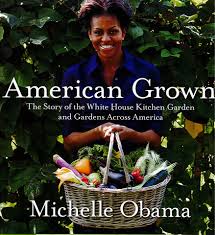
Michelle ObamaPointing out the letters with her finger, Zuki gradually made out the title of the book and smiled. On the cover, Mrs Obama held a basket full of vegetables in all the colours of the rainbow. Even though Zuki did not recognise most of the vegetables, the picture made her mouth water. Especially the cucumber. In summer, Ms Murray often made cucumber sandwiches for her tea and always shared them with Zuki.

Inside the book, Zuki found many more photographs of Mrs Obama, surrounded by children, working in a garden, all busy with wheelbarrows and spades and rakes, then proudly showing off their vegetables in front of the camera. The people in the book appeared so relaxed and happy.

Zuki hadn’t known happiness since her mother’s death. Although it was difficult to admit, deep down inside she knew that her father was a drunk, her brother a chancer, and that her mother died because her father ordered her to visit a witchdoctor when she discovered lumps in her breast, instead of taking her to a clinic. But Zuki preferred not to dwell on things beyond her control. She was grateful for a roof over her head and didn’t mind giving most of her earnings to her father, just as long as he left her enough to feed them all. Even if what they could afford was mostly umngqusho or rice.

In one of the photographs, Mrs Obama was crouching next to a patch of plants Zuki did not recognise. The small-print text next to the picture looked daunting. At the top of the page, spelling the words carefully to herself, Zuki could make out a caption: “How Times Have Changed”.

In her dreams that night Zuki was in a garden and suddenly found herself face to face with the First Lady who held out to her a funny-shaped, purple vegetable. ‘Do you know what this is?’ Mrs Obama asked her. Zuki had to shake her head.

Waking up she felt her stomach grumble. Her dream made her feel ashamed. She hid Mrs Obama’s book under her sofa.

At work that day, Ms Murray was surprised to find Zuki paging through the commemorative U.S. election special issue of Time magazine. Ms Murray had not liked the idea of Zuki being torn out of school to work for her, but understood the situation and was glad that there had been at least something she could do for the family when her mother passed away. Zuki had never complained or indicated that she missed school, so it somehow surprised Ms Murray to see her looking so intently at the magazine in front of her, pointing, and mouthing the letters which stood to attention before her nail. She was so absorbed that in answer to Ms Murray’s hello she jumped up from her chair, spilling the remains of her tea over the magazine.

‘I didn’t mean to scare you,’ Ms Murray said and turned on the kettle.

Apologising, Zuki started wiping off her tea from the full-spread picture of the American First Family.

‘Don’t worry,’ her employer assured her. ‘I’m finished with it. You are welcome to have it when it’s dry.’

Zuki hesitated.

‘Are you happy that Obama was re-elected?’ Ms Murray asked unexpectedly. They had never talked politics before.

‘I know very little about –’ Zuki paused.

‘But you are interested to find out, I see.’

‘I’m not good at – ’

‘Reading?’ Ms Murray probed and Zuki nodded tentatively.

‘But you seem eager to?’

Zuki remembered the book at home and nodded again.

‘You know, I could help you,’ Ms Murray said. ‘Would you like that?’ she added carefully.

Zuki raised her eyes. In them Ms Murray found her answer.

In the afternoon, still glowing from the offer, Zuki went outside with a cool drink for Ms Murray’s gardener.

‘Do you mind if I take some of these home?’ she asked, pointing at some plants which resembled the ones she remembered from Mrs Obama’s book.

Alone on her sofa late that night, Zuki opened Mrs Obama’s garden book and held the thyme and rosemary twigs close to her nose. She smelled change in the palm of her hand.

***

Originally published as “Mevrou Obama se tuin” in By on 21 December 2013.

Review: Synapse by Antjie Krog

SynapseReading Antjie Krog’s latest volume of poetry translated into English, Synapse (Mede-wete in Afrikaans), I was faced with an old personal dilemma: How much hard work is too much in order to reach that moment where meaning and aesthetic pleasure reveal themselves to you as a poetry reader? I don’t have an adequate answer. Perhaps everyone’s threshold is different anyway. In the end all you have is your very individual frame of reference, as a friend recently reminded me.

In any poetry volume you will find poems which will immediately speak to you. Others will require a specific key to unlock a feeling of appreciation. Rereading, research, or exploration of context will eventually reward your effort. Some poems will forever remain inaccessible no matter the amount of goodwill you put in. And then there will be those which will simply leave you cold. The poems in Synapse fit into all these categories.

The volume is divided into two parts: The Yard and Four Efforts in Linguistic Synapse Tracing. The first part opens with a series of epigraphs which are followed by thirteen poems, all focused on the images of the yard and the farm. These I find the strongest and most captivating in the book. In the epigraphs we are introduced to spaces in which the land and its ownership take centre stage and gender roles are clearly defined. The poems speak of the death of a patriarch, familial roots which reach into a troubled past, grief, guilt, race relations, and the ancient questions of owning and belonging.

As the poem 11. fossilised tree trunk makes clear, everything is connected, embedded, echoed throughout history. And yet, everything changes: “after all the years we gurgle (the only outlasting ones) / burdened with the dying light and bloodsick with heritage / : the new ones prepare to enter the yard” (13. old yard). At the heart of one’s relationship with the land are beauty and language: “places that could always snap my skeleton into language / coil me into voices bore into my entrails / expose a certain wholeness of belonging as my deepest tongue / tear chorales and something like discord from my brain” (6. live the myth).

This is the kind of poetry that leaves one gasping for air, which opens up new spaces in one’s understanding and feeling about the past and everyday reality in this country.

The Yard continues with poems which grapple with morality and reconciliation. The idea of interconnectedness is challenged in hold your ear to the tear in the skin of my country where already the format of the poem signals separate spheres of understanding the concept of forgiveness. The words of the speaker of the first section, Cynthia Ngewu, who testified in front of the Truth and Reconciliation Commission about the murder of her son, one of the Guguletu Seven, cascade onto the page like a waterfall. The neat couplets which follow represent an ordered attempt to understand the motives and worldviews of the officer who was involved in the killing. In the end, we are told, “it was futile to try to weave interconnectedness into / the concrete bunker that lives inside Mr Barnard’s whiteness”.

The bleakness of moving beyond such divisions is captured in miracle where South Africa’s relatively peaceful liberation is juxtaposed with present-day, all-consuming greed and violence: “we have become the prey of ourselves caught up / in ethnic avarice and total incapacity for vision”.

More intimate poems about ageing, memory, grand-motherhood, domesticity, or the I-you constellation of lovers reveal the wonders of the world along deeper philosophical questions about our capabilities and responsibilities. The tone ranges from sombre to light-hearted. Krog is one of the few poets out there who can smuggle Skype, wifi, the Internet and memory sticks into poetry and make them look as if they almost belonged. Also, when she swears, she makes it count.

The poem convivium astounds with its breadth: “what use my caress in the breath-earthed night if a centre- / less universe opens space in the nonexistent for dark / matter to overpower a few broken beads of light?” The poem, like the human body at the core of its universe, “tuneforks such abundance”.

Apart from a handful exceptions, especially the Lament on the death of Mandela, the latter part of the volume, specifically the obfuscated Four Efforts in Linguistic Synapse Tracing left me baffled. The tightness and clarity of the preceding poems dissolved in musings where it became more and more difficult to follow the poet on her journey. The academic in me insisted I persevere and come to grips with the pieces, but the Sunday morning reader just wanted to return to the earlier poems in the collection or open another book. The Sunday morning reader won.

Synapse
by Antjie Krog
translated by Karen Press
Human & Rousseau, 2014

A ‘butchered’ version of this review appeared in the Cape Times on 19 December 2014, p. 12.

Christmas Story: A Silver Spoon

IMGP2891Sanna never liked polishing the silver. She would have preferred to iron the white damask tablecloth the new Mrs Joubert brought over from home. She told Sanna her mother had given it to her as a parting present. Sanna listens to the huffs and puffs of the iron in the next room. She puts aside the last spoon and continues with the forks. Forks are tricky. You have to work the cloth carefully around the tines; the task is too much for her impatient chubby fingers. She takes a deep breath, trying to keep her cool. A cinnamony smell penetrates her nostrils. She looks at the big pot of stewing dried fruit, bubbling happily on the stove. It could also be the half-moon cookies Missus has put in the oven.

Rubbing Silvo into the cutlery, Sanna thinks of going home this afternoon; of her sister’s house in Worcester; the kitchen there buzzing with activities; her nieces and nephews, eagerly awaiting the next morning. She takes a sip of coffee Mrs Joubert has made for her before ironing. She still cannot get used to the idea of having anything served to her, especially not by the Missus – or Zosia, as she insists on being called. Old Mrs Joubert would never even have thought of it. But this one, this one was not born and bred here; she is different with her strange European ways. Sanna likes her.

In the other room, Zosia glides the iron over the intricate patterns of the white tablecloth. She breathes in the damp, warm smell of ironing. Her mother taught her to do it, insisting early on that she must know how to take care of herself. Housework always makes Zosia feel close to her. In this house, having Sanna to do most of it for her is difficult to get used to, but she understands the necessity of providing her with a job. When the tablecloth is ready, Zosia walks to the dining room holding it up between her outstretched arms. She places it carefully on the table and smoothes it around the edges with her hands. She puts the red placemats she bought for the occasion on top. She can already see how beautiful the silver will look on them.

‘Sanna, how are you coming along?’ Zosia calls into the kitchen.

‘Almost ready,’ Sanna replies, polishing the last knife.

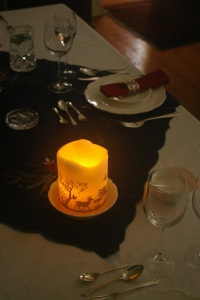
Zosia puts long red candles on the table, then takes out some plates and glasses from the side cupboard. As Sanna comes through with the cutlery a few minutes later, Zosia is busy placing red and silver cone-shaped napkins into the neatly arranged soup plates.

Sanna sees the three placemats and is perplexed, but remains silent in her inscrutable way. Zosia smiles at her raised eyebrows and, bending over the table to put another wineglass into place, explains: ‘We have a tradition in Poland. On Christmas Eve, we always set the table for one extra person, just in case somebody stops by.’

Sanna shakes her head slowly, placing the cutlery next to the plates. ‘The most important Christmas meal on the 24th; twelve different dishes; no meat, just fish; waiting for the first star in the sky to appear before sitting down to dinner; opening presents on Christmas Eve; setting the table for a guest who never comes…’ In her head, Sanna repeats the list of strange customs Zosia has told her about in the last few days.

Seeing the dubious look on Sanna’s face, Zosia continues, arranging a few fir twigs around the tall candles. ‘There is a German saying, Andere Länder, andere Sitten. Other countries, other customs. I won’t be cooking twelve dishes for Johan and me tonight though,’ she reassures Sanna. ‘But there won’t be any meat, and we’ll have to cheat about the first star. We’ll starve if we wait for one to appear in this summer sky,’ Zosia looks outside. ‘In Europe we have snow for Christmas,’ she says and turns back to Sanna, ‘What is your sister cooking for your family?’

‘Chicken.’ Sanna does not say more. The single word fills her memory with smells and sounds of home and she looks at the grandfather’s clock in the dining room. Zosia catches the furtive glance. ‘You must be eager to go. Please, could you just vacuum the lounge and put the fresh linen on I have laid out on our bed.’ Before Sanna turns away, she adds, ‘Thank you,’ and, ‘I will make a small salad for us for lunch, and make sure that Johan remembers about taking you to the station on time.’

The ancient Hoover reminds Sanna of the old Mrs Joubert, always insisting on having the house vacuumed daily. She never said ‘please’ or ‘thank you.’ She passed away at the beginning of the year. After the funeral Johan decided to move back home with his outlandish wife whom he had married overseas without inviting the family. His mother never forgave him for it.

Sanna tucks the duvet in underneath the mattress and smoothes over the bed before putting the pillows in place. She hears Zosia call that lunch is ready. In the kitchen, she picks up her plate and takes it to her room in the back of the house where she always eats alone.

‘I wish she’d join us,’ Zosia tells her husband sitting at the kitchen table.

‘Years of conditioning. And you know how shy she is; give her time.’

Zosia sighs impatiently.

In her room, Sanna enjoys the salad. Her little suitcase is packed and ready to go. An extra bag leans on it. With the unexpectedly generous Christmas bonus she has bought some treats for her family.
Sanna wants to wash up the dishes after lunch, but Zosia tells her to leave them. ‘I can do it, no problem, and Johan is ready to take you to the station.’

‘Thank you,’ Sanna says and before she turns to go adds a shy ‘Merry Christmas’.

‘And merry Christmas to you, too. Enjoy your holiday, Sanna. We’ll see you after New Year.’ Zosia walks up to her and gives her a cautious hug. Sanna does not know how to react. She rushes out of the kitchen.
At the station, the bus is late. Johan insists on staying until it arrives, but Sanna tells him not to worry and to go back home. Half an hour later it is announced that the bus to Worcester has broken down and no other will be going there until the next day.

Back at the house, Johan helps Zosia with the preparations for their first Christmas dinner together. For the first time in years he is excited about the festive season. Overseas there was nobody really to share the occasion with before they met, and he never felt like coming back home to his mother’s overbearing presence and suffocating piety. He’d left on a job contract the moment an opportunity arose. Meeting Zosia on one of his business trips to Berlin where she was working at the time was like discovering a new continent.

All day long Johan has been watching her rituals for the festivities, which felt refreshingly like a safety net and not a wet bag. He has been delegated to set up the Christmas tree and get fresh Cape salmon from town. Zosia insisted on a local fish and recipe for tonight. He happily obliged.

While she is busy with the last touches on the dinner, Johan goes into the dining room to admire the decorations on the table and choose a wine to go with the Cape salmon. They both look up at the sound of the door bell.

‘Who could…?’ Johan strides over to the intercom, followed by Zosia, wiping both hands on her apron.

‘Beggars?’ she asks.

‘No, it’s Sanna!’ Johan buzzes the gate open for their housekeeper. Flustered, she explains about the bus. While Johan considers other options for getting Sanna safe home for Christmas, Zosia comes up with a simple solution.

‘You must stay with us for dinner, Sanna. Please, we would love to have you. And first thing tomorrow morning, we can both take you to your family in Worcester.’

‘But…’ Sanna is at a loss for words.

‘No buts, please, come. You can tell me how the salmon turned out. And for once, the extra plate at the Christmas table won’t remain empty.’ She smiles reassuringly and ushers Sanna through to the dining room, taking her luggage from her.

A while later Zosia is busy dishing out the food in the kitchen and Johan opens a bottle of wine. Sanna sits alone at the decorated Christmas table and does not know what to do with her fidgeting hands. With the left one she raises her fork, turns it, and watches the candlelight reflect off its polished tines. She puts it down again. Then with her right hand she picks up the spoon and inspects her image in its concave surface. Upside down, her head looks small, her torso elongated. She likes the slimmer version of herself. She turns the spoon and sees her still distorted face, but now the right way up, staring back. Her mouth is bigger than all her other features. She twitches her lips, opens them slightly and smiles. Slowly, from ear to ear.

‘Dinner is served,’ Zosia enters with the salmon from the kitchen.

First published as “’N SILWER LEPEL” in By on 20 December 2008.

Book mark: The Night Watchman by Richard Zimler

The Night WatchmanChief Inspector Henrique Monroe of the Lisbon Police Department is brilliant at what he does, but gets help from a very unusual source. When a successful businessman is murdered under strange circumstances in his home, Monroe is called to investigate. The complex case awakens memories of Monroe’s distant past of growing up in Colorado with his younger brother Ernie, and threatens to unravel the fragile new reality the cop had been constructing around himself in Portugal ever since. His search for truth takes him to the country’s highest echelons of power. What he finds is horrifying, but tragically common. The Night Watchman portrays a troubled, corrupt society any South African reader will recognise. Tense, deeply felt, the novel asks a pivotal question: “Was it a paradox that truths left unspoken ended up taking away your voice?” The disquieting answers it provides are heart-breaking.

The Night Watchman
by Richard Zimler
Corsair, 2014

Book mark first published in the Cape Times on 12 December 2014.

In 2007, I reviewed one other novel by Richard Zimler:

The Seventh GateThe Seventh Gate
Constable, 2007

In 1990 the discovery of seven manuscripts of the sixteenth-century Kabbalist Berekiah Zarco sparked Richard Zimler’s internationally bestselling novel The Last Kabbalist of Lisbon (1996). Following its success, Zimler, an American living in Portugal, published two other novels about the Portuguese-Jewish Zarco family: Hunting Midnight (2003) and Guardian of the Dawn (2005).

The Last Kabbalist of Lisbon explores the fates of the Jewish community at the time of the Lisbon massacre of April 1506. Partly set in nineteenth-century Africa, Hunting Midnight is the story of a friendship between the Portuguese John Zarco Stewart and an African healer and freed slave named Midnight. Guardian of the Dawn takes us back to Goa at the time of the Catholic Inquisition in the seventeenth century.

The fourth novel in Zimler’s independent historical novels series is The Seventh Gate. Set in Berlin of the 1930s, it portrays Hitler’s brutal rise to power and the effects it had on the Jewish community and the disabled long before Second World War began. It subtly exposes how a whole nation could succumb to the madness of the Nazi regime; some willingly, others under extreme pressure. Meticulously researched and vividly brought to life, Zimler’s Berlin of the 1930s is a nightmarish place where loyalty between family members and friends as well as each individual’s sanity and heroism are tested to the limits.

In spite of its harrowing topic, The Seventh Gate is the kind of novel that makes you relax after the first twenty pages, knowing that there is another five hundred in store for you before the final curtain falls. Driven by superbly drawn characters, strong dialogues, and the unusual but beautifully touching love story at its centre, The Seventh Gate is a tribute to all the people who suffered similar fates at the hand of the Nazis as the characters in the novel.

The story is told by Sophie. In the Preface of the novel she is a fragile eighty-nine year old living in America and being taken care of by her nephew. After a spell in the hospital she decides to entrust him with her memories of the past when she was a teenage German girl in Berlin of the 30s and the world began to fall to pieces.

Sophie tells the story of Isaac Zarco, a descendant of the Kabbalist Berekiah Zarco, and the members of The Ring, now a clandestine group of Jewish activists trying to fight the Nazi regime. It is also the story of her brother Hansi, a distant child whom Sophie loves dearly and whose life is threatened by the Nazis. Misunderstood by her mother, betrayed by her father and Tonio, the boy she has a crush on, Sophie has to make some tough choices, trying to protect Hansi and her friends from the Nazi onslaught. The sudden wave of mysterious murders, disappearances and forced sterilizations makes her and Isaac realise that Berekiah Zarco’s worst fears might be about to come true, centuries after he wrote his manuscripts.

Artistically talented and mischievous, Sophie is a heroine one will not easily forget. Her passion for the cinema, her growing sense of righteousness, her awakening sexuality, and her selfless devotion to the people she loves sparkle with authenticity. The novel is interspersed with the poignant sketches she draws of her friends, adding to this overall effect.

Much has been written on Hitler’s Germany, but Zimler’s The Seventh Gate reveals a side of its inhumane machinery which has not been as prominent in the renderings of the time as it should have been, as the novel carefully examines how the horrors we associate with the time of the war already started happening in the early 30s with everyone watching almost in complete silence. Zimler probes the questions of how power is consolidated by intimidation and propagandistic lies, but also shows how small acts of courage and integrity can stand in its way. As Sophie comments on her younger self: “I’m still too young to know that people need only be frightened for their lives to swear that night is day. And that they can believe it’s really true.”

In an interview with Boyd Tonkin, Zimler stated that the relationship between the siblings Hansi and Sophie is his “monument” to the victims of the Nazi war on the disabled. The author expressed his wish that “every reader who reads the book with an open heart will be devastated by what happens to them both.” Because of the powerful storytelling of The Seventh Gate one cannot help but be.

Review first published in the Sunday Independent on 25 November 2007.