Category Archives: What I’ve Read

Sugar Man: The Life, Death and Resurrection of Sixto Rodriguez by Craig Bartholomew Strydom and Stephen ‘Sugar’ Segerman

“I remember her tongue sliding into my mouth,” a friend tells me, his eyes sparkling, mischief playing on his lips. A pause follows while everyone around the table is trying to recall their first French kiss. “Yeah, ‘Sugar Man’ was playing in the background,” he says eventually, snapping us out of our respective reveries.

“I wonder how many times you had sex”, Sixto Rodriguez sings in “I Wonder”, one of the songs on his debut album, Cold Fact, which was released in South Africa in 1971. The South African release is the beginning of one of the most incredible stories. Ever.

Years of enthusiasm and dedicated research, countless unbelievable coincidences, and an Oscar-winning documentary later, Sixto Rodriguez has risen from decades-long obscurity to enjoy the world-wide recognition he and his music deserve.

Sugar Man coverAnd now, the two men who refused to give up on a crazy idea and started it all, Craig Bartholomew Strydom and Stephen ‘Sugar’ Segerman, have written a fascinating book chronicling the quest.

Many of my South Africa friends have a Rodriguez story to tell. Like Strydom and Segerman, most of them first heard the music in the army. All believed the rumours that Rodriguez had committed a spectacular suicide. But unlike the authors of Sugar Man: The Life, Death and Resurrection of Sixto Rodriguez (2015), they did not set out to find out what exactly had happened to the singer with an astounding cult following in South Africa.

I’d never heard of Rodriguez until I saw Malik Bendjelloul’s remarkable documentary Searching for Sugar Man (2012). The soundtrack immediately crept under my skin. I shed tears of unbelief and joy watching the amazing story.

I cried again every few pages while reading. With infectious passion, Strydom and Segerman offer an incisive behind-the-scenes look at the Rodriguez Saga. Divided in four parts – The Mystery, The Man, The Music and The Movie – Sugar Man: The Life, Death and Resurrection of Sixto Rodriguez is full of gems Rodriguez fans will love, including two generous photo sections. The writing is great, and the beauty of reading the story is that you can slow down at leisure and savour the magic of every step along the authors’ journey.

I met and heard Strydom and Segerman for the first time at the Open Book Festival in Cape Town earlier this month. Listening to them speak about Rodriguez and their involvement in his story was magical, reliving it all once more through Sugar Man: The Life, Death and Resurrection of Sixto Rodriguez even more so. Their generosity, die-hard dedication and integrity (there is no glossing over the difficult bits in the book) is truly inspiring.

Craig Bartholomew Strydom and Stephen ‘Sugar’ Segerman with Andrew Donaldson at Open Book 2015 (Photo: Books Live)

Craig Bartholomew Strydom and Stephen ‘Sugar’ Segerman with Andrew Donaldson at Open Book 2015 (Photo: Books Live)


Malik, who heard the news with Brittany by his side while on a trip to Los Angeles, was finally able to exhale. It was as if he had been holding his breath for four years. He was now only one step away from the moviemaking’s greatest accolade. Craig went for a long walk after the announcement, remembering his statement to his army friends in 1984: ‘I am going to find out what happened to Rodriguez.’ His words may have dissipated into the ether, but they had been the genesis of an idea. An idea that was later energised by the liner notes of a CD and eventually realised. Now, thanks to an indefatigable Swede and a young record dealer who literally begged for the rights to re-release the music of the rock star who never was, that idea, that story, was world-famous. And so, at long last, was the withdrawn poet-sage-musician-activist who started it all.
(Sugar Man: The Life, Death and Resurrection of Sixto Rodriguez, 234-5).

For all Sugar Man news: The Official Rodriguez Website
Polish – Afrikaans magic

This morning I received the following message (in Afrikaans, nogal!):

“Koop vandag se Rapport! Groete Jerzy”

To which I automatically replied:

“Ek sal, baie dankie! K”

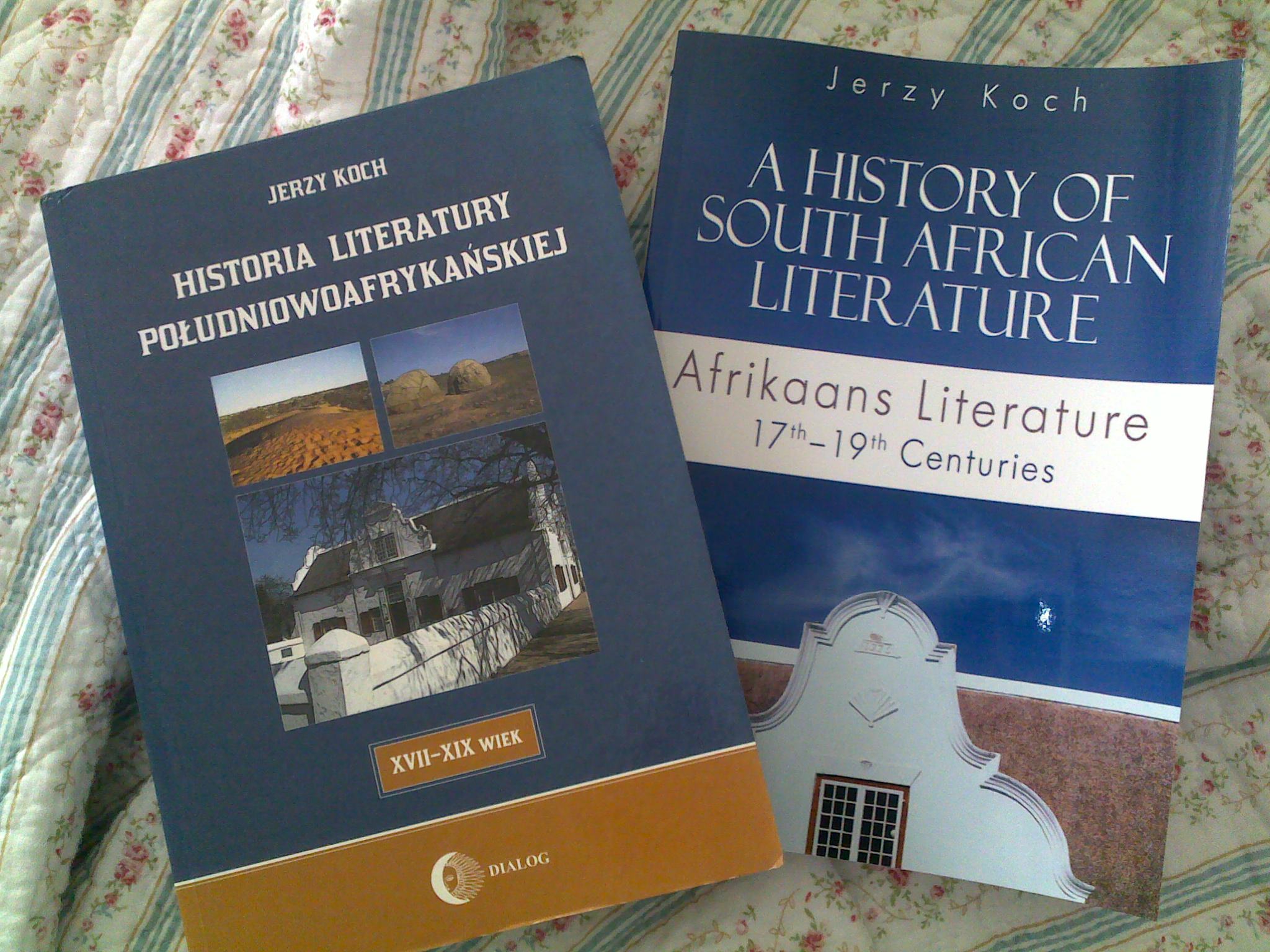
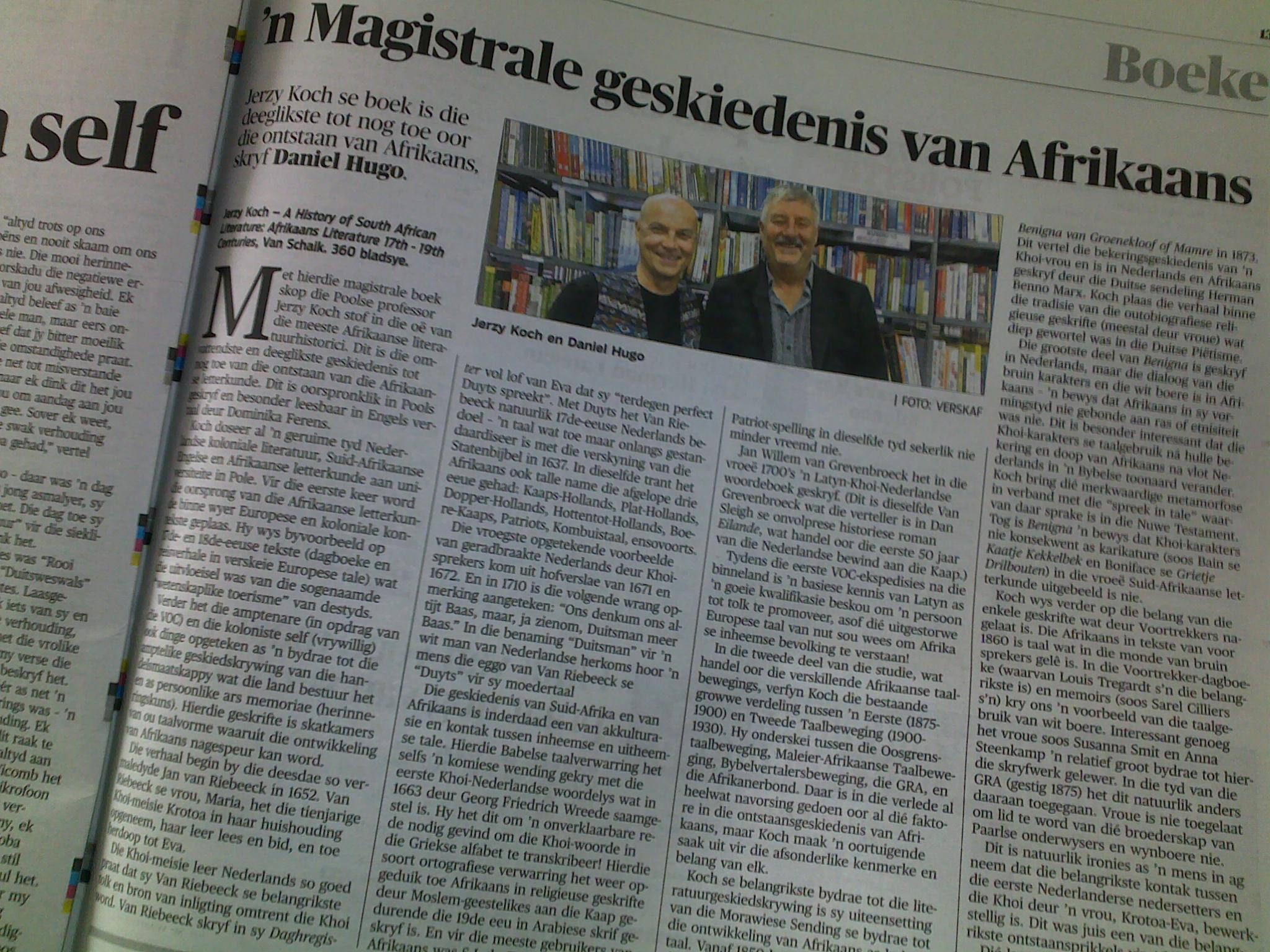
And I did. Inside, was an article about Jerzy Koch’s A History of South African Literature: Afrikaans Literature 17th – 19th Centuries (Van Schaik, 2015).
Jerzy Koch_Rapport
The article and our exchange reminded me of something I wrote for Die Burger in 2008.

Found in Translation: Two Poles in South Africa
(Die Burger 28 July 2008)

There is only a handful of people in his home country with whom the Pole Professor Jerzy Koch can easily converse in the language which over the last fifteen years has become his great linguistic passion – Afrikaans. His home in Wrocław in the South of Poland is perhaps the only place in the country where one will be welcomed with homemade bobotie and some biltong which always features on his shopping list whenever he visits South Africa.

When he is here, people are pleasantly surprised with his fluent and articulate Afrikaans and his incredibly diverse knowledge of local culture, literature and history. Koch’s work forms one of the strongest cultural and intellectual bridges between Poland and South Africa, and between the two languages, Polish and Afrikaans.

Suitably, his African adventure began with magic. Sometime in the 1980s, with his students of German, Koch was celebrating Andrzejki (St Andrew’s Day). According to Polish tradition, he poured some beeswax through the hole of a key into a bowl of cold water. The ensuing wax figurine, which was to foretell his future, was interpreted as having the shape of either a heart or of Africa. Not surprisingly, a few years later, Koch lost his heart to Africa when, after completing his doctorate at the Belgian Catholic University of Leuven, he participated in a conference in Potchefstroom in 1992.

In the introduction of his latest book, Hottentot Venus and Other Essays on South African Literature (published in Polish by Dialog, 2008), he recalls his fascination with South Africa of the early 1990s: “The fact that the transition in Poland was happening at the same time as the South African one made interest in South Africa, at least in my eyes, obvious.”

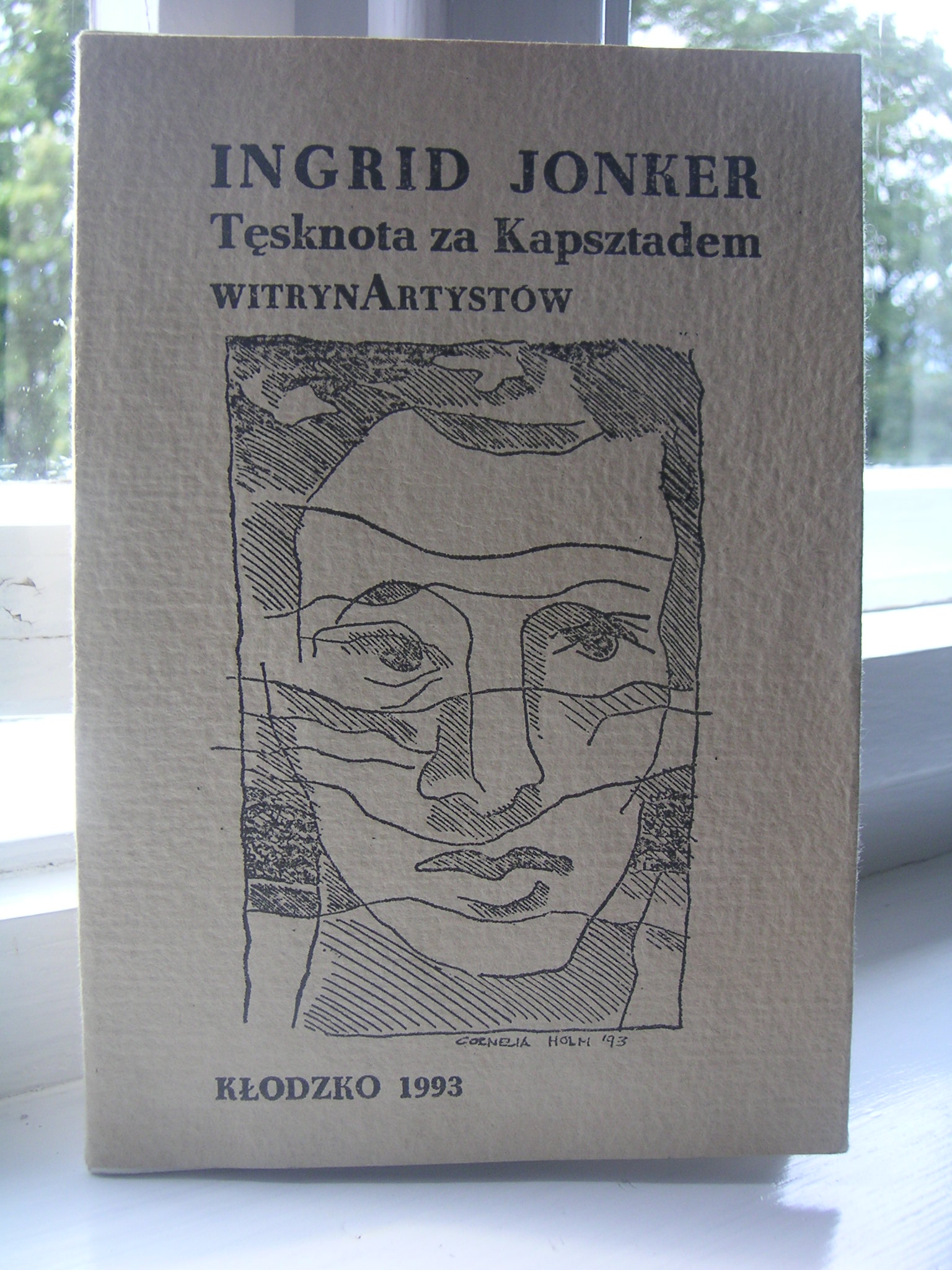
In 1993, our paths crossed for the first time in the most unusual manner and unbeknown to both of us at the time. After Daniel Hugo recited some of Ingrid Jonker’s verses to him at Three Anchor Bay, Koch translated a selection of Jonker’s poetry from Afrikaans into Polish. The volume was edited and published by WitrynArtystów, a small publishing house run by none other than my uncle, Bogusław Michnik. Jonker’s poetry collection was most likely the first book ever translated from Afrikaans into Polish. It is one of numerous translations from Dutch and Afrikaans for which Koch received the Martinus Nijhoffprijs in 1995.

Jerzy Koch is also the author of several monographs and numerous articles on South African literature in general, and Afrikaans literature in particular.
Jerzy Koch_booksHis previous book of local interest, History of South African Literature: Afrikaans Literature – 17th-19th Century, published in Polish in 2004, was the first study of its kind written by a non-South African for a non-South African audience. It is comprehensive, wonderfully illustrated history of Afrikaans literature which is an excellent point of entry for Polish students of South African studies at two Polish universities, University of Wrocław and the Adam Mickiewicz University in Poznań, where Koch introduced this particular field of inquiry. In translation, it might offer an inspirationally fresh look at literary history for Afrikaans speakers.

Koch is currently working on the sequel to this publication, a history of twenty-century Afrikaans literature and on the first Afrikaans-Polish dictionary, apparently the fourth ever bilingual dictionary that includes Afrikaans. He is also editor of the annual publication Werkwinkel: Journal of Low Countries and South African Studies. Its third issue on its way to us as I write.

Jerzy Koch, André and I in Stellenbosch in 2006.

Jerzy Koch, André and I in Stellenbosch in 2006.

In South Africa, he is presently a research fellow at the UFS in Bloemfontein and since 2005 a member of the Suid-Afrikaanse Akademie vir Wetenskap en Kuns, an honour rarely bestowed on a foreign scholar.

Easily recognised by his old-fashioned, long, curled moustache, Jerzy Koch was, fittingly, the first person I ever spoke Polish to in South Africa when we met at last in person in 2006 during one of his visits to the Cape. Ever since I came to live here myself in 2005 I have been absorbing Afrikaans. One day, Jerzy Koch and I will have a conversation in Afrikaans about Langenhoven. We share a passion for this country, its people and their cultural treasures, believing that it is of the utmost importance to forge understanding between peoples through explorations of the unknown with the help of the known. And a little bit of magic.

(When André and I first visited my uncle who published Tęsknota za Kapsztadem, he proudly presented the volume to us, not in the least aware of the connection between Ingrid Jonker and André. He was just proud of having published a South African author in translation. I remember I had tears in my eyes when he handed the book over to us and I paged through it, looking for a poem dedicated to André. I found one, pointed at the dedication and then at André, and said to my uncle in Polish: “It’s the same person, you know.” Tears flooded all our eyes. Magic. And Jerzy and I texting to each other in Afrikaans – that’s magic, too.)

Entertaining and insightful: Pamela Power’s Ms Conception

Ms ConceptionEver wanted to kill your beloved kids? Shag your psychotherapist? Take revenge on the Floozy lusting after your husband? Write a nasty email to your Boss from Hell? You are not alone! Jo de Villiers, the delightful heroine of Pamela Power’s debut novel Ms Conception (Penguin, 2015), knows exactly how you feel. Soapie scriptwriter, wife, mother of two, daughter and friend, Jo, like so many women before her, is trying to juggle domestic and professional responsibilities without going insane in the process.

Pamela Power is not afraid of dark truths. Motherhood is not for sissies. It can ravage your body, play havoc with your mind, put strain on your relationships, and ruin your chances of getting ahead in your career: “Nobody ever warns you that, much as you love your children, there will be times when you hate them just as fervently. And that the guilt you feel for being such a useless, inadequate excuse for a mother will sometimes completely overwhelm you.” But Ms Conception with its brilliant title and wonderful cover is anything but a dark book. Power does not shy away from afterbirths, baby poos, or cracked nipples. Nor from tackling other serious topics such as peer pressure, HIV, and infidelity, but she does it all with such a mischievous sense of humour that one can’t help smiling on every page. In fact, my introduction to the book was via a friend who picked up my copy, started reading before me, and chuckled every few paragraphs. I felt exactly like that when it was my turn and devoured the book in two sittings. It ends with a ‘delicious’ bang and a recipe which will make you squirm!

Pamela Power made me think of the way difficult issues were handled in my family. We would sit around the dinner table and tease each other about the things that bothered us or tell some funny, seemingly unrelated, meandering stories which would illustrate our worries. It might not have been the ideal way of confronting conflict but it had its uses as it was an easy way of avoiding direct offence. And yet, despite having perfected this skill while growing up and using it in my early experiments in writing, I am hopeless at writing humour. I have endless admiration for writers who approach tough subjects with a light touch and make one laugh. Power is definitely one of them.

Thirty Second WorldMs Conception also reminded me strongly of another local novel, Emma van der Vliet’s Thirty Second World (Penguin, 2013), which paints a similarly humorous picture of a woman’s attempts to survive modern motherhood. Some of the most striking and strangely hilarious descriptions in both books involve breastfeeding and breast pumps and I am tempted to lump them into a new genre: ‘breast pump fiction’. There is something liberating and empowering about reading novels which reveal the often mundane everyday horrors of being a woman without batting an eyelid while cracking jokes at the same time.

Power dedicated Ms Conception to “childminders everywhere”, stating “You deserve a raise!” Women – and men who know what it’s like and do their share! – are the superheroes of our daily lives. And Pamela Power is definitely a writer to watch.

Review: Go Set a Watchman by Harper Lee

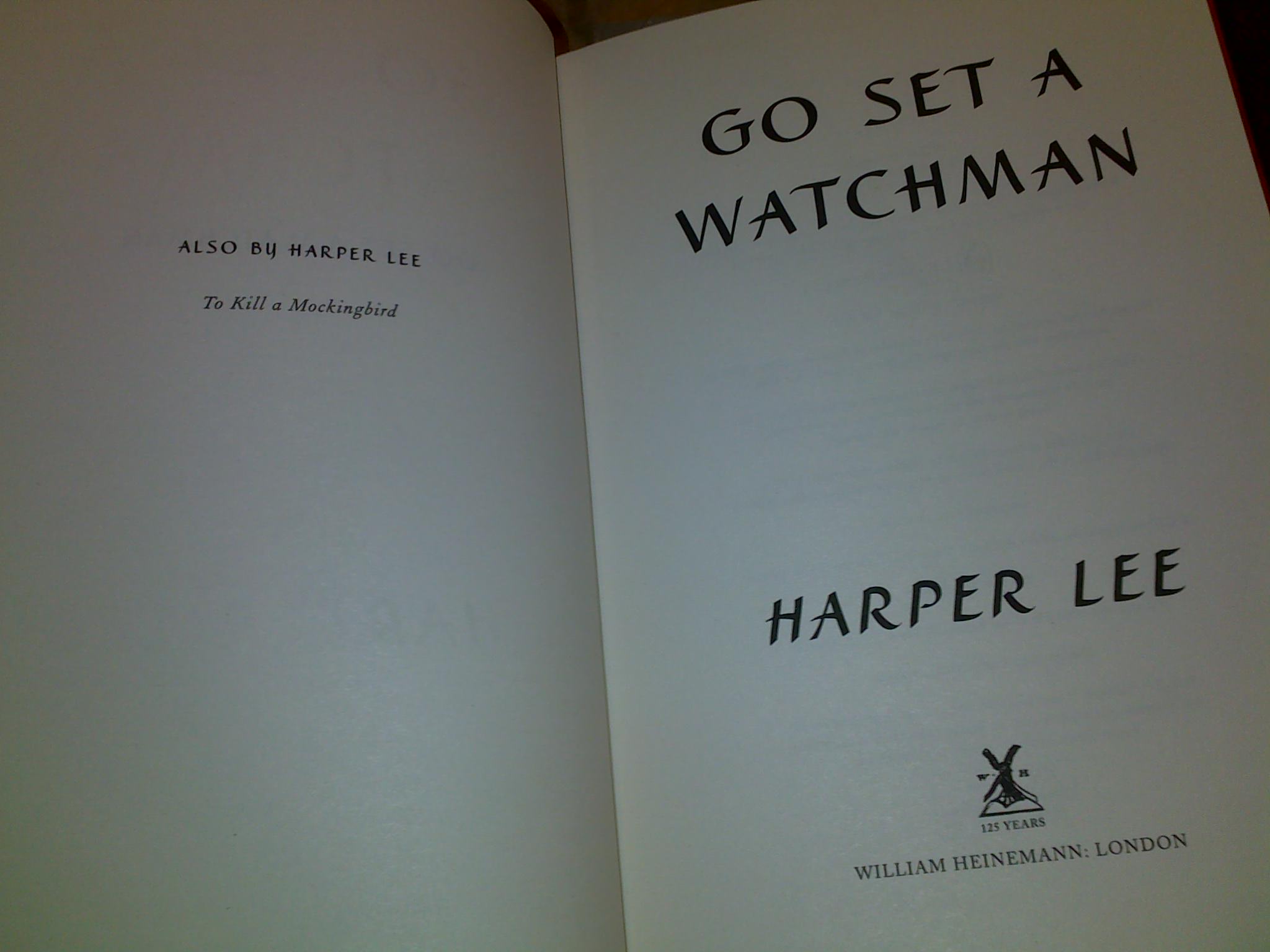
To Kill A Mockingbird“It is what it is, says love” is a phrase from a poem by the Austrian poet Erich Fried which echoed in my head while I was reading Harper Lee’s highly anticipated Go Set a Watchman. Published decades after her Pulitzer Prize-winning, internationally bestselling To Kill a Mockingbird (1960), Lee’s only other novel to date, no matter what its merits or lack thereof, Go Set a Watchman is a literary milestone.

How the two books relate to each other reminds one of the ancient question about which came first: the chicken or the egg. It’s complicated. Or not? Although first to be published, To Kill a Mockingbird was written after Go Set a Watchman. Both tell the story of the Finch family, but they are set twenty years apart. In the late 1950s, Harper Lee was told by an editor who saw the manuscript of Go Set a Watchman, where the main characters are all grown up but frequently return in their memories of an earlier time throughout the book, to rework it to focus on those childhood stories. This rewrite became To Kill a Mockingbird. Without any doubt there are good reasons why the initial book hasn’t seen the light of the published page until now. And all kudos to the editor who saw its potential back then and challenged Lee to write another novel which millions of readers across the world have come to love over the last half a century.

My personal love affair with To Kill a Mockingbird began in grade 8. I still have my school copy of the novel with a dust jacket I designed for it myself. It is one of only a handful of books which travelled with me across three continents to settle in Cape Town. I mention this to emphasise the important part that the tale of the siblings, Scout and Jem, and their wonderful father, Atticus Finch, plays in my life. Full of wisdom and tenderness, beautifully written, poignant and funny, the richly layered To Kill a Mockingbird is a true classic. It is set in the imagined county of Maycomb in Alabama of the 1930s. Through Scout’s innocent eyes, it tells the story of her and her brother’s fascination with their reclusive neighbour, Boo Radley, and their father’s fight for fairness for a black man accused of raping a white woman in the Jim Crow South. The children learn that it’s easy to fear what you do not understand and that more often than not law has very little to do with justice. But what they also discover is that there are certain things in life worth fighting for.

When I reread the novel recently, my love of it was reaffirmed. And when you love something so much, it is easy to have your heart broken if somebody tampers with it in ways which are uncomfortably unpredictable…

Continue reading: LitNet

14072015752

Interview: Ivan Vladislavić and 101 Detectives

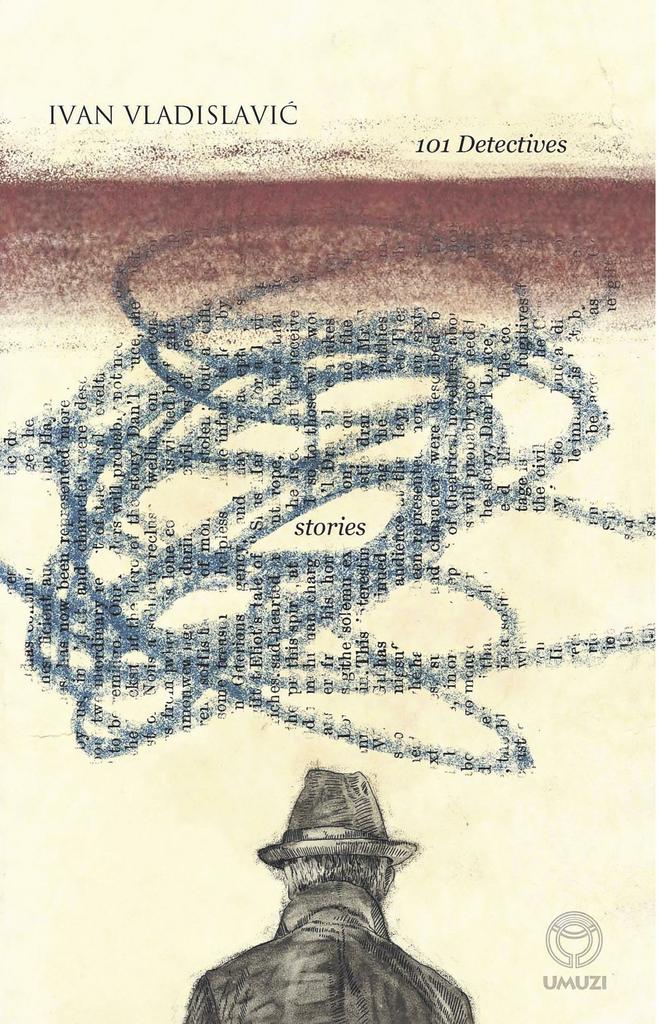
101 DetectivesThe FollyMy first encounter with Ivan Vladislavić’s writing took place in a multidimensional construct of language and fantasy that is his remarkable novel The Folly (1993). It must have been around a decade ago when I moved to South Africa. Since then I have always returned to his books with a great sense of anticipation which has never been disappointed. His latest collection of stories, 101 Detectives, is no different, although it baffled me in the beginning. The first three pieces made me think a lot about the intellectual playfulness of The Folly. Some of the stories are set in recognisable and yet shifted or alternative realities which are quite uncanny. In a recent e-interview I asked Vladislavić whether this was his way of avoiding the cliché trap, of challenging the impression of one of his characters that “no matter what I do or say, or how I remember it or tell it, it will never be interesting enough” (“Exit Strategy”)? He hadn’t gone about it “deliberately”, he wrote, and mentioned that in his youth he read “a lot of sci-fi and was taken with writers like Ray Bradbury, who could twist the ordinary into the alien very skilfully through a kind of estranging lyricism”. Of his own early work he says that “the strangeness is more a product of language and imagery than of constructed setting.” More recently he had read speculative fiction again, “which may account for the atmosphere of a story like ‘Report on a Convention’. Many ordinary contemporary spaces are strange. One grows accustomed to it, but the precincts and lifestyle estates often have a weirdly layered, compelling artificiality to them. They’re at such an odd angle to the surrounding world that ‘shifting’ them would make them feel less rather than more peculiar.”

Reading and listening to Vladislavić, the key word I associate with his work is “intellectual”, especially in conjunction with “stimulation”, and it is the main reason why I read him. He challenges me, inspires me to question reality and literature, to perceive both more consciously and often with deeper appreciation. I delight in the engagement. When I think Vladislavić, I also think art, photography, beauty, language, and, perhaps above all, Johannesburg. Few have written as perceptively about Johannesburg as he, “mapping and mythologising” the city (in the words of Elleke Boehmer). Few can employ language to capture not only the beauty of experience, but the beauty of language itself to such stunning effect. Few have entered collaborations with artists of different media, as victoriously enhancing the disciplines in the process. In 2010, together with the South African photographer David Goldblatt, Vladislavić published TJ & Double Negative, a novel with photographs. More recently he worked with Sunandini Banerjee on an illustrated novella titled A Labour of Moles (2012), and 101 Detectives also includes a “Special Feature”: a gallery of photocopies of dead letters, ie letters never delivered to their intended recipients because of address errors and suchlike, referred to in the story “Dead Letters”. There are also images of the places they were supposed to have reached, taken from an exhibition in Poland dedicated to them.

What appeals to Vladislavić in this kind of exchange? I wondered…

Continue reading: LitNet

Review: 101 Detectives by Ivan Vladislavić

101 DetectivesOm te sê ek was verward, is om dit sagkens te stel. Die eerste drie verhale in 101 Detectives, Ivan Vladi­slavic se jongste versameling, het my met hul onvoorspelbare vreemdheid van balans af gehad.

In die wete dat die naam op die boekomslag sinoniem is met bobaas van die kortverhaalkuns, het ek ­egter volhard. Ek is ryklik beloon.

Hierdie outeur se boeke het my nog nooit teleurgestel nie. Uitgedaag, gestimuleer, verryk – ja! Maar nie teleurgestel nie.

Sy skryfwerk verg die leser se aktiewe deelname. Toegegee, ek het nie al die woorde in elke paragraaf van die titelverhaal getel nie, maar die truuk wat gebruik word skemer aan die einde van die verhaal deur sonder dat lesers hul somme hoef te maak.

Tel of nie, jy kan nie bloot deur die boek blaai en ontsnappingsvermaak verwag nie. Ek was derhalwe bereid om my ongemak met die ­begin van die versameling opsy te skuif en met sorg te lees om die ­genot te smaak.

Die vierde storie het my reeds oortuig ek is op die regte spoor.

“Exit Strategy” (let op die titel) bevat dalk ’n paragraaf wat die sleutel tot die hele versameling inhou. Nadat sy ’n man die wolkekrabbers waarin sy werk, sien uitklim het, merk ’n vrou op: “It’s a distressing idea: this might be the most interesting thing that’s ever happened to me . . . and yet it feels like a cliché. Everything surprising has already happened before or is about to happen again. No matter what I do or say, or how I remember it or tell it, it will never be interesting enough.”

Die vrou is ’n korporatiewe storieverteller wat, figuurlik en letterlik, bo haar vlak by die werk probeer uitstyg, maar ook na uitkomkans soek…

Continue reading: Media 24

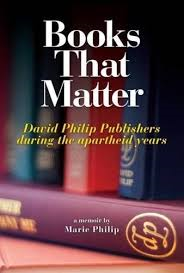
Review: Books That Matter – David Philip Publishers during the apartheid years by Marie Philip

Books That MatterAs I see it, in publishing there is a significant difference between accidental and nurtured bestsellers. Nowadays, the market is dominated by the former. But every now and then you get a publisher who will understand the value of the latter.

Reading Marie Philip’s memoir about the famous publishing house she and her husband established in South Africa during the dark years of apartheid, I was reminded of how precious such an approach is in the book world. It is even more precious and definitely rarer when it is combined with a moral and social conscience which Marie and David Philip and their team exemplified.

It is difficult to imagine the South African literary scene without David Philip Publishers (DPP). Over the years, they have launched or assisted the careers of such writers as Richard Rive, Nadine Gordimer, Mandla Langa, Stephen Watson, Alan Paton, Sindiwe Magona, Ivan Vladislavić and Lyndall Gordon. The list of their titles, which Marie Philip includes at the end of her incisive book, is astounding, to say the least. Just to give you a sample, among their seminal publications are: Don Foster’s Detention and Torture in South Africa, Mamphela Ramphele’s A Bed Called Home, Michael Fraser’s A Fynbos Year, The Essential Evita Bezuidenhout, Ellen Kuzwayo’s Sit Down and Listen, and Being Here: Modern Short Stories from Southern Africa (compiled by Robin Malan). Because of their independence the Philips “had the freedom to take risks and be bold, and even eccentric”, as well as to tune into their “own publishing instincts”. While it was important to survive, money was not their “main concern”. The combination of these factors turned out to be a recipe for great success in all respects.

And it all began with a penguin in the early 1970s…
Continue reading: Not Now Darling, I’m Reading

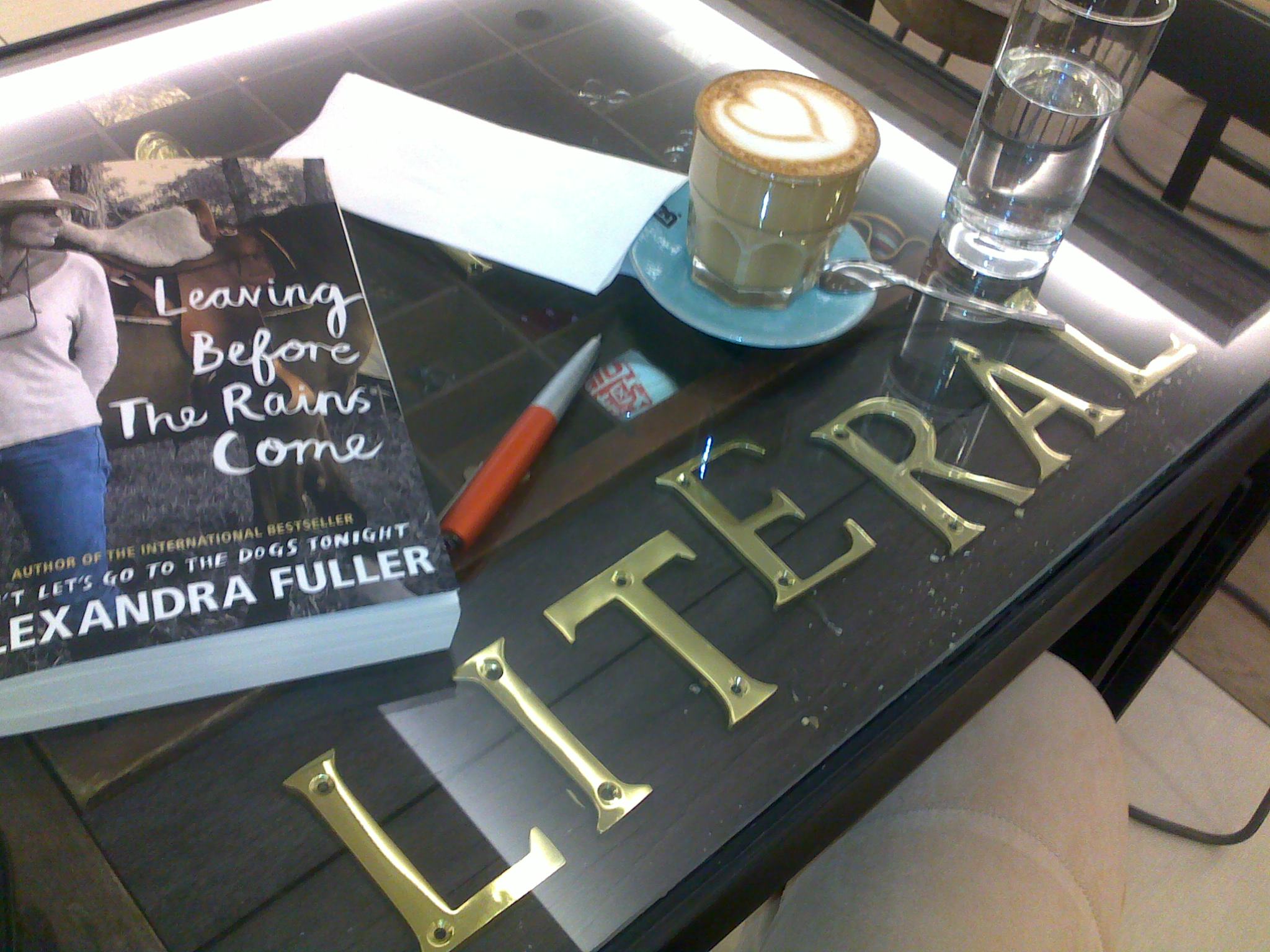
Book review: Leaving Before the Rains Come by Alexandra Fuller

Fuller LeavingI must have been quite a disconcerting sight: weeping my eyes out in the middle of O.R. Tambo International Airport. I couldn’t help myself. That is what a good book can do to you. I was passing the wait for my flight home with the final few chapters of Alexandra Fuller’s latest memoir, Leaving Before the Rains Come, when the tears just started spilling over. It wasn’t the first time one of Fuller’s books had made me cry. But perhaps it was most fitting since this particular story feels as if it had been written through a lot of intimate pain.

Mostly known for her international bestseller, Don’t Let’s Go to the Dogs Tonight, Fuller is the author of four other books. She is one of those writers who will either irritate the hell out of you or steal your heart. She stole mine with The Legend of Colton H. Bryant, the incredibly moving story of a young cowboy who died on the oil rigs in Wyoming, and I have been reading her work ever since. My other favourite is Scribbling the Cat: Travels with an African Soldier in which Fuller captured her haunting encounter with a veteran of the Rhodesian war. In hindsight, the book can be read as a companion to Leaving Before the Rain Comes.

Continue reading: Not Now Darling, I’m Reading

Book review: The Death’s Head Chess Club by John Donoghue

Deaths Head Chess ClubA friend has recently suggested that my reluctance to read Second World War novels might be similar to many South Africans’ reluctance to read apartheid fiction, and that saturation might be at the heart of it. True, having grown up in Poland and Austria, I have heard, seen and read plenty about the war – the stories as related by both sides. It is not that I shy away from the horror, even though after having visited the Mauthausen concentration camp as a teenager I was unable to accompany my husband when he wanted to see the concentration camp in Auschwitz (throughout, I sat very still in a coffee shop just outside and wept without going in). Imagination and empathy can be deadly for a soul. But I understand that these (hi)stories must be told and listened to. Today, in the midst of xenophobia, racism and violence, we need to grasp, perhaps even more than ever, what is at stake when we declare others as subhuman…

Continue reading: LitNet

The Death’s Head Chess Club
by John Donoghue
Atlantic Books, 2015

1 July: Talking love and loss with Réney Warrington at Love Books, Johannesburg

invite vir love books
Next week at Love Books in Johannesburg, I will have the pleasure of talking to the author and photographer Réney Warrington whose debut novel October (also published in Afrikaans as Oktober) was one of my favourite reads of last year. At the moment, Réney is also exhibiting at the Circa Gallery in Johannesburg. From the few glimpses I have had of it online, I can’t wait to see the entire exhibition.
Apart from sharing a publisher (Protea Book House), being debut novelists, and writing about sexuality and the trials and tribulations of relationships, Renéy and I have something in common which has resulted in a meaningful exchange of letters and messages in recent months: grief. We have both lost Loved Ones at the beginning of the year and are trying to find our feet in a reality completely changed by the experience.