Tag Archives: Karina Magdalena Szczurek

Book marks: White Wahala and Dying in New York by Ekow Duker

White WahalaA finalist in the 2011/12 European Literary Awards, White Wahala is a modern tall tale with a dark South Africa twist. When Alasdair Nicholson, a spoilt young banker from a wealthy family, heads towards Soweto with his little sister to buy drugs, he sets in motion a chain of disastrous events which will put his entire family in grave danger, expose a long-buried secret, and end up in the headlines amidst an intrigue of national proportions.

White Wahala is populated by exaggerated characters whose outrageous actions and the dubious reasoning behind them take us to the heart of the misunderstandings and fears we encounter in everyday life as South Africans of all backgrounds. Ekow Duker’s take on the present state of the country has the potential to generate a lot of debate. It is impossible to remain neutral towards the story. My own personal response was a mix of incredulity and anger.

White Wahala
by Ekow Duker
Picador Africa, 2014

First published in the Cape Times on 26 September 2014.

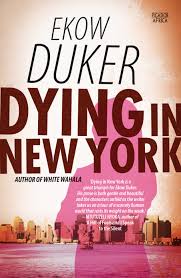
Dying in NYIt is difficult to write about Ekow Duker’s second novel, Dying in New York, without giving away the ending, an unexpected twist on which the entire narrative hinges. The book’s pre-teenage protagonist, Lerato Malema, suffers horrendous abuse at the hands of her father. Her mother, also a victim, unable to protect her daughter, stands by hopelessly. One day, the dynamics of the setup change with fatal consequences.

The only thing that keeps Lerato going is a vague fantasy about the city of New York which she shares with her mother. Propelled by her vivid imagination, she embarks on a roller-coaster ride through contemporary South Africa where she encounters the worst of what the country has to offer, with very little to relieve the alienation, horror and pain of her dark adventures. Reality and fantasy blur uncomfortably, revealing a highly unsettling picture of violence and insanity.

Dying in New York
by Ekow Duker
Picador Africa, 2014

First published in the Cape Times on 3 October 2014.

October Blackout

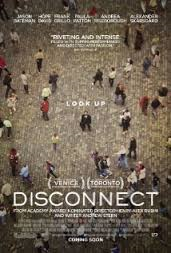
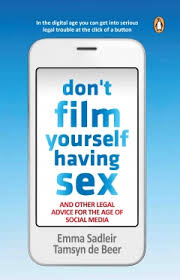
DisconnectDont Film YourselfThe Snowden FilesReading Luke Harding’s The Snowden Files: The Inside Story of the World’s Most Wanted Man, Emma Sadleir and Tasmyn de Beer’s Don’t Film Yourself Having Sex: And Other Legal Advice For the Age of Social Media, and Pico Iyer’s article in the New York TimesThe Joy of Quiet“, as well as watching Disconnect in the same week might have put anybody off the internet for a while (or for life). But it was only a chat (over tea, in the real world out there) I had with Alex Smith the same week in early September that made me want to consider the following: NO SOCIAL MEDIA FOR THE MONTH OF OCTOBER. In my case it’s only blogging, tweeting, and as of recently goodreading (I haven’t made it to facebooking, instagraming etc yet) – all entertaining, informative, and sharing activities which I really enjoy, but which are also time-consuming and often creativity-sapping. I can’t complain. In the last few weeks I have done a lot of creative and critical writing, and I think I have got the balance between the different activities nearly right, but I would like to have a month of selfishness (no sharing on diverse platforms, no matter how much fun it is) and finish my second novel, provisionally entitled Ordinary. It is almost there…

In the famous words of Arnold Schwarzenegger: “I’ll be back!”…In November, with a manuscript ready to submit to Danél, my wonderful editor at Protea Book House.

In the meantime, please enjoy some of the pieces which I have posted from my archives:
OUR BRASS BED
A MIRACLE WORKER FROM BAGHDAD
ONA & HUSØYA
ALGIERS
HONEY, WE’RE HAVING A BOOK
AT HOME IN CHINA
WRITERS’ OTHER LIVES

Review: My Mzansi Heart by King Adz

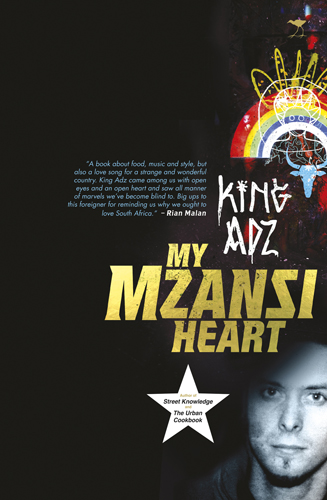
MyMzansiHeartReading King Adz’s My Mzansi Heart is like watching a reality TV show: drama, drugs, rock and roll, and rather longish ad breaks in-between. The book was almost too much for my senses and left me quite confused at times. I doubt, however, that nearing forty, still wearing shoes I bought a decade ago, and attending Metropolitan Opera live transmissions at Cinema Nouveau, I form part of the readership My Mzansi Heart is targeted at. Yet, King Adz and I have something crucial in common. We are both foreigners who have made our homes in South Africa, having fallen head over heels in love with the country and its people. Every love is different though. What matters is that your heart is in the right place, and King Adz’s beats for Mzansi.

King Adz is the pen name of Adam Stone, a Brit who grew up in the outer suburbs of London, arrived here with his family just after the changeover, and decided to stay. He started off at an ad agency and became a filmmaker, a writer (previously of Street Knowledge, The Urban Cookbook, The Stuff You Can’t Bottle: Advertising for the Global Youth Market), and most importantly a promoter of everything connected with street culture. Somewhere along his many travels he took the wrong turn and nearly lost everything to booze and drugs. My Mzansi Heart tells the story of his descent into the hell of addiction and his recovery.

The in-your-face narrative, punctuated by slang and a lot of French, is a rollercoaster ride across South Africa. It includes King Adz’s encounters with some famous locals such as the photographer Roger Ballen, the fashion stylist Bee Diamondhead, or writer Rian Malan. Along the way he also sniffs out potential future stars of different industries, whether it is fashion, media, photography, food, or music. King Adz roams the cities from Soweto to the Cape Flats looking for talent and promoting his heart out for places, institutions, products, and people (himself included), he believes in.

Towards the end of the book he writes: “There was a second there, typing the above words in, that I stopped and thought of the enormity, the stupidity, and the restlessness of the egocentric and Warholian act of self-promotion, and how it consumes a lot of my life. One moment it seems worthwhile, the next pointless and empty.” The statement captures my sentiments about his project. My Mzansi Heart offers many great flashes of insight into present-day South Africa, but one has to wade through a lot of fluff and bling to get to the gritty, good stuff.

Perhaps surprisingly, though, King Adz selling techniques worked on me. I’m looking forward to taking out a friend to lunch at Beijing Opera. As a lover of dim sum, I was intrigued by the mention of the “pop-up” restaurant in My Mzansi Heart (King Adz knows the owner Yang, and they have a copy of his cookbook on the wall). And I am not ashamed to admit that I’ll be looking out for Jack Parow Braai Sauce at my local supermarket.

First published in the Cape Times, 26 September 2014, p. 31.

A Miracle Worker from Baghdad

Saad Eskander1It took four flights and twenty-seven hours for Dr Saad Eskander to reach Molde, a coastal town in Norway, home to the annual Bjørnson Festival. Arriving late on Friday, he is to give a lecture the next day and embark on the same, tiring journey back to Baghdad, his home, on Sunday morning. To add to the strain, the two nights he spends in Molde, he hardly sleeps. “I cannot sleep longer than half an hour at a time when staying at a hotel,” he tells me. He has come to Molde as a guest of the festival, asked to speak about his work as director general of the Iraqi National Library and Archive (INLA) in Baghdad. His lecture, entitled “Rising from the Ashes: The Destruction and Reconstruction of INLA (2003-2008)”, is one the highlights of this year’s Bjørnson Festival and is preceded by a moving poetry reading. The poet, Nada Yousif, lives in Norway in exile with her husband Thamer A.K. Al-Shahwani, a musician, and their small baby. Accompanied by her husband’s clarinet, she recites the original verses in a deep voice full of pain. English translations of her work are given to us before the lecture. She begins with the poem “The Last Flower” which ends with these telling lines: “My dwelling is now a tent at the borders / And my homeland… / A cemetery”.

Nada Yousif’s poetry reading sets the mood for Saad Eskander’s lecture. “The story I’m about to tell is a sad story, and it is always difficult to tell a sad story,” he admits and reminds his audience of John Milton’s remark that the destruction of books equals the destruction of reason. Throughout the history of humankind both have been constantly under threat. In this respect the fate of the INLA has not been unusual. During Saddam Hussein’s reign the library, like other cultural institutions in the country, served the dictator, not the nation. The regime was hostile towards any forms of creativity and did not participate in any rational planning to preserve the rich cultural treasures of Iraq. A small budget, shortages in acquisitions, ancient equipment, denial of access for scholars, unbearable working conditions, isolation from the international community, and censorship, contributed to the gradual demise of the library and archive holdings. Undesirable items were either removed from the institution or made inaccessible to the public. Constant surveillance by secret agents placed in the ranks of the library’s staff spread fear and intimidation. With salaries amounting to US$ 3 per month corruption thrived; quick and efficient access to the INLA became impossible without bribery.

The regime’s downfall in April 2003 put the INLA in an even more precarious situation. The institution became a target not only for the arsonists of the defeated regime wanting to destroy any criminal evidence, but also for professional thieves hunting for goods to sell to private collectors, and for ordinary looters who plundered the already minimal furnishings and equipment of the INLA. The cultural losses were enormous. With sixty percent of the archival materials and twenty-five percent of the institution’s publications, including rare books and periodicals, looted and destroyed, some of the remaining holdings scattered, ruined and lost, the events of the time can only be described as a national disaster. The building of the INLA itself was terribly damaged by fires, bombardments and vandalism.

The Coalition Provisional Government (CPA) of the time (2003-2004) did not prioritise cultural matters and failed to implement any goals for the INLA. The institution seemed doomed until the appointment of Saad Eskander as director of the INLA in December 2004. With a PhD in international relations and history from the London School of Economics and coming from a family known for its political integrity, Eskander was well-equipped to do the job. A former Kurdish fighter, after thirteen years of living in the UK he decided to return to his home country with a group of exiled Iraqi artists and intellectuals after the 2003 invasion to help with reconstruction. From the group, he was the only one to remain in Iraq permanently. He became well-known for the diary he wrote about the terrifying time of the civil war in Baghdad. The diary was made available worldwide through the British Library’s homepage where it was published.

Although he was told to wait with any plans and actions for the INLA when he took over the library as director at the end of 2004, he decided to open the institution without any help from the Ministry of Culture. There was literally nothing in the building to work with: no electricity, water, furniture, or security. With the help of some volunteers he organised looting parties and plundered specifically targeted buildings for some equipment and furniture. One of those targets was the club of Saddam Hussein’s son. All these actions were illegal, but they proved highly successful. The INLA opened officially after only a few weeks of preparations. The working conditions were appalling at first. The building was dark, cold and situated in a very dangerous neighbourhood. The people trying to restore the INLA had to overcome many obstacles and placed their life in danger to fulfil their task. Eight people died in the process, dozens of others were injured or displaced.

Those who persisted had to confront the rubble heaps covered by soot and dust that constituted the library. Eskander is full of praise especially for the women who got involved in the project: “Women are good leaders, they immediately took initiative and set to work.” From the beginning, democratisation of the INLA’s inner life and gender equality have been strongly encouraged under his policy. Knowing that corruption was one of the greatest challenges to be dealt with, he immediately curtailed his own power (his own people have the power to fire him anytime) and substituted the former culture of taking orders with a culture of initiatives. Women have formed their own association within the library’s governing structures and publish an independent journal. New people from all sections of the population – Kurds, Sunnis, Shias – are employed and skilled permanently.

The Czech Republic and Italy were the two nations first to offer their assistance to the INLA (funding, equipment, skill-exchange). Some of INLA’s staff members travelled to these countries to be trained in restoration and preservation of materials on the most modern equipment available. Other countries and NGOs followed suit. Eskander’s work has been recognised abroad. He was awarded the Archivist of the Year Award at Columbia University in 2007. The same year he also won the MESA Academic Freedom Award of the Middle East Studies Association of the University of Arizona. But his greatest achievement remains the look of satisfaction on the thousand of people’s faces visiting the INLA, hungry for knowledge. Access to the INLA’s holdings and to online resources is free for all.

Today, the INLA’s staff counts four hundred employees. The average salary is about US$ 300. The building of the INLA has been almost completely renovated and all working conditions tremendously improved. Self-sufficiency and resistance to all forms of censorship are high on the INLA’s agenda. When, in 2007, the INLA refused to be turned into a military base, the Iraqi army invaded the institution as punishment. They soon realised the futility of the action and retreated. However, the headquarters of the US forces remain opposite the INLA building. The coming and going of helicopters can be heard in the background at all times. Sometimes a misguided bullet or shrapnel finds its way into the library, reminding the workers and visitors of the constant threat and instability of the outside world. And even though the worst seems to be over, the INLA continues to face innumerable challenges.

In a recent interview with the Guardian’s Stuart Jeffries, Eskander explained his motivation of taking up the job, “I thought I could help Iraqis understand their past and build their future.” Not a small task, but one he seems to be the perfect person to attempt.

During his lecture at the Bjørnson Festival in Molde, with obvious pride, he tells the audience about a file recently discovered in the INLA’s archives, portraying historical events unknown until now. He knows how crucial these and other findings are for the understanding and interpretation of history. As he ends his presentation on a very uplifting note, sharing with us some recent photographs of the beautifully renovated library, full of busy employees and engrossed visitors, most of us are moved to tears by Saad Eskander’s story. I do not manage more than a simple thank you and a handshake after his lecture.

In this context, it is a disconcerting anticlimax to hear the announcement of the next speaker, Vigdis Moe Skarstein, who will be talking about Norway’s National Library and the challenges of digitalisation the institution is facing. There will be no talk about security threats, blackouts, stray bullets, corruption, people displaced or killed – the everyday hardships of all the people working with Eskander to keep the library and archive going from on a daily basis.

Saad Eskander2Before he has to leave the next day, Eskander joins a few of the festival participants for dinner, even though it is very late and he is not used to eating at this hour. While we others enjoy the local specialities, he sips some wine and patiently replies to our endless questions. We all want to know whether he believes Barack Obama can bring about change in Iraq if he is elected president of the United States. Eskander does not seem optimistic. “No matter who is elected in November, the US foreign policy will continue on its own terms,” he says.

During our conversation we discover a lot of similarities between present-day Iraq and South Africa. The challenges of diversity seem all too familiar; both societies are trying not only to come to terms with their multiethnic, multilingual and religiously diverse makeup, but also to profit from the opportunities it offers.

At the end of the evening, Eskander shares a personal tragedy with us. Three days before his departure for Norway, a dear friend of his who served as the Advisor to the Minister of Culture was assassinated near his home. “Kamel Shayaa’s death shocked everybody in Iraq, as he was an exceptionally nice and gifted person. He spoke four European languages and had an MA in philosophy. Like me, he returned from exile (Belgium) to Baghdad after Saddam’s downfall.” Immediately after the funeral, Eskander boarded the plane to Norway only because he had given his word to the festival organisers that he would attend. “I did my best to conceal my sadness,” he writes to me after his return to Baghdad.

As we say goodbye after the dinner, we wish him a safe journey to that place which he, in spite of all, chooses as his home. A place I knew previously only through the horrific images of war and destruction favoured by the world media. Through the stories Saad Eskander shared with us, Baghdad became a place of hope.

First published in New Era on 3 October 2008 and an edited version in the Sunday Independent on 9 November 2008.

For updates see:
Wikipedia
Interview with Saad Eskander (2013)

In 2012 during Open Book, I spoke about Saad Eskander with the amazing Anne Nivat, who was on her way to Iraq. Watch her documentary in which she meets up with Saad Eskander:

Ona & Husøya: A tiny paradise off the Norwegian fjord coast

OnaHusoya1
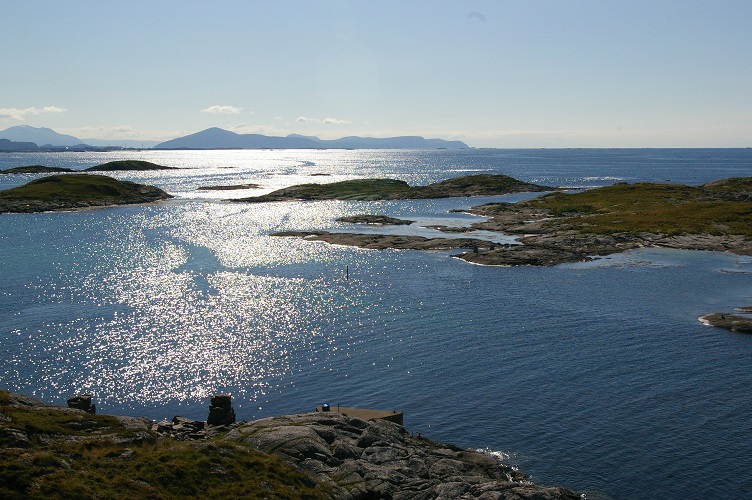
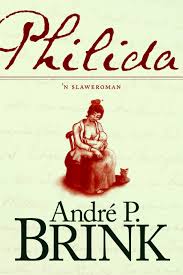
Today, the navigational light up on the hill changes automatically from white to red and green. The last of the keepers who kept vigil up here at the lighthouse every Christmas with his grandson is long buried in the small graveyard facing the fjords on the adjacent island. With him rest a few dozen other souls, former inhabitants of these small Norwegian Sea twin islands called Ona and Husøya. Situated exactly in the middle between the former medieval capital of Norway, Trondheim, and the Hanseatic city of Bergen, Ona is the island located furthest away from the mainland in this region. It shields its twin Husøya from the open sea. The two islands almost form one landmass and are connected by a narrow inconspicuous bridge. A ferry transports supplies, tourists and locals to and fro between the mainland and the islands five times a day. After an one-and-a-half-hour journey from Småge, the ferry docks in a small harbour in Ona. A stone statue of a woman welcomes the people descending on land. With one hand she holds a child to her breast and with the other she shields her eyes from a setting sun or a merciless wind, her whole posture an expression of anticipation.
OnaHusoya2
We arrive on the evening ferry. Even though it is almost eight, the sun is still bright and it will take two more hours to set; quite a change after the short winter days of Cape Town in August. We move into a spacious grey house next to the harbour, rented out before it is to be sold to a new owner. Downstairs is a café selling svele – traditional big fluffy pancakes one can have with butter and sugar or brown goat’s cheese, a Norwegian speciality. We already had them on the ferry where, we have been assured, they always taste best.
OnaHusoya6
With an estimated fifty permanent inhabitants Ona and Husøya do not require much of an infrastructure, yet they provide a small cosy hotel with a restaurant, a well-stocked grocery shop with some banking and postal facilities, and two ceramic workshops – all situated in the vicinity of the harbour. Ona is famous for its ceramics. The two shops are a paradise for a coffee-mug collector like myself. Both showcase original designs. As if on purpose, the one located east of the harbour specialises in light, pastel colours and frivolous patterns. ‘These all look as if they were wearing pyjamas,’ my husband comments with a smile. The other workshop, located on the other side of the harbour, offers dark, elegant products which immediately catch my fancy. I add a tall, distinguished-looking, dark blue mug to my collection. I have been enjoying my afternoon coffee in it ever since.
OnaHusoya7
There is hardly any traffic on the few paved roads of the two islands, and everything is within easy walking distance. The ancient maroon-red lighthouse built on Ona in 1867 remains the main sightseeing attraction. Located on a hilltop near the harbour, fifteen meters tall, it is the perfect vantage point for the entire island. Grey boulders covered with moss and grass dominate the landscape into which the inhabitants have fitted large family homes and small holiday cottages. People have lived here for centuries, but most of the buildings are modern and very well kept. Some of the roofs are covered with thick turf, which creates perfect insulation in winter. In summer, the green roofs look like flower hats. Some people grow herbs near the edge of the roof, ready anytime to be picked for a salad. Others cultivate wild strawberries on top of their houses. Another striking feature of the local architecture is colour. Houses are painted in intensely bold colours, creating the impression of a fairytale setting. And now, in late summer, nature displays all her picturesque glory, adding to the impression. The intoxicatingly fresh smell of the sea penetrates the air and makes one want to go fishing.
OnaHusoya8
Svein Bjørnerem, a local journalist visiting his mother on Ona for the weekend, arranges a trip for us with Tore Viken, one of the island’s young fishermen, when he goes out to sea to bring in the day’s catch. Forgetting my proneness to seasickness, I eagerly join the excursion. I do suffer a bit, but the excitement is too big to spoil the occasion. As Tore pulls in the line with some 300 hooks on it, out of nowhere dozens of seagulls begin to swoop down to our small boat. A truly Hitchcockian scene, but these birds are not interested in us. They are eagerly awaiting their share of the feast. We return home with fresh cod and haddock which Tore fillets for us. An hour later the fish is on the dinner table, the freshest and finest we have had in a long time.
OnaHusoya9
The next day is a Saturday. My husband wakes me up very early to witness a spectacular sunrise. The sky seems on fire; its reflection makes the perfectly still sea in the harbour look like billowing hot lava. I run out in my nightgown to take photographs. Later in the morning the entire island is abuzz with activities. We are told that a couple from a neighbouring island got married and are to celebrate their wedding on Ona. Guests arrive on the ferry and chartered boats, some dressed in beautiful traditional costumes to feast our eyes on. The celebrations continue late into the night, but we are hardly aware of them, deeply asleep after spending the day on an idyllic white-sand beach on Husøya. The beach is situated near the cemetery where some gravestones date back to the early nineteenth century, others have only recently been set up. All people we speak to tell us about the famous Swedish crime author Henning Mankell visiting the island a few years ago. Allegedly, upon seeing this graveyard, Mankell expressed his wish to be buried on Husøya when the time came for his final rest.
OnaHusoya10
The beauty of the twin islands and the sense of inner calm one experiences here make Mankell’s wish perfectly understandable. None the less, my mind is flooded by other visions. A creative project not requiring contact with the outside world to work on and a few months away from everyday life seem like the ideal plan for this magical place. One feels creatively inspired the moment one sets foot on the islands. They could, for example, be the perfect setting for a novel. I wouldn’t be surprised if, before he comes to rest here, Mankell immortalises Ona in one of his books.
OnaHusoya11
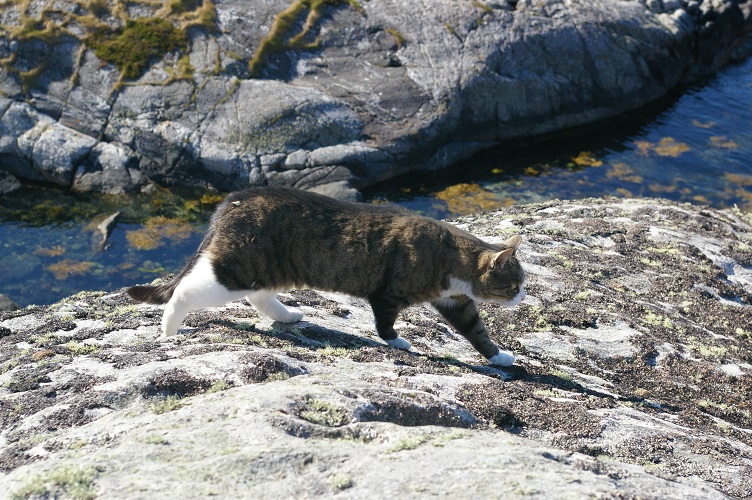
On Sunday, before we have to leave, we make a final trip to the beach for a picnic lunch. The sun is generous again, the water crystal-clear. In stormy seasons the waves along this coast sometimes swell to thirty meters, but during our visit the sea is a calm and deep aquamarine expanse. Some people brave the cold water and go for a refreshing swim. By midday the tide begins to come in. Three ornithologists have set up a tent nearby to observe some birds which we cannot detect. In our ignorance we only recognise the seagulls which are everywhere. The only other bigger animal we encounter on the island is a cat which follows us on one of our excursions, dropping to the ground every now and then to wallow in the earth warmed by the late afternoon sun.
OnaHusoya12
After only a few days, Ona feels like home and it is difficult to say goodbye. From the departing ferry I see another, even smaller, white beach near the one we have visited but which remained hidden from our view on land. One of the twin islands’ treasures which still waits to be discovered. I know I will return one day to find it.

(2008)

Honey, We’re Having a Book

Authors of both genders relate the process of writing and publishing books to having children. Karina Magdalena Szczurek spoke to Lauren Beukes, Mary Watson and Emma van der Vliet about writing and motherhood.

maverick-coverLauren Beukes is a literary mother of two and soon to be a biological mother of her first child, a daughter, to whom she has dedicated her debut novel Moxyland: “To bright possibilities”. Lauren is also the author of the non-fiction collection of stories about extraordinary women from South Africa’s past entitled Maverick (2004). Nominated for the Sunday Times Alan Paton award, it seems to have been only the beginning of a highly successful career.

Since she was a toddler, Lauren has been addicted to the written word. Early on she became impatient with her parents’ pace of reading bedtime stories and took the matter into her own little hands. At five she read her first novel, no other than Tolkien’s The Hobbit. “I highlighted all the difficult words in yellow, then my parents had to explain what they meant.” At about the same time, upon hearing that Enid Blyton had earned £1 million with her books, Lauren decided to become a writer herself: “It had never occurred to me before that you could get paid to make up stories.”

Lauren and her younger brother grew up in a house full of books. Their parents encouraged them to read and to make up stories. The family led a culturally inclusive life and Lauren often visited Alexandra as a child. “My parents were involved in the church support group called Friends of Alex. My mother worked with the women of Alexandra to make culturally accurate china dolls from Zulu brides to Xhosa initiates for the tourist market. My brother and I were fortunate to have had such a liberal upbringing.”

This upbringing equipped Lauren to seek out and face the challenges that form the everyday of her life. She jokingly describes herself as “a recovering journalist”, for many years her primary occupation. For the last three she has been working as a scriptwriter at Clockwork Zoo Animation in Cape Town. The acclaimed SABC sci-fi kids’ series URBO: The Adventures of Pax Afrika is one of her babies. “It’s been great to create a coherent world that tackles big issues head-on and I am proud of our inspiring multidimensional heroines.”

Lauren feels strongly about being a woman and is excited about having a daughter. She wants to raise her as more than the stereotyped Bratz princess that seems endemic to 21st century girlhood. At the same time, she does have fears about imminent motherhood. “It’s a scary thing. I don’t begrudge other women their choices, but I would never want to be ‘just’ a mom, the same way I’m not ‘just’ a wife. I don’t want to give up my job, nor my interests. There will certainly be less time for creativity, the necessary ‘headspace’ for writing, and I will have less energy, but undoubtedly I want to continue working. My new novel is already incubating and I have some ideas for smart and slightly dark children’s books.”

Lauren wants to be there for her daughter, to be entirely involved in her life. But the fulfilment her work offers is also very important to her. “Having a wonderful, supportive partner makes things a lot easier.” Lauren’s husband, Matthew, works with her at Clockwork Zoo Animation. “We wanted to have our baby now. Moxyland was accepted for publication at the beginning of the year, and we decided that it was the right time to consider parenthood.”

Moxyland began as an MA thesis in Creative Writing at UCT. After some initial false starts, the manuscript ended up on the desk of one of Jacana’s editors and was accepted for publication literally within hours – “one of the fastest book deals ever,” Lauren recalls proudly. It is a brilliant, generically pioneering (in the South African literary context) novel which can be compared to the best of its kind worldwide. Margaret Atwood’s Oryx and Crake (2003) or Jeanette Winterson’s The Stone Gods (2007) come to mind immediately. It presents a frighteningly believable near-future vision of the city of Cape Town and has all the ingredients of becoming a cult novel.

Lauren wants to continue writing the kind of literature that asks questions and does not necessarily offer simple solutions. “I’m absolutely a feminist, or maybe I should say a humanist, in that I believe women are entitled to choice. But I balk at describing myself as a ‘woman writer’, I’m just a writer. Gender – and genre – are too often used to ghettoise. There seem to be certain expectations of women writers, just as there are of science-fiction writers. I’d like to avoid labels.”

Glinka with Lauren Beukes's Moxyland toy

Glinka with Lauren Beukes’s Moxyland toy

The marketing of Moxyland transcends expectations as well. A mini merchandise empire has sprung up around the novel, including an official soundtrack CD from African Dope which captures the futuristic urban vibe of the book, and the fabulous Moxy toy, a mutant clone of the Moxyland cover monster. It is produced by the Montagu Sew & Sews, a collective of impoverished women in the Klein Karoo set up by Lauren’s friends especially for the project, in keeping with the sense of communal responsibility Lauren inherited from her parents.

Before her daughter is born in September, Lauren would like to finish her part of an experimental novel she and three other authors (Henrietta Rose-Innes, Diane Awerbuck and Mary Watson) from Cape Town are co-writing, Exquisite Corpse, a collection of intertwined but independent stories set in a glossy shopping mall on the day before Christmas. The book promises to be another literary success.

MossMary Watson gave birth to Liam, her first baby, in May. She has been a literary mother since 2004 when Moss, her volume of interlinked short-stories, was published. The first story in the collection, “Jungfrau”, won the prestigious Caine Prize for African Writing in 2006. Mary dedicated Moss to her parents and siblings. “When I was small my sisters read to me more than my parents, but my parents introduced us to books. On Saturdays they would take all of us to a second-hand bookshop where we would explore the shelves for hours.” Mary could read before she went to school and had to wait patiently for the other kids to catch up with her skills. “I read like a demon and loved writing activities at school. My imagination was working overtime, I invented my own stories. I already wrote and illustrated my first book at about the age of 5 or 6. Literature was my first love.”

Liam’s nursery is already full of books, but Mary will only start reading to her son in a few months. Her husband Cathal played the fiddle to their baby when he was still in the womb. Now Mary sings to him in what she calls her “unlovely” voice. “Really, you have to hear it, I can’t sing but Liam doesn’t mind.”

The pregnancy was for her “the most uncreative, unproductive time.” She struggled to write anything during the whole nine months. “Before I became pregnant I imagined that my pregnancy would be a wonderful time for creativity, but I guess all my creative energy went into growing my baby.” Looking at Liam, one cannot help but see that he is more beautiful and precious than any work of art.

After giving birth, Mary is again bursting with creative energies. “For me, the writing process is like André Breton’s ‘phrases knocking at the window.’ There was a lot of silence during my pregnancy, but now the sentences are back and I hear them knocking all the time. Once motherhood becomes more manageable, I’ll go back to writing.”

When the time comes, Mary will be finishing her contribution to Exquisite Corpse and her first novel. “The novel is going to be more ‘realistic’ and it will be more about ‘real’ people than Moss. It is an altogether different book, a lateral take on ghosts and haunting.” By mid-October Mary will also be going back to her work at UCT where she is a lecturer at the Centre for Film and Media Studies.

Mary’s doctoral thesis explored “disruptions in cinematic realism and the construction of alternatives such as magical realism and surrealism through the use of specific editing techniques.” She thinks of film and media studies as “another way of doing English.” When she entered the field it was a growing discipline and offered good opportunities for development.

Mary’s academic and creative interests intertwine. The characters in Moss (2004) slip in and out of reality into fairytale-like places, most notably the moss garden, their stories however being anything but fairytales. It is as if the dark psychological states and the violent reality the characters have to deal with are too much to be faced on the level of realistic descriptions.

Like Moxyland, Moss is set in Cape Town. But in Moss the reality of the urban setting is not subverted by dystopian imaginings, but rather by myths, legends, and fables, no less disturbing. Many of the stories in Moss portray dysfunctional familial relationships. The title story “The Moss Garden” explores the difficult topic of incestuous child abuse. It did not come “knocking on the window”: “The story came to me in a dream. In the same dream I also saw myself writing it.”

Mary is a master of the short story form. Seldom does one see the kind of control over the genre which her work demonstrates. Although she enjoys the challenges of novel writing, she is fascinated by the “completeness” of the shorter form. “A story is this small, perfect thing that you can make. It’s like poetry with more of a narrative. The art of the short story excites me. The novel can also offer you the scope to expand on a single, small moment. Ian McEwan does this so excellently in Enduring Love or Atonement.”

In the coming weeks Mary wants to concentrate on all those special moments she is experiencing with her biological firstborn. “Right now, my life evolves around Liam’s needs. We are still figuring out motherhood together.” But she is firmly set on returning to work and writing as soon as possible. “I need to go back, but for now it’s just one project at the time.”
Past ImperfectThe experiences of giving birth to a baby and a book have been always uncannily connected to one another for Emma van der Vliet. On Valentine’s Day in 2003 she felt like a “barrel on legs” when she finally handed in her MA thesis in Creative Writing at UCT. A few hours later she gave birth to her first son, Oscar. “It felt like a comedy of errors at the time. I was stressed before handing in, hadn’t had a day off before the time and precisely on that day I couldn’t find parking and was frantic because of the deadline running up. Luckily, my mom was there to support me. After I finally submitted the thesis, I couldn’t feel any movement in my womb and was worried, especially since it was one month early before the set date. My mom suggested that we go for a scan, but I ended up staying at the hospital and Oscar was born that day.”

Two years later, the submission of the thesis for publication – a novel entitled Past Imperfect – coincided with the birth of her second son Leo. Today, Emma is pregnant with her first daughter who is due in October. Shortly beforehand, in August, Emma is submitting her doctoral thesis at the Centre for Film and Media Studies at UCT where, like Mary, she is a lecturer.

Emma’s literary firstborn Past Imperfect appeared in 2007 and was dedicated to her mother. “I was read to a lot as a child, especially by her. The first book I remember reading (and rereading) myself was Alice in Wonderland. Ever since, I’ve been fascinated by children’s Gothic stories. I also lived out books and my own imaginary worlds. One of my favourite games was playing ‘lost in the woods.’ I constructed houses, applied make-up, invented costumes and staged plays which all the visitors to the house had to watch. I became obsessed with Victorian literature and society early on. The Brontë sisters remain among my favourite authors.”

Nowadays, reading to her own children is one of Emma’s favourite activities. “I can always calm them down with reading. At the moment they are obsessed with nature books but they also love stories. I think I would feel terribly bereft if they didn’t like reading.”

Emma grew up in a family of teachers and academics. When it was time for her to choose a course of studies she decided on languages, drama, journalism and media. During a two-year break in her studies she worked as a photographer and publicist for the theatre and travelled around Europe. “I also acted on stage in children’s theatre. I always played the baddies, the vampire or the evil witch.” The progression to film came naturally to her. “The medium combines my visual and verbal interests.” She spent a decade in the film industry, doing a great deal of production as well as writing, directing and designing props. “But after a while I felt that my brain was atrophying. I also had to live in constant crisis management mode, with little time for anything and not enough intellectual stimulation. I was already writing bits and pieces at the time and felt that writing offered me the solitary time that I needed for myself.”

When Emma was 7, her teacher at school told her mom that one day Emma would become a writer. In 2000, at the same time as she began her work at UCT, she embarked on her creative writing course. The result, Past Imperfect, embodies chick lit at its very best, and Emma is one of the champions of the genre. This kind of writing style is her “Holy Grail: enjoyable, intelligent, slightly left-leaning woman’s fiction that might make people laugh.” And while Past Imperfect will make you laugh yourself into stitches, it is also one of the best-written novels recently published in South Africa, our own local Bridget Jones, or even better. No wonder the initial print run is almost sold out.

Like many other debut novels, Past Imperfect is slightly autobiographical. However, the relationship between the heroine Clem and her mother is not. “I have a very strong, close bond with my own mother. I really cherish it. The dysfunctional relationship between Clem and her mom is the complete opposite. They only become reconciled in the course of the novel. By portraying them is such a way I have somehow exorcised one of my biggest fears and it felt like another form of homecoming.”

Emma is planning to set her next novel in the film industry. She is also thinking of writing about the way children influence people’s lives. “Children force you to see the world in a different way, your priorities shift, you take small things less seriously. They also fill up everything. Before my children were born, writing took place in the cracks between the responsibilities of my day job. Now, there are no cracks, so something has to give to make room for creativity.”

Emma plans to take some time off work next year and tackle the second book syndrome head-on. “I am quite desperate to write,” she confesses. And anyone who has had the pleasure of reading Past Imperfect will be desperate for the publication of her next baby.

First published in WORDSETC 3 (September 2008).

Since then:
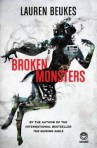
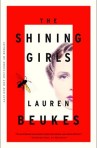
30SecondWorldzoo-city-award-coverfacebook-broken-monsters-sa--267x409CuttingRoomThe-Shining-Girls-Mulholland-cover-267x409

At Home in China

China1
Unexpectedly, it felt like a homecoming. Our Dragonair flight from Hong Kong to Beijing landed in the late afternoon. From the moment we left the arrivals hall something in the air made me want to curl up inside myself and simply return to where we came from. And it was not the chilling wind; nor the constant drizzle.

The grey architecture’s sharp and unimaginative lines, the bleak atmosphere, the poverty and hopelessness of masses, the condescending attitudes of people in any kind of authoritative position, the schemers operating below the radar of the system, and the uncanny impression of being constantly watched as if surrounded by an omnipotent, unpredictably scary, presence – almost instantly I was transported back to the time I was growing up in Eastern Europe still under the thumb of communist rule, before the political changeover of the late 1980s. Something engrained in my bones, but dormant for so many years, resurfaced in recognition.

The traffic policeman in charge of the taxi flow at the Beijing Capital International Airport shoved us aside and signalled for us to wait. It transpired that we were judged to have too much luggage to fit into an ordinary taxi, with no other kind of taxi in sight. There were three of us, each in possession of a suitcase and a piece of hand luggage. We tried to suggest that we could at least attempt to load the luggage into a car or separate and take two taxis, but both ideas were rejected. After a while of hopeless waiting, a rickety minibus arrived, clearly not an official taxi. The driver ‘generously’ offered to take us all to our hotel for about twice the usual fee. We did not have a choice but to accept.

An insignificant scene, one could say, but it was just the beginning. For the reminder of the trip I was constantly aware of this familiarity between the Poland of my childhood and the present-day China and I marvelled again at the destructive power of the ideology behind the resemblance, at how two countries of such diverse cultural backgrounds – Eastern European and Asian – could be reduced to eerie similarity under the pressures of a single system of thought.

But beside the ache in my bones, the experience of discovering a few spots of China was one of the most memorable ones of my entire travelling life. For the first time, I realised what Americans were doing when they ‘did’ Europe in two weeks. Our attempt was of a similar nature. My husband André Brink and I visited China to attend two literary festivals, in Hong Kong and Shanghai. The invitation was facilitated by a dear friend of André’s, Gary Kitching, who kindly offered to accompany us not only to the official literary events but on most of our journey through the Land of the Dragon. Apart from visiting the two festival cities, we used the opportunity to fulfil lifelong dreams of walking on the Great Wall and seeing the warriors of Emperor Qin Shi Huang’s Terracotta Army.

It was our honour and pleasure to share parts of the journey with another South African writer, Mandla Langa who, like André, was a guest of both literary festivals. Mandla Langa’s latest novel, The Lost Colours of the Chameleon (2008) won the Commonwealth Writers’ Prize for Africa Region in 2009. During the two festivals Mandla read from the novel and spoke very movingly about his work, the hardships of exile, and the tragedy of having to cope with his brother’s death at the hands of the ANC. At shared events, Mandla and André discussed the different sides of the literary and political struggle they were both involved in during apartheid. On a more positive note, they shared with their enthusiastic audiences their feelings of optimism about the explosion of creativity in the New South Africa.

In Hong Kong at one of the literary events, together with Mandla, André was interviewed by Rachel Holmes, author of The Secret of Dr James Barry (2002) and The Hottentot Venus: The Life and Times of Saartjie Baartman (2007). She reminded them of the occasion they had met in London when Mandla was still in exile. André described the encounter in his memoir, A Fork in the Road (2008). He went to see Mandla and Essop Pahad at the time. As he took his leave, André was offered a packet of ANC coffee from Kenya and was told that they would drink it together when they were all allowed to come home “one of these days”. “The coffee will still be fresh,” André was reassured. Mandla accompanied him to the tube. André recalls in the memoir: “I walked huddled over the small packet I was carrying like precious loot under my arm. Mandla walked inclined towards me as if he, too, wanted to claim possession. Perhaps we were both imagining the flavour of that coffee: the smell of tomorrow. One of these days.”

For both of them, and for myself, the time of tasting freedom has arrived when at last we all found ourselves living in democratic countries, post-1994 South Africa and Austria respectively. But while we were travelling in China, signs of the ongoing repression and fear were everywhere: the Rio Tinto trial began in Shanghai amongst secrecy and doubt in the fairness of the process, Google was finally on its way out of the country refusing to accept the censorship imposed on the search engine, and an interview with the outspoken Chinese artist and activist Ai Weiwei, a victim of censorship and state violence, was repeatedly shown on BBC World. Very tellingly, there were hardly any Chinese readers attending the festival events.
China3
Even before arrival in the country, while applying for our visas we were told not to mention the fact that we were writers, academics or had any associations with the media. This might have either endangered the positive outcome of the application or at least made the process much more tedious, we were warned. So, André travelled as a retired teacher, I as a housewife. Neither was a direct lie, but both statements were far removed from the truth. The application went smoothly. To our great surprise, the Chinese Consulate in Cape Town even distributed free DVDs about the Dalai Lama. We did not dare take one when applying for the visa, suspicious of the unexpected offer (a possible test of the worthiness of the applicant?), but could not resist bringing it back home once the visas had been granted. We were curious whether it was a piece of propaganda. But it turned out to be shrewder than that. We only managed to watch thirty minutes of what seemed a factually correct documentary. Then we fell asleep; it was so boring. Clever, we thought.

We also discovered that in spite of being widely publicised in the print and online media, the literary festival in Shanghai we attended was strictly speaking illegal. This kind of schism is also part of the system I remembered from growing up. You constantly live your life on the border of legality. Your actions are tolerated until you overstep a line. Where that line is precisely located you never know until you cross it, and then all which has been ignored till then will be counted against you.

As a special administrative region, reflecting the policy known as “one country, two systems”, Hong Kong still enjoys a high degree of autonomy in all areas except defence and foreign affairs. The city hosted its literary events officially. Celebrating their tenth anniversary with a bang, the festival organisers invited the likes of Alexander McCall Smith, Junot Díaz, Louis de Bernièrs, Linda Jaivin, and Mo Zhi Hong whose debut novel The Year of the Shanghai Shark (2008) won the Best First Book for South East Asia and Pacific of the Commonwealth Writers’ Prize 2009 (the same year as Mandla won with The Lost Colours of the Chameleon).

The Hong Kong and Shanghai festivals often collaborate in bringing authors to the their audiences. So some faces were more or less familiar when we arrived in Shanghai. Contrary to expectations, literary festivals or conferences seldom offer good opportunities of getting to know other writers, especially if one is rather shy by nature, which, maybe surprisingly, many writers are. In spite of many organiser’s efforts to put them into social situations, writers often end up lonely in hotel rooms, passing the time from one event to another with TV or mini-bar content (more often than not, both), or if the gatherings take place in interesting settings, desperately trying to see as much of the area as possible. The latter happened to us, when André and I spent every free minute exploring Hong Kong and Shanghai instead of listening to other guests of the festival, no matter how alluring.

We did however, even if only briefly, catch up with Linda Javin, Louis de Bernièrs, and Mo Zhi Hong in Shanghai. On the terrace of the fabulous “M on the Bund” Restaurant (venue and one of the main sponsors of the festival), over James Bond martinis and the exotic Dragon’s Pearl cocktails we listened to the wonderfully flamboyant Linda Javin, author of the best-selling A Most Immoral Woman (2009), talking about her latest project, a traditional Chinese opera based on a story from a Ming Dynasty novel for which she has been asked to write the libretto. We actually managed to attend Louis de Bernièrs’s official event during which he delighted the audience with a reading of “Obadiah Oak, Mrs Griffiths and the Carol Singers”, a story from his recent collection Notwithstanding (2009), and charmed us all with his infectious sense of humour. With Mo Zhi Hong we shared a taxi to the airport in Shanghai and after a brief conversation were very sorry not to have been able to spent more time in the company of this erudite young man. The festival over, he was on his way back home to Auckland and we were travelling to Xi’an for our appointment with the world-famous Terracotta Army.

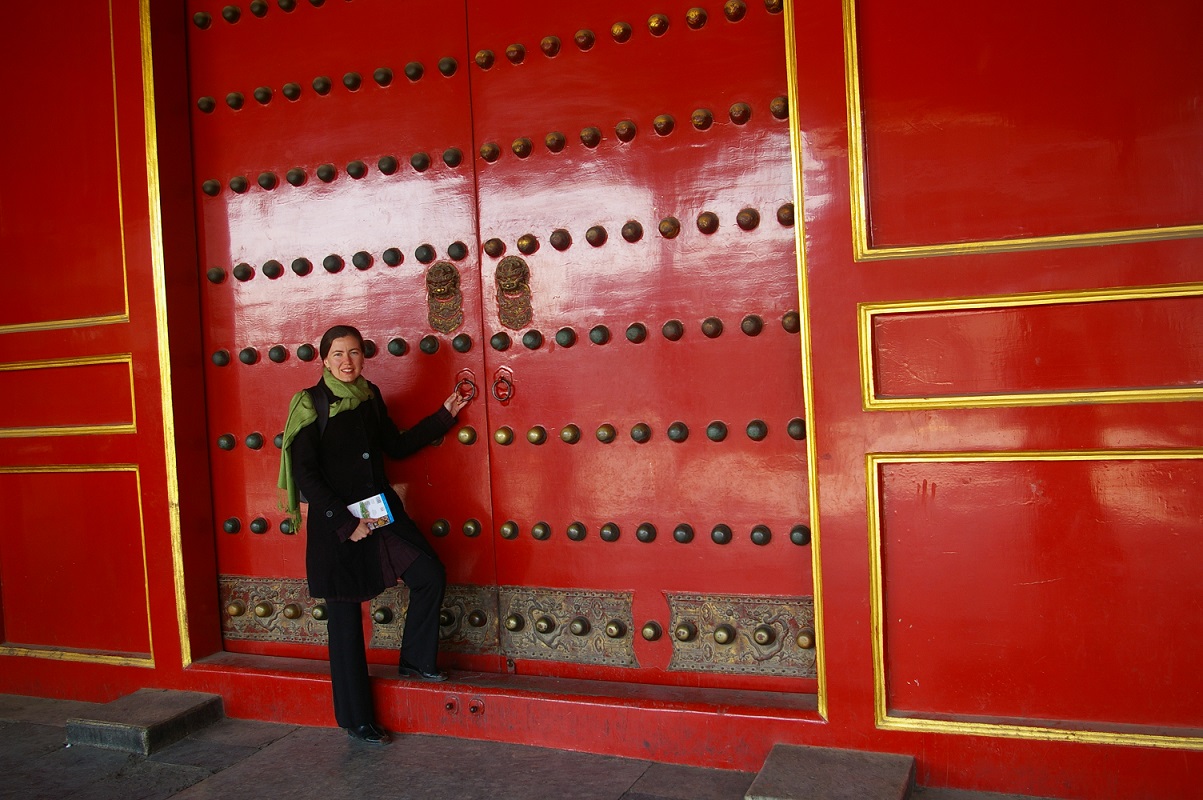
One of Emperor Qin Shi Huang’s megalomaniac ventures, the terracotta warriors are a sight to behold. What struck me most about visiting China’s well-known places of interest was that in spite of seeing them numerous times on television programmes or in photography books, one is not prepared for their size. Constantly I had to readjust the images in my head to the real thing. The Great Wall of China (also Emperor Qin Shi Huang’s brainchild) does not impress with its height, as I expected. It is actually quite low and narrow for most of its unfathomable length. But when you stand on one of its vantage points and it stretches away from you in both directions over the mountain ranges like a ribbon carelessly discarded on the seemingly impenetrable landscape, it takes your breath away. In Beijing, the infamous Tiananmen Square is so vast that one can hardly see from one side of it to the other and walking across it in bitter cold was quite a challenge. The Forbidden City is actually a city within the capital. We began our tour of it at the northern entrance and it took us over four hours of almost continuous walking to reach the South Gate where Chairman Mao’s portrait overlooks the scene of the terrible massacre which took place in 1989.

Similarly, no matter how often one had seen them on television, the enormous excavation pits near the city of Xi’an where the Terracotta Army stands exposed after thousands of years of existing only in legends, are simply awe-inspiring. Each individually crafted and meticulously reassembled after centuries of being buried in mud, the warriors testify to the outrageous and murderous dreams of a single individual. Thousands of craftsmen and workers were tortured and killed during the execution of Qin Shi Huang’s vision of the army that was to protect him in the afterlife. Since their discovery just over thirty years ago, thousands of archaeologists, scientists and helpers have been meticulously putting the warriors’ remains together to make them, and what they stand for, known to the world. I walked around the pits and was terrified by the hunger for power and greatness which called this army into being. It was a chilling experience, but I admired the incredible reconstruction work on site and the amount of knowledge experts have gathered about ourselves and our past from the excavation pits. If only we would learn from it.

Other ‘visionaries’ ruled the land. After the so-called Cultural Revolution of the late 1960s when China’s innumerable treasures were destroyed and a whole generation of artists annihilated, the country is in the throes of another ‘cultural revolution’, this time brought about by Big Money and Big Mac. Like many other fast-growing economies, China is in constant flux, its authenticity challenged by the same forces which are at work in South Africa and other westernised parts of the world. Recently modernised for the Olympic Games, China still looks like one gigantic building site. Entire cityscapes are dominated by high-rise flat buildings which function as dormitories for the expanding population. Transport networks, shopping malls, factories, office buildings, and all kinds of institutions rise from the ground like mushrooms after the rain. The one constant is forests of cranes. Higher, bigger and faster seems to be the motto for everything. I can imagine that architects must have a field day in a country where their imaginations are required to go beyond all limits.

One of the most spectacular modern sites we saw was the architecturally mind-boggling Pudong skyline in Shanghai, the characteristic Oriental Pearl Tower dominating the scene. Over the last two decades the district has become home to China’s commercial and financial buzz. Just across the Huangpu river from Pudong is Shanghai’s best-known historical landmark, the Bund. While we were visiting, we witnessed the exciting preparations for the World Expo all along its beautiful promenade.
China2
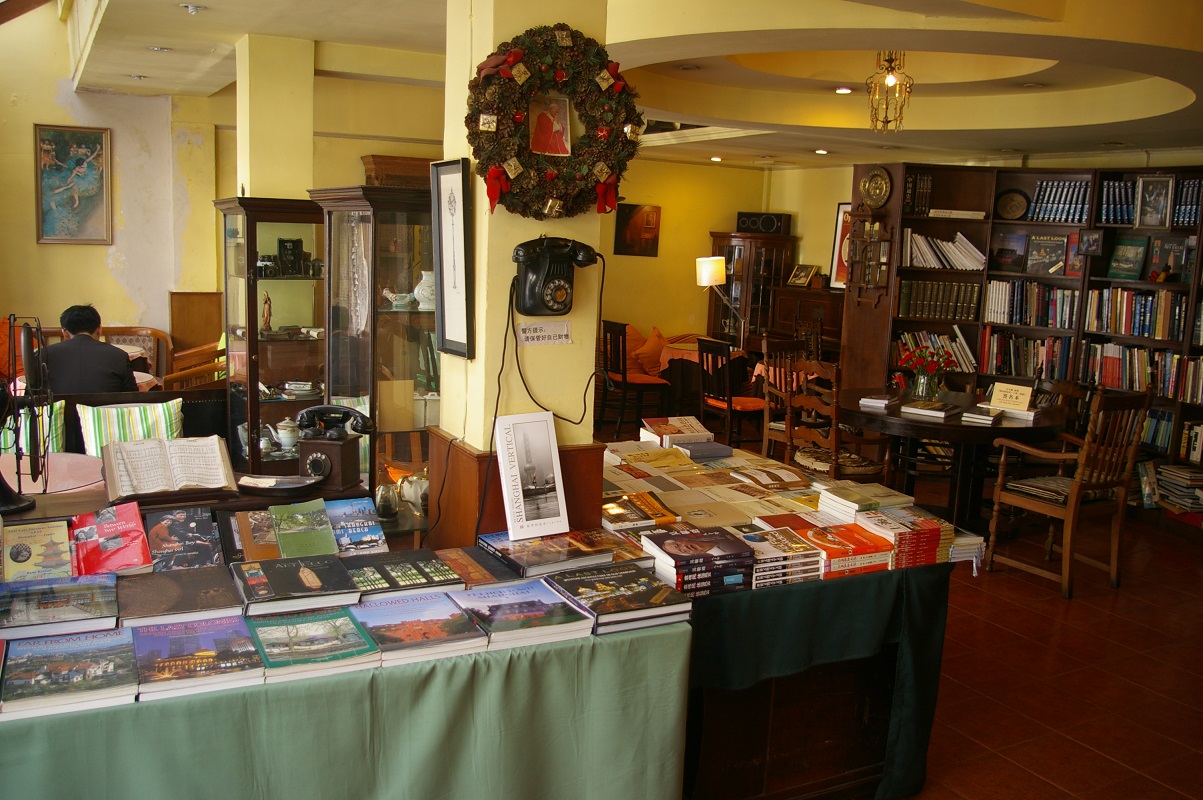
Yet, among all the splendour and chaos, the one place in China that is truly lodged in my memory is the Old China Hand Reading Room, a small antique book-cum-tea shop located in one of the quieter streets of the French Concession, another of Shanghai’s historical districts. It was founded by photographer Deke Erh and writer Tess Johnston and strikes the perfect balance between past and present, between Chinese and Western influences. Furnished with antique furniture and stocked with hundreds of old and new publications as well as many quirky trinkets of local and international origins, the shop is a must for all tea and book lovers. They also serve excellent cappuccinos in ancient porcelain cups. Just the thing after a long Sunday morning walk through the Concession, as André and I discovered.

Everywhere else we had what one really should have while travelling through China: tea. It is served at every opportunity, its distinct flavours and the rituals to bring them forth cultivated through millennia-old traditions. I have always loved tea but never appreciated it as much as after the visit to China. The souvenir I cherish most from our visit is my collection of exquisitely embroidered, colourful silk pouches from the Laoshe Teashop in Beijing which was recommended to us by our dear friend Alex Smith, the author of the travel memoir Drinking from the Dragon’s Well (2008). Inside the pouches conceal such wonders as Dancing Fairies, Love at First Sight, Birds of Heaven, and Whispering Flowers. If you put them in a transparent teapot and pour mild boiling water over them, the little green tealeaf bundles which are known by these fantastic names open up like blossoms and release a string of flowers – jasmine or lily – from their centre. The taste is as marvellous as the spectacle.

It is good to be back in Cape Town, where I’m truly at home, and to enjoy a bit of Chinese magic. Not all can be lost for a people who can create such perfect little artworks in a teacup. They may yet survive the dreams and visions of ‘Great Men’. And in spite of everything that is going wrong in our own country, I gain strength from the unsurpassed surge of creativity we are experiencing at the moment in South Africa. I just hope that my bones won’t begin to ache here, and I wonder whether I will ever be granted a Chinese visa again. Or will this article be placed in a file with my name on it, hidden away in some obscure cabinet?

First published in WORDSETC 8 (August 2010).

Writers’ Other Lives

Books in Mafra
“We pay our writers to write,” my Norwegian friend Kristin said as if it was the most obvious thing in the world and enlightened me about the Statens Kunstnerstipend, a “grant and guaranteed income programme with the objective to give creative and performing artists the opportunity to actively pursue their artistic career and to aid younger artists in establishing themselves as artists.” The programme offers diverse short and long-term grants as well as one-off bursaries for travel, study or material expenses for artists based in Norway. I was mostly fascinated by the “guaranteed income” support scheme: established artists can apply for this to provide them with the financial stability necessary for having “artistic enterprise as their primary form of occupation.” And the crux is that the recipients retain the right to this financial stability (paid monthly) until they reach retirement age.
Norwegians seem to take a much-quoted imperative to heart: “If you think culture is expensive, try ignorance!” The objective of their support programmes is to ensure that individual artists are able to contribute “to a diverse and creative wealth of art” in Norwegian society.

Listening to Kristin and reading about Statens Kunstnerstipend, I thought of the many writers I know in South Africa who struggle to make a living while pursuing their creative careers. For most, the situation is not desperate, but almost all pay their bills by other means than their creativity. I decided to approach a few of them to discuss the dynamics involved in being a writer and having an ordinary day job. Their valuable comments were often surprising and opened up many engaging ways of thinking about this topic.

We tend to think of creative people rushing home after long hours of suffering in their dreary jobs to lock themselves up in that special room of their own and devoting the rest of their waking hours to the Muse. What transpired from my interviewees is that, on the contrary, even though it is sometimes difficult to juggle their paid and creative work, they actually enjoy their money earning jobs just as much as they do their creative ones. Only the degrees vary.
Red InkAngela Makholwa is the author of the urban thriller Red Ink (2007) and the fresh-off-the-press chick-lit adventure The Thirtieth Candle. When she was fifteen, she decided “quite firmly” that one day she would publish a novel with “an authentically South African story”. Today, she is not quite sure anymore what that means, but she is definitely somebody who knows what she wants and how to get there. She runs Britespark Communications, a successful public relations and events management agency in Johannesburg, and feels fortunate to be “doing something that allows her creativity to flourish”.

Siphiwo Mahala is in a similar position. As Deputy Director for Books and Publishing at the Department of Arts and Culture, he works in his field, which gives him great satisfaction. He has always been passionate about reading and went on to study literature at university, finishing with an MA in African Literature at Wits. When he began publishing short stories, the overwhelming joy of “seeing his creative writing in print” inspired him to pursue this avenue further. He received the 2006 Ernst van Heerden Creative Writing Award for his first novel, When a Man Cries (2007), an incisive portrayal of township life in South Africa. He says that his day job is “essentially the best one that any literary enthusiast could do in the public service”. It includes the promotion of the culture of reading and writing and developing a sustainable book industry that encourages equitable development of all local languages: “The job itself is not too far from my personal ambitions hence it is so fulfilling.” Only drawback: “When a job is a passion it means that when something goes wrong it doesn’t end in the office, you take it home and your family falls victim of a situation they didn’t cause.”

When a Man CriesInspired by their day jobs, Angela and Siphiwo find that they can well manage the two spheres in their lives, creativity and work. However, sacrifices have to be made, as Siphiwo notes, and one has to accord creativity the time and space it deserves. Only then can you also “expect your potential reader to skip their favourite soap opera, miss hot gossip, and let the pots burn while reading your book,” he says.
Would they give up their jobs to write fulltime if they could make a living out of it? An emphatic yes in both cases in spite of the aforesaid. For Angela writing is “an esoteric experience” and she “envies those who can afford to do it fulltime”. Siphiwo considers writing his “first love”, but he is too realistic about making money out of it: “For as long as the culture of reading remains as low as it is currently in the country, we are not likely to have more than 10% of our writers writing for a living.” He might not write for a living, but he insists he “lives for writing.” Financial support from the government for writers would be welcomed by both, although Angela feels that it could make her feel obliged to write “about issues of enormous political or social impact”, while Siphiwo believes that any such support could truly work only with “a national writers’ association firmly in place.”

In their considerations, both authors allude directly and indirectly to an aspect of state-sponsored support for artists about which Sven Eick, author of the socio-critical novel Apetown (2007), feels strongly: “I am firmly behind the notion that artists should challenge society rather than attempt to have society endorse their work.” He also believes “that the tax-paying public should have the right to choose whether or not they want to support writers, i.e. by buying their books, and that it’s not the government’s business to fund writers on their behalf.” Sven highlights the corruptive aspect of making money with creativity: “If writing novels were to become my only source of income, then inevitably I’d begin writing novels to make money, and that would represent a corruption of the creative process for me. I think a 50/50 balance would be about right.” By which he means that he’d also “always want to do something other than writing.”

ApetownSven was working on cruise lines when he realised that he was destined to become a writer. He wrote regular updates of his experiences which attracted “a small, but dedicated following.” He knew then that he should invest more “energy” into writing. Today, he earns his living as a copywriter for a network of sports websites: “I find many aspects of the sports I cover interesting. Sport is really about narratives, and despite being somewhat saturated by the amount of sport I cover I still find these narratives interesting and engaging.” He wants to continue with a similar but more creative line of work in the future: “I’m interested in the business aspect of the internet, how to keep content free and informative whilst still generating revenue using non-intrusive and targeted advertising. However, I’d obviously prefer to write more creative content than the grunt work that occupies a lot of my time.” And even though he would not accept financial help from the government as a writer, he wouldn’t mind making money out of books, so that he could continue to write at leisure. “I guess this is any writer’s dream,” he says. “I just don’t want to become a book-a-year Wilbur Smith type.” He also suggests that “instead of governments paying writers it might be useful to fund initiatives like the Boekehuis in Calvinia, or other low-cost writers’ retreats where we could go away to write at no expense.”

Other writers would endorse state-funded grants, but like Sven, they cannot imagine giving up their other occupations in order to write fulltime. Multitalented, with degrees in drama, journalism, and creative writing, Willemien Brümmer always knew that she wanted to be “An Artist”, but it took her a long time to find her individual path. She published her debut short-story collection, Die dag toe ek my hare losgemaak het (The Day I Let My Hair Down) in 2008. She actually writes for a living, writing feature articles for By, the Saturday supplement of Die Burger, Beeld and Volksblad. Almost stumbling into journalism by accident, Willemien felt in the beginning that it was not creative enough; “it felt like stealing,” she remembers, and the wrongly perceived lack of creativity made her ashamed to call herself a “journalist”. She realised how inseparable journalism and creativity were only fairly recently. A few years ago, while completing her MA in Creative Writing, she wrote profiles of people “in the news” for Die Burger’s weekly column Oop Kaarte and recognised how similar the methods for writing articles and writing short stories were. The only difference is that “reality is often far more interesting than anything I can come up with,” she admits.

Die daagThis dimension of her work is decisive. She draws inspiration for her fiction from the stories she encounters in real life: “In my next book, fiction and journalism come together closely.” Still, writing fiction feels like “chocolates after dinner”, like “spoiling yourself,” says the Calvinist in her. As a perfectionist, Willemien invests a lot of time in each journalistic article, and despite having a lot of freedom in what she writes about, she sometimes feels torn between having to write about yet another subject and wanting to engross herself in the one she is currently working on. “It’s simply not enough to have only one week to write about somebody like Sindiwe Magona,” she laments about a recent assignment. “Nor is it easy to distance oneself from a story one is working on for a couple of months. It’s like falling in love; turning away can be a painful experience which also poses a lot of ethical questions. It’s not a natural situation; one has to become calculatedly distant and that’s not the kind of person I really am.” In this respect, Willemien would not hesitate to accept a grant to support her writing, journalistic and fictional: “It would allow me to concentrate, work in-depth, on both. In an ideal world I would write a book about each subject.”

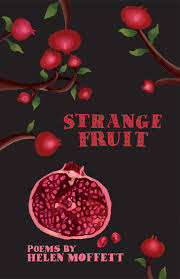
Similarly, in an ideal world, the talents of Helen Moffett would not go to waste. “I wear many hats,” she writes on her blog. It would take an entire walk-in cupboard to display all, or at least some, of them: academic, copyeditor, mentor, teacher, cricket expert, and most recently the co-author of Bob Woolmer’s Art and Science of Cricket (2008) and author of the sensual poetry collection Strange Fruit (2009). With four academic degrees and thirty years of experience, Helen does not have a regular income because her health dictates that she work as a freelancer. Academic editing for clients all over the world pays the bulk of her bills. There is also fiction editing, manuscript assessment, training (writing workshops for academics and NGOs), copywriting, ghost-writing, and occasionally a life-saving royalty cheque courtesy of one of her prescribed academic titles.

As for Willemien, creative writing feels to Helen like “sitting down to pudding”. She has her notebook always at hand, because “poetry happens anytime”, and she has enough notes for stories, novels non-fiction to keep her busy for the rest of her life, if she could only afford to give up her bill-paying activities, especially academic editing. “If I have any kind of break, I write like mad,” she says with a dreamy smile on her face, “and I eagerly accept commissions for fiction. This means I get a deadline and the piece must be finish on time, allowing the work equal value and importance. It always feels like a holiday.”

Strange FruitHaving constantly to worry about making a living, diminishes Helen’s potential as an academic as well as a creative fiction and non-fiction writer. She says an unambiguous yes to any grants for writers, however modest. Many wonderful opportunities slip by her because she cannot afford to invest her energies in them. In the last seven years, she has been trying to write a book on gender violence, a crucial topic in contemporary South Africa, and one that Helen is an expert on. “It’s tough to write; I’m only able to make any progress when I get a bit of funding for the project, but I still have some way to go.” Asked what she would do if she didn’t have to worry about the end of the month, she says she would write and devote more time to teaching: “I love teaching, but there is so little pay in it. Yet, I feel that it is my moral responsibility to transfer my skills. I just can’t lock up all that education and experience I’ve been fortunate to acquire over the years; not being able to pass it on is terrifying, but I have very little choice.” Even so, she insists on teaching a few courses a year, however poorly paid.

Drinking from a Dragon's WellIn comparison, Alex Smith fully intends to “make a living out of creative writing”, but she also wants to continue working in other areas as long as they do not sap her creativity. At present, she is a tutor for a novel writing course and a bookseller at Exclusive Books. “Working with books keeps me grounded. I’m a story addict and seeing the dozens of new titles arriving every day is heartening, but it also doesn’t allow for any illusions of grandness about writing. I feel writers and booksellers are readers’ servants.” Alex’s grandfather was a dedicated book collector, travelling to London to buy everything from antique tomes to rare first editions. She grew up surrounded by books and being around them makes her “immeasurably happy.” She has authored two herself, the novel Algeria’s Way (2007) and the travel memoir Drinking from the Dragon’s Well (2008). A third, Four Drunk Beauties, will be published next year. Talented and prolific, with a Creative Writing MA under her belt, Alex wouldn’t say no to financial support for creativity, but doesn’t feel anybody owes her anything. Having studied business science, for some years Alex earned a good salary as a successful creative and marketing director of a textile company. “But I always wanted to be a storyteller,” she stresses. “The way things are now, I’m free to write, and the price is debt, but it is my choice to be in this position. My heart’s desire is to explore real and imagined places, and play with turning those into stories.” Knowing her literary output and determination, one cannot help but feel assured that she will succeed at what she does with such unmistakable passion.

One author who has managed to write himself out of dire poverty is the inspirational Zanozuko Mzamo, or Zyd, as many know him. He is the author of a motivational book called A Year of Staying Positive (2007). Zyd grew up in Johannesburg, went into exile in the 1970s, studied economics in Zambia and Bulgaria, and returned to South Africa in the early 1990s to work in commerce. He was deeply unhappy with what he was doing, struggled to keep working, and eventually ended up broke and homeless. It was devastating, but the experience set him out on a journey of “soul-searching and gift finding”. He asked himself, “Who am I? What am I here for?”

A Year of Staying PositiveTo find answers, he visited libraries, fell in love with self-help literature, and discovered writing as a way of encouraging people. In 2005, he applied for a job at the community newspaper City Vision and even without pay persisted in publishing a weekly motivational column that garnered him a lot of recognition. He received so much positive feedback from his readers that with the help of Colleen Higgs and the Centre of the Book, he decided to self-publish 52 of his articles in book form. “A couple of publishers turned me down, but I wouldn’t be deterred, not even by the initial scepticism about the book in my community.”

His persistence and initiative were recognised by Carl Wesselink of the Kuyasa CDM Project (developing energy efficient housing in Khayelitsha). Carl Wesselink saw that Zyd’s book could inspire people and offered to buy two thousand copies of it to distribute in Kuyasa as well as to pay Zyd’s salary for a year. Today, Zyd coaches people in personal development and self-improvement in Kuyasa. He considers reading an indispensable ingredient of both. His latest initiative is the Teach a Child to Read Campaign, and he has two more books on the way. He finds the idea of state-funded support for his writing intriguing, but is scared that it would make him lazy: “I like challenges,” he points out. “When I was about to drown, I found my calling,” he says, relaxed and confident. “I hope to sell a million copies of my books.” His mere presence inspires. It’s easy to believe that he will make it.

All seven authors I spoke to seem to have found the right niches for their many talents. Financial support for their creativity wouldn’t drastically change their lifestyles, just utilise their talents in more efficient and rewarding ways. They all seem to have discovered what Zyd writes in one of his essays: “Life is what you make it.”

Sources:
http://www.kunstnerstipend.no/english/

First published in WORDSETC 6 (September 2009).

Review: Adults Only – Stories of Love, Lust, Sex and Sensuality edited by Joanne Hichens

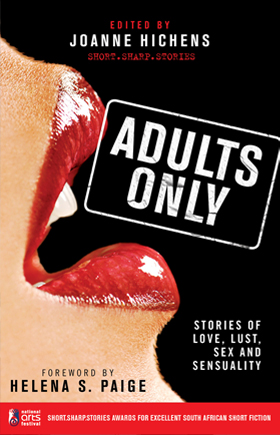
adultsonlycoverThe stories in this anthology have been selected from some 150 entries submitted for the second annual Short.Sharp.Stories competition. As with all such collections, the quality of the twenty-two individual pieces varies. The authors range from first-time-published to award-winning practitioners of the genre. Additionally, in this particular case, every reader’s sexual preferences will strongly influence their reading of these diverse contributions. Sex in all its permutations is a highly personal experience, as is writing and reading about it. Hats off to the editor and all the authors for their daring explorations of the mine-fields of our sexualities.

As Aryan Kaganof’s narrator states, “there is no love that is not an echo”; he also understands that “real sex happens in the head”. Erotic stories are like lovers. They will either satisfy you or leave you wanting.

No doubt a few of the contributions will bring many readers out of their comfort zone and will have you reading through your fingers. Others will excite you. Some will delight with their humour or tenderness. There is a lot to be learned. Who would have thought that Woolies would emerge from the anthology as the preferred place of choice for sexy lingerie shopping? Or that the smell of semen reminds some of peeled potato? I didn’t even want to know what blunt knives could be used for. Every reader will find something to please or disturb them. No matter what, brace yourself: Adults Only is one hell of ride for most of its journey.

After reading the opening story, Alex Smith’s “The Big Toad”, I knew that I would never be able to look into my kitchen cupboards without apprehension, and perhaps a tiny bit of envy. I might have to get some Jungle Oats to liven up the scene inside my predictable cupboards. Arja Salafranca’s “Post-Dated Sex” made me look at post-it notes with fresh eyes. Her story approaches that beautiful space between lovers where words “dissolve” and become something “instinctive that moves against them.” Beauty is also the subject of Donvé Lee’s “The Mirror”. Lee is the author of An Intimate War (2010), one of the most erotic local novels of recent years. Her story shines with a similar intensity and rare honesty.

The competition’s winning entry, Nick Mulgrawe’s “Turning”, is a well-written and a worthy choice, but it did not move me as much as Ken Barris’s captivating “Louka in Autumn”, or Anthony Ehler’s shattering “Breaking the Rules”, or Alexander Matthews’s illuminating “Entropy”. Efemia Chela is a young writer to watch. Her “Perigee” is as bold and astute as her recently Caine Prize-shortlisted “Chicken”. She writes a lush and supple prose that is a pleasure in itself.

The language of sexuality is a very tricky thing to master. What will arouse one person, will do nothing for another. It’s so easy to fall into clichés and vulgarity. So it was quite refreshing to smile at phrases like “sex has always been at best pedestrian – Tim walks all over me” (in Christine Coate’s “The Cat’s Wife”, a tale of a bored wife seeking out adventures which will make her fly, literally and otherwise), or to admire the eloquence with which Justine Loots describes the sadness of an encounter between a prostitute and a young inexperienced man: “One of his wings, if he has wings at all, is torn at the edge. It won’t affect his flight much, you won’t even see it, but it’s there all the same.” The magic realist twist of Loots’s story “Uncaged” brings a wonderful dimension to the entire book. Strange beasts roam the world she creates; one can never be sure who is the prey and who the predator.

Not every use of the word “cunt” will have the same impact of Ian McEwan’s Atonement. And yet I was reminded of it in Aryan Kaganof’s powerful story “Time Out With My Destiny”. With every paragraph the first-person narrator lures you in, manages to surprise and capture something unique, and ends on a shattering note. A “wow story”, my husband said when I read it aloud to him.

The stories in Adults Only capture different aspects of our relationships: from tender intimacy to raw sex, and beyond, to abuse and rape. Wamuwi Mbao’s “The Ninth Wave” tells of that moment when wanting more from a relationship breaks the little that the other is prepared to give. Alan Waters’ debut story “A Threesome in the New South Africa” recounts a hilarious encounter between a middle-aged man, his younger girlfriend, and a Rastafarian of intimidating proportions. Not every longing is clearly identifiable. In Dudumalingani Mqombothi’s “The Streetwalkers”, the search for his lost father leads a man into the arms of a sex worker.

Adults Only is a fascinating read which showcases the diversity, audacity and vibrancy of South African fiction.

Adults Only: Stories of Love, Lust, Sex and Sensuality
Edited by Joanne Hichens
Mercury, 2014

An edited version of this review was published in the Cape Times on 12 September 2014, p. 10.

Our Literary Felines

Mozart after finishing Imre Kertész's Liquidation

Mozart after finishing Imre Kertész’s Liquidation

Inspired by a chat over dim sum and pu-erh tea with Alex Smith and her recent Three Cats blog post, as well as an exchange of cat photographs on twitter with Katherine Stansfield whose four Cats seem as literary as our Feline Family, I decided to share a few stories and photographs here with you.
Anya and Mozart supervising the writing of my PhD thesis on Nadine Gordimer

Anya and Mozart supervising the writing of my PhD thesis on Nadine Gordimer


MINOLTA DIGITAL CAMERA
André and I don’t want to remember the ordinary boring life we led before Anya and Mozart (named after Anna Netrebko and Amadeus – they were born in the Mozart year) arrived on a KLM flight from Austria in 2006. It was quite a dramatic occasion, because their documents got lost along the way and their trip was postponed by 24 anxious hours. However, at last we received the news that they were safely on their way and we could pick them up from the airport. The plane landed, all the passengers – human and non-human – deboarded and we were told that we would get ‘our dog’ in a few minutes.
‘But we are expecting two cats,’ we protested with hearts in our throats.
The man glanced at the documents in his hands, ‘Yeah, right.’
Minutes passed, we remembered the lost documents and began to prepare ourselves for the Rottweiler travelling on Mozart’s pet passport while he and Anya were on their way to Australia for all we knew.
The airport official returned empty-handed, but assured us that ‘our dog’ was on his way.
‘You mean our TWO CATS!’ we shouted, but he was gone again.
At last, he returned with a cage containing two very vocal Kitties we recognised. Relief, relief!
We had read all the available cat books and prepared the house for their welcome, stressing about getting it all right, but Anya and Mozart were completely blasé about the entire trip to the other side of the world. The moment we arrived home, we let them out of the cage and stood around helplessly, watching for any signs of distress. They stretched, looked around, located the litter box, did their business, saw the food and the water, helped themselves, sniffed a bit around, and literally twenty minutes later were both stretched out on our bed, looking up as if to say, ‘So, when are you coming to bed?’

Our lives changed that day. They became a million times better!

Anya with one of her favourite novels, Jeanette Winterson's Lighthousekeeping

Anya with one of her favourite novels, Jeanette Winterson’s Lighthousekeeping


To lose Anya to a speeding car a few months later was shattering, for all three of us, worst for Mozart of course, but we all didn’t know how to deal with the loss. I still see her strolling through the house, waving her gorgeous bushy tale as if the world belonged to her. It did. We miss her terribly.
Mozart showing Salieri the ropes of supervising my PhD on Gordimer

Mozart showing Salieri the ropes of supervising my PhD on Gordimer


After the tragedy, friends recommended a kitten. That is how Antonia Salieri came into our lives in 2007. Born in a sewage pipe, she was a bit of a rough diamond at first, and so tiny that she constantly got lost under Mozart’s feet when he tried to play with her. Eventually, out of desperation, I presume, not knowing how to engage her otherwise, he danced on the scratching pole for her, bum and tail high in the air like a real pro. None of us will ever forget the performance, least of all the flabbergasted Salieri. Once she recovered from the shock, they settled into a co-habitation of mutual respect. Salieri quickly realised that the circumstances of her birth shouldn’t stand in her way of behaving like royalty and she earned herself the nickname Principessa from an Italian visitor to the Brink household. She only eats her food if served on the kitchen table (Royal Albert plates), takes up half of my half of the bed (she doesn’t care much for my back problems), and screams at me if I misunderstand ‘Catlise’, the most important language for any human to understand. Any cuddles happen only and entirely on her terms when she is ready for them.
As a kitten Salieri read Olga Tokarczuk

As a kitten Salieri read Olga Tokarczuk


Salieri pensive after reading the Sunday newspapers

Salieri pensive after reading the Sunday newspapers


Salieri shocked how little she knew about Paris after reading The Most Beautiful Walk in the World by John Baxter

Salieri shocked how little she knew about Paris after reading The Most Beautiful Walk in the World by John Baxter


Salieri supervising André's translations of Ingrid Jonker's poetry for Black Butterflies

Salieri supervising André’s translations of Ingrid Jonker’s poetry for Black Butterflies

Salieri getting her teeth into Roget's Thesaurus

Salieri getting her teeth into Roget’s Thesaurus


Salieri trying to put some order into the chaos on André's desk

Salieri trying to put some order into the chaos on André’s desk


Mozart is our wanderer and partly adopted the neighbours as his other family. He is very wise, speaks Polish, German, English, Afrikaans, and Catlise fluently, understands many more languages and loves David Attenborough bird documentaries.
Mozart contemplating whether to read Granta magazine or Gordimer's Selected Stories next

Mozart contemplating whether to read Granta magazine or Gordimer’s Selected Stories next


Mozart searching for a dictionary

Mozart searching for a dictionary


We never thought of another cat to join the household, but when Michela Glinka was placed in my hands with a red bow around her neck and we were told that she desperately needed a home, we had no choice. She arrived in 2008 with a tummy problem and kept us awake the whole first night. Between trying to somehow help her and changing our bed sheets for the third time, I was ready to give her back, but when we eventually all fell asleep in the morning and woke up together, I knew she was here to stay. She is now sleeping on my chaise longue in one of her nests.
Glinka in a nest

Glinka in a nest


Glinka5
Glinka is the ultimate nest-builder, fresh laundry is best, but any blankets or quilts will do. We also call her our birdie-cat because she chirps like a little bird. The moment I set foot out of the bed in the morning, she will be running through the house, chirping along the way to welcome me into the day. We make coffee together and then return to bed where she will sit on my chest (as close to my face as possible), have rusk crumbs, and read with me or go over to André to check whether his book is more interesting. Most of my writing happens with her in my lap or somewhere in the room.
Glinka with Lauren Beukes's Moxyland toy

Glinka with Lauren Beukes’s Moxyland toy

Glinka pondering a word she'd just looked up in a German-English dictionary

Glinka pondering a word she’d just looked up in a German-English dictionary


Glinka inspiring my writing

Glinka inspiring my writing

Glinka and I writing in winter close to the fireplace

Glinka and I writing in winter close to the fireplace


Glinka is most famous in the literary circles around the world as the cat who inspired Kleinkat in André’s Philida (2012), recently also published in Taiwan (I love the cats on the different covers).
Philida3Philida2Philida cover TaiwanFrom the acknowledgements of my Invisible Others: “My furry family, Glinka, Salieri and Mozart, true experts at life, keep trying to teach me how to make the most of it; I hope they will succeed one day.”