Category Archives: Events

Worldwide Reading for Edward Snowden – Kalk Bay Books

Kalk Bay Books
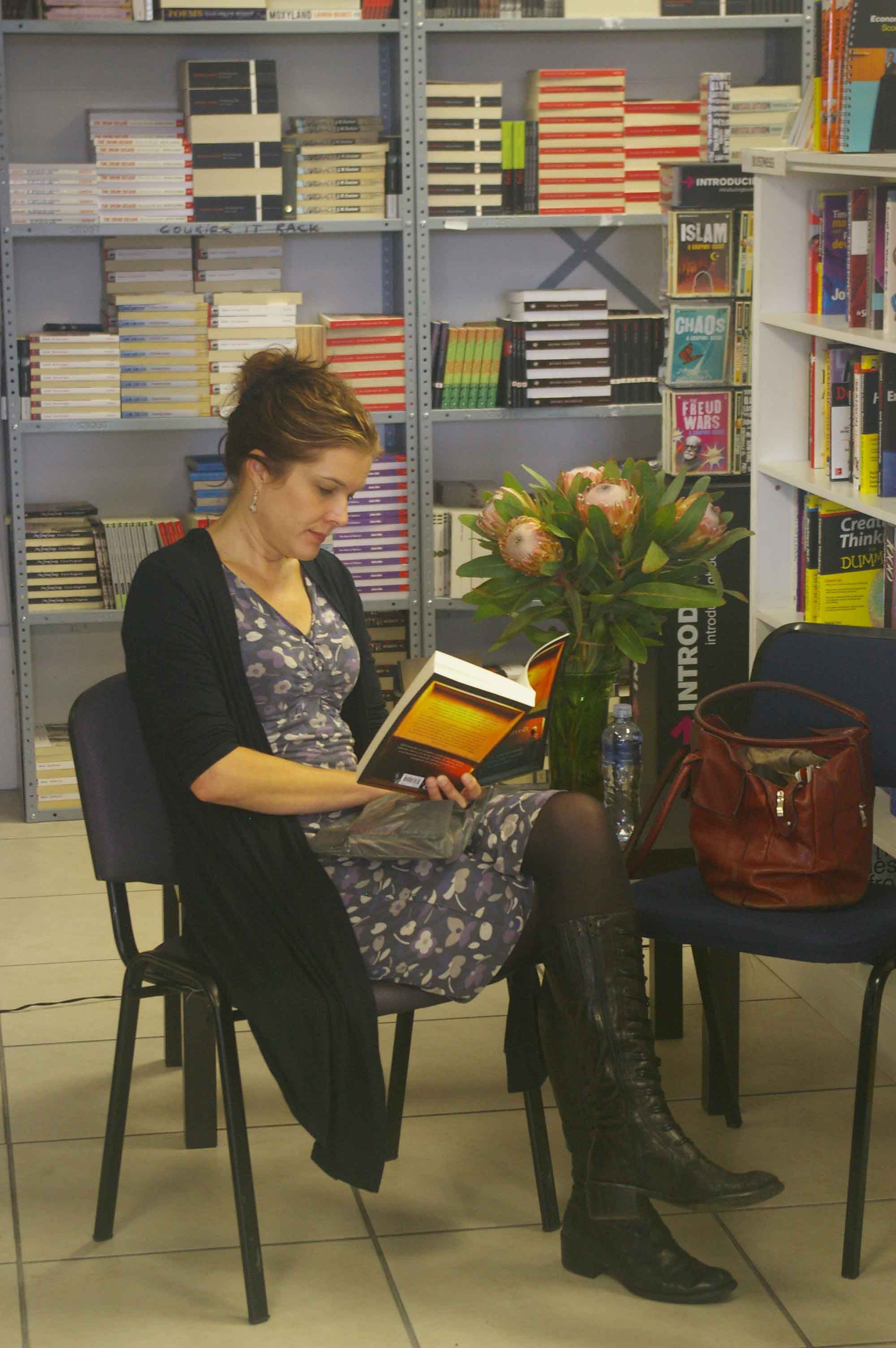
Happy to participate in the following event:

PEN South Africa invites you to a Worldwide Reading for Edward Snowden

The international literature festival Berlin (ilb) has called on individuals, institutions, schools and media outlets to participate in a worldwide reading of texts about surveillance, in support of Edward Snowden, on Monday 8th September 2014. Pen South Africa will be participating in this event, and the reading will take place at Kalk Bay Books.

Readers include:

Rustum Kozain – Liesl Jobson – Ken Barris – Karina Szczurek – Karen Jayes – Justin Fox – Ingrid de Kok – Diane Awerbuck – Brent Meersman – Andrew Brown – AE Ballakisten

Monday the 8th is also International Literacy Day. Please join us in support of writers, freedom and civil rights.

WHEN: Monday 8th September at 6.30 for 7pm
WHERE: 124 Main Road, Kalk Bay

RSVP: email

events@kalkbaybooks.co.za
or call 021 788 2266

Invitation: PEN South Africa

Open Book Festival 2014

Between 17 and 21 September the literary community in Cape Town will gather for the fourth Open Book Festival.
Open Book
In past years, apart from attending as a passionate reader, I have had the pleasure of interviewing some of my favourite authors at Open Book: Craig Higginson, Rachel Zadok, and Kgebetli Moele among them.

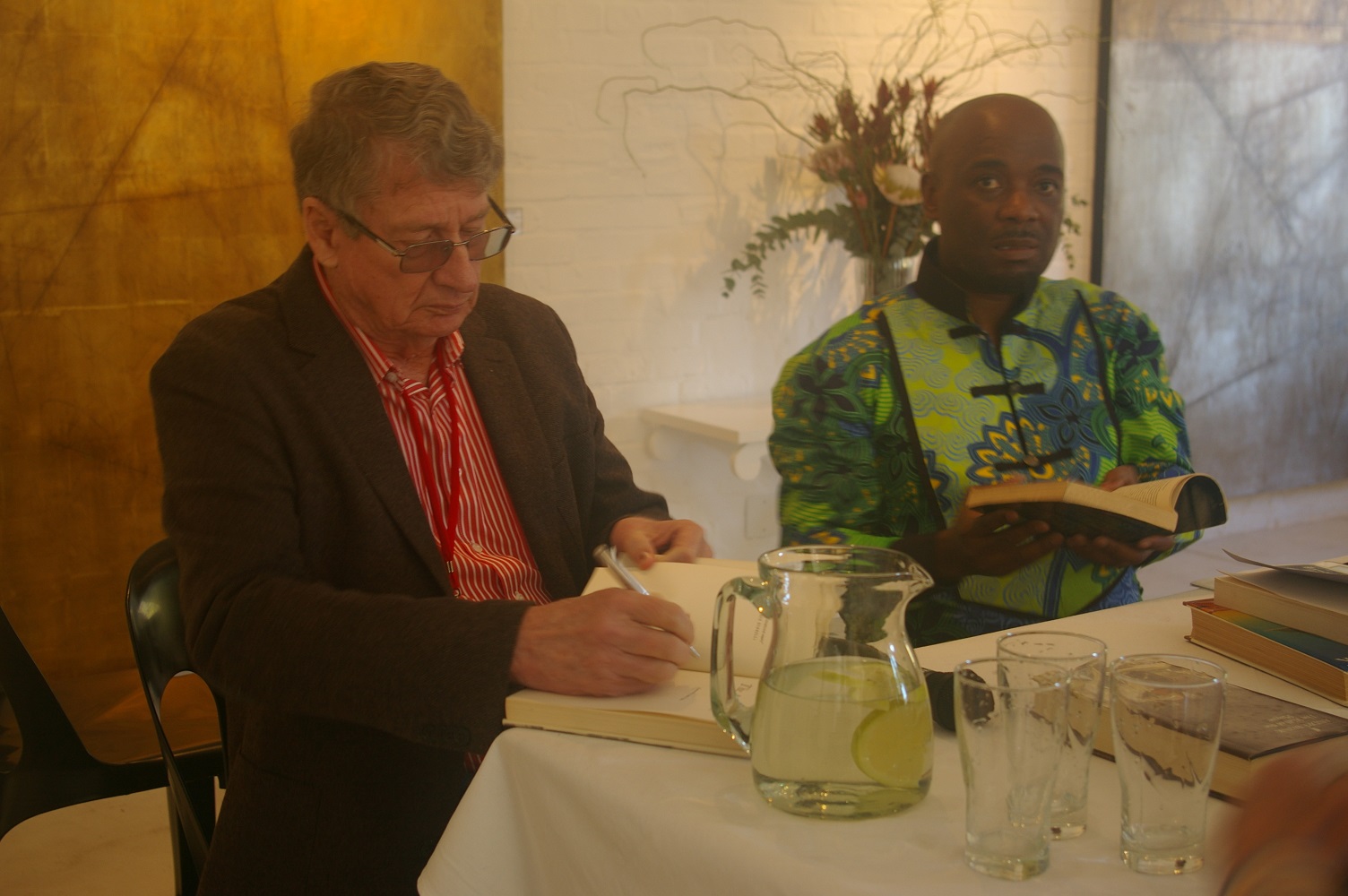
This year, I am in for another treat: I’ll be talking to Andrew Brown, Ekow Duker and Jonny Steinberg about the impact that the content of their books has on them (OFF THE PAGE, Friday 19 September, 4-5pm, Fugard Studio).

The day before, I’ll be chairing Open Book’s TRIBUTE TO NADINE GORDIMER with Imraan Coovadia, Billy Kahora and Margie Orford who will read from Nadine Gordimer’s work and share stories about her influence on their creative lives (Thursday, 18 September, 2-3pm, Fugard Theatre).

And last but not least, I’ll be the ‘little rat’ (=szczurek) next to two literary greats: Michiel Heyns and Damon Galgut. Our session – WRITING SEXUALITY – will be chaired by Karin Schimke (Wednesday, 17 September, 2-3pm, Fugard Studio).
Emma-van-der-Vliet-and-Patrick-DeWitt
For the full festival programme click here: Open Book 2014.
Imraan-Coovadia-and-Sarah-Lotz
Photographs: Open Book 2013.

Wednesday

When I get a little moneyEver since the summer of 1993, I’ve had this thing about Wednesdays. Special things used to happen to me on Wednesdays. But when I came to live in Cape Town, for a while Wednesday became my least-favourite day of the week. Fortunately, routines can change and miracles do happen. About two years ago, Wednesday reverted to being an ordinary day like any other. But yesterday, Wednesday hit again with the full force of all its magic and I was reminded of kisses, falling stars, the Baltic Sea, literary lectures, and the colour blue. Yes magic.

Most of my days centre on books, but yesterday brought with it an avalanche of bookish delights.

Beijing OperaRecently, I read a book which mentioned a dim sum restaurant in Cape Town with the glorious name Beijing Opera. I discovered my love of dim sum during a trip to China in 2008. It was soon afterwards that I met Alex Smith and read her wonderful account of travels in Asia, Drinking from the Dragon’s Well. She loves dim sum and tea as much as I do, so it was a no-brainer whom to invite to go with me on an exploration of Beijing Opera. We celebrated the recent publication of her latest YA novel, Devilskien & Dearlove, with some delicious gao, bao, and pu-erh tea.

I returned home already smiling to the fantastic news that one of my all-time favourite authors was longlisted for the Man Booker with a novel which I adore: Siri Hustvedt’s The Blazing World.

In the evening, on my way to Alex’s reading at Clarke’s Bookshop in Longstreet where Devilskien & Dearlove is set, I stopped at two of my other regular hunting grounds, the Protea Bookshop in Rondebosch and the Book Lounge, to pick up three books that have been waiting for me. I am struggling to finish Stephen King’s The Shining (I was expecting more creepiness; as it is, the only thing that creeps up on me on nearly every page is the word ‘overindulgent’), but I do not want to give up on him just yet, so I ordered the one book apparently every beginning writer should read: On Writing. I believe in second chances, and staying away from creepy hotels.

Divided LivesThe other two books were Astra Taylor’s The People’s Platform and Lyndall Gordon’s Divided Lives: Dreams of a Mother and Daughter. I have read all books written by Gordon. Her biographies of writers – Virginia Woolf, Charlotte Brontë, T.S. Eliot, Emily Dickinson, Henry James, and Mary Wollstonecraft – are simply brilliant. I don’t know how I would have survived many periods of doubt in the last few years without these insightful, empathetic, passionate, beautifully written books on lives of writing. Divided Lives (what a cover!) is different, because it is a memoir. I’ve been following its reception in the UK and have a feeling that I am in for a magical treat.

I found out about Astra Taylor’s The People’s Platform through the New York Times. I have been reading books about the internet for years in order to be able to participate more consciously in its evolution, i.e. to use it wisely instead of being stupidly abused by it. Not sure that I am succeeding, but in the words of Manuel (Fawlty Towers): “I learn, I learn!” Perhaps now that I have joined twitter I need the books more than ever, but so far, my experience with the service has been quite positive. I treat it like a radio station: I tune in and out when I feel like it. Occasionally, I tweet. I follow God and Jennifer Lopez, so I feel in safe hands. (I might even make it to Facebook one day – in the words of my compatriot Conrad: “The horror! The horror!”)

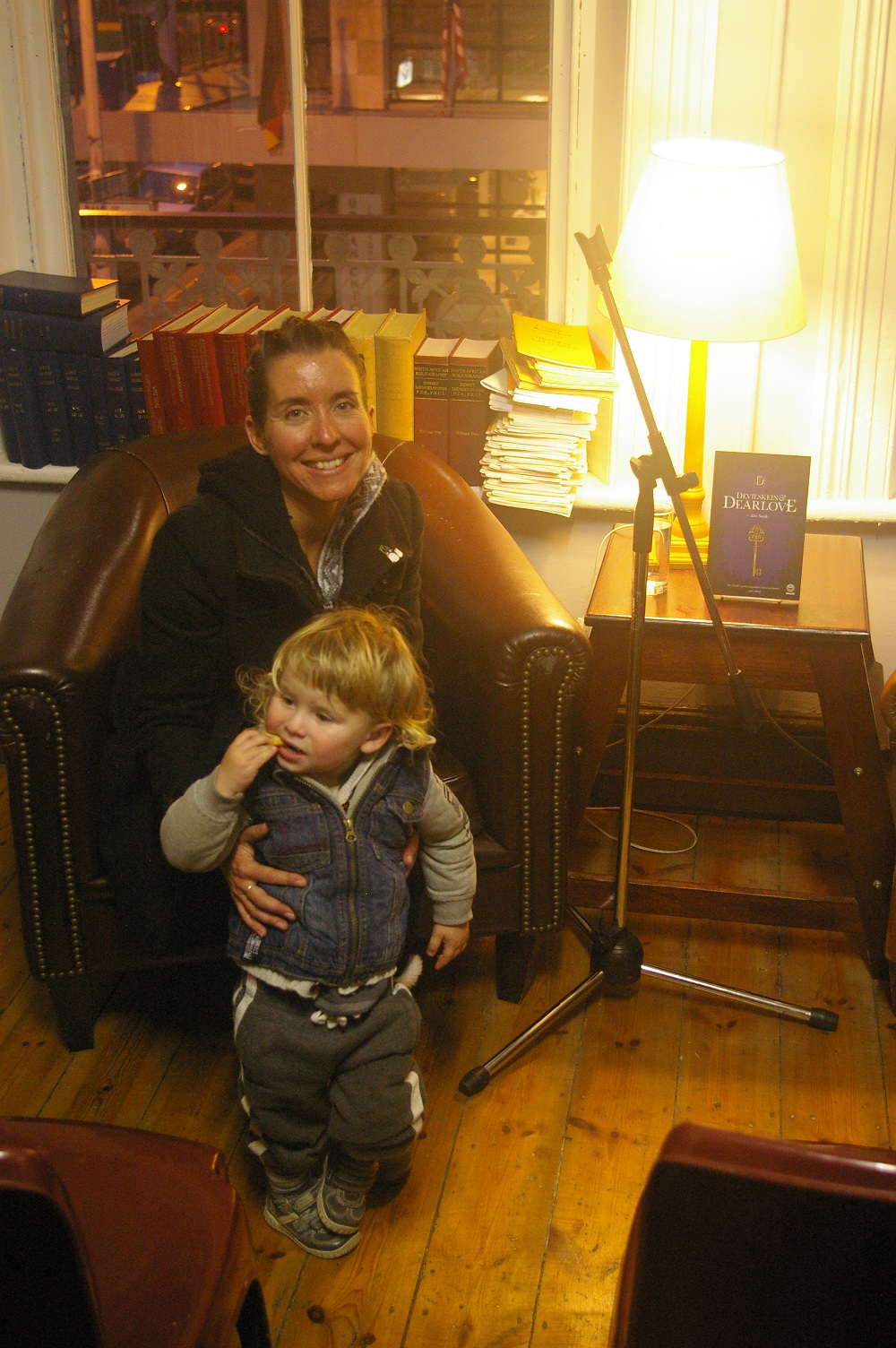
Alex with son Elias after her reading at Clarke's

Alex with son Elias after her reading at Clarke’s

So: There I was at Clarke’s Bookshop, still smiling from the dim sum lunch and the longlist announcement, with a handbag full of books I couldn’t wait to get into bed with, listening to Alex’s beautiful reading voice, surrounded by shelves and shelves of exquisite second-hand books, then chatting to friends and other book lovers about Stephen King and literary podcasts, when…DDDRUM RRROLL…I spotted a copy of Nadine Gordimer’s Face to Face (1949), the first book she ever published. And because my handbag was stuffed with only three books, and because after the shopping spree I was on the verge of being completely broke again (“When I get a little money…”), I bought it, of course.

I flew home on the wings of a booklover’s happiness and arrived to the news of winning a copy of Jane Austen by David Nokes in the Great Faber Finds Summer Reads Giveaway:

“We are about to shut up Finds Towers for the summer, pack a bag full of odd-sized vintage paperbacks and catch a plane to somewhere sunlit and contemplative. In case you haven’t got your own bag packed yet we can, perhaps, make it all a bit easier for you. We are giving away a copy of each of the following thirty (that’s 30) superior Faber Finds titles.”

What a way to end a Wednesday!

How did I find out about the giveaway?
On twitter.

I’m off with my own bag full of odd-sized books in search of a glass of sherry and a fireplace…

Happy reading everyone!
And have a great Thursday. (It’s Set Menu Dinner Club time at Beijing Opera tonight.)

Alex Smith

Alex Smith1A long time ago, behind seven mountains and seven rivers… That is how fairy tales begin in Polish. The words make me think of the time I met Alex Smith when she was looking for people to translate her Orphan’s Lullaby. I did the Polish version and we met for coffee at the Book Lounge to discuss the project and to get to know each other. It’s hard to believe that this already happened six years ago. Since then we have become friends and have supported each other through the ups and downs of writing careers.

We share a deep love for literature, even if our reading tastes often differ and the kind of stories we tell are sometimes worlds apart. The one thing which has always stood out for me in Alex’s work is her powerful, versatile, irresistible prose which has few equals in contemporary South African literature. I once told her that I would even read the history of toilet paper, if she were to write it. Her prose is like a cup of delicious tea, like a favourite bar of chocolate, like a warm breeze on a perfect day on the beach. One wallows in it with pleasure, no matter what her subject matter.

My absolute favourite of Alex’s books until now is Drinking from the Dragon’s Well (2008), a quirky travel memoir about the time she spent in Asia. I will never forget the kettle falling scene. Simply wonderful, like the rest of the book. I reviewed it along with her Four Drunk Beauties (2010) for ITCH.

Alex contributed a funny, moving story to Touch: Stories of Contact. She has been shortlisted for the prestigious Caine Prize. One of her more recent stories features in the Adults Only anthology and I am told that it is remarkable (can’t wait to get the book just to read it). She has been recognised for her work with the Nielsen Booksellers’ Choice Award, has been short-listed for the SA PEN Literary Award, won a silver award in the English category of the Sanlam Prize for Youth Literature, and was shortlisted for the international Rolex Mentor & Protégé Arts Initiative. And I believe even greater things are to come for her.

Her latest novel, Devilskein & Dearlove (published by Umuzi locally and Arachne Press in the UK) is about to be launched at the Book Lounge next week. Alex will be in conversation with the amazing Versuhka Louw. We are in for a real literary treat.

“Young Erin Dearlove has lost everything in a violent attack on her family. She now lives with her bohemian aunt Kate in a run-down Cape Town apartment block. Locked into a fantasy of her previous life, she shuns all overtures of friendship from her new neighbours, until she meets Mr Devilskein, the demon who lives on the top floor… and opens a door into another world. Just as Neil Gaiman’s The Graveyard Book reworked Kipling’s The Jungle Book for a modern audience with a liking for the supernatural, Devilskein & Dearlove is a darker, more edgy, contemporary reworking of Frances Hodgson Burnett’s classic The Secret Garden. An orphaned teenager is taken in by a reluctant distant relative, and in her new home makes an unexpected friend and finds a secret realm. It has shades of the quirky fantastical in the style of Miyazaki’s (Studio Ghibli) animated films like Spirited Away and Howl’s Moving Castle (originally a novel by Diana Wynne Jones). Alex says ‘As a child The Secret Garden was one of my first favourite novels – one of the first I relished reading by myself. Although Devilskein & Dearlove is very different, it was inspired by that novel and its themes.'” (Arachne Press)

Interviewing Helen Moffett at the South African Book Fair

Girl-wallpaperThis Sunday I will be interviewing one part of the Helena S. Paige trio, Helen Moffett, on books, bars, and boys at the South African Book Fair.

A girl walks into a bar (and talks books):

Sunday
15 June
2pm

Cape Town International Convention Centre
Literary Forum 2

Fresh from Franschhoek: FLF 2014

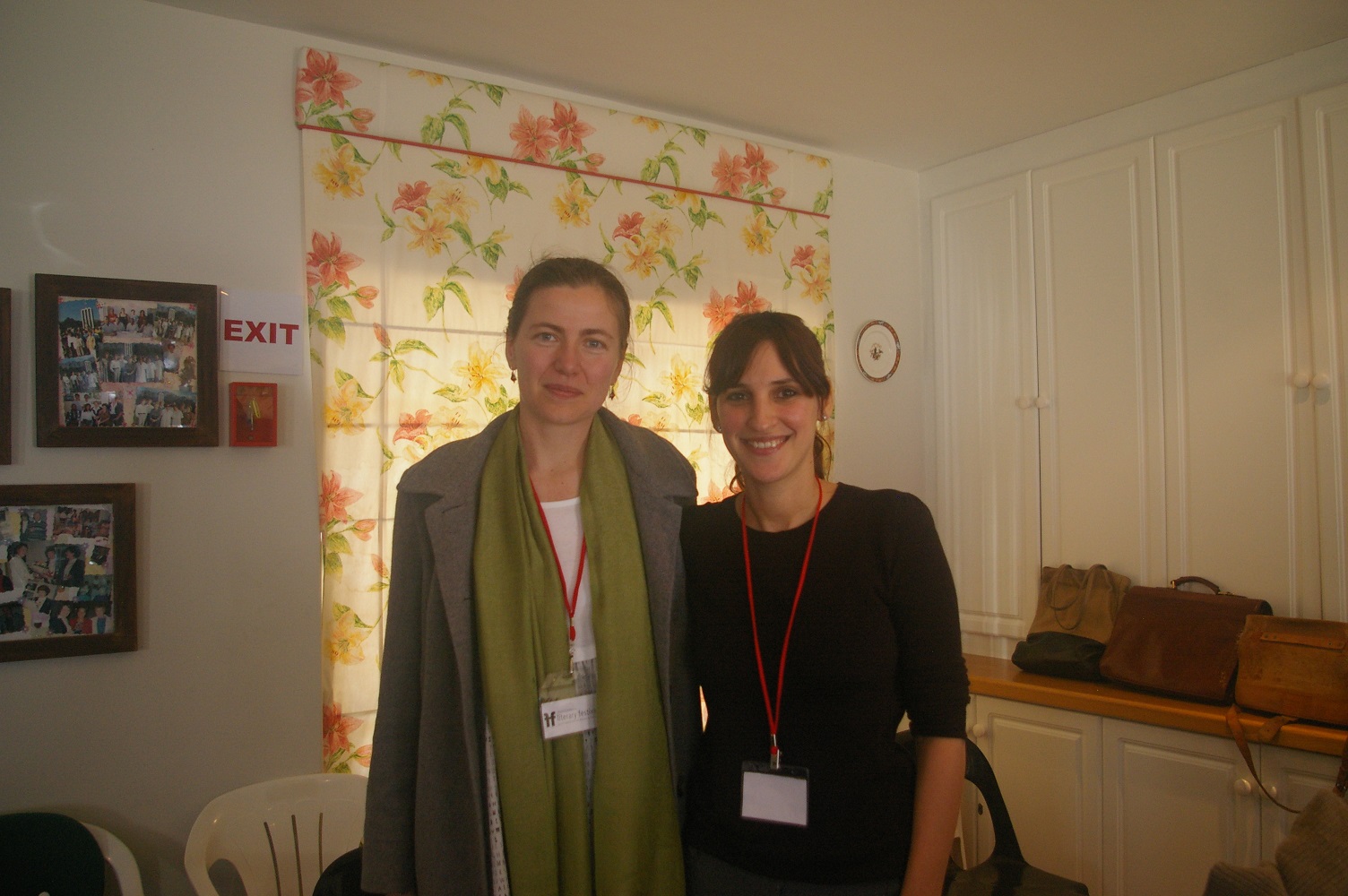
Nadia and I at the FLF, photo by Jennifer Platt

Nadia and I at the FLF, photo by Jennifer Platt

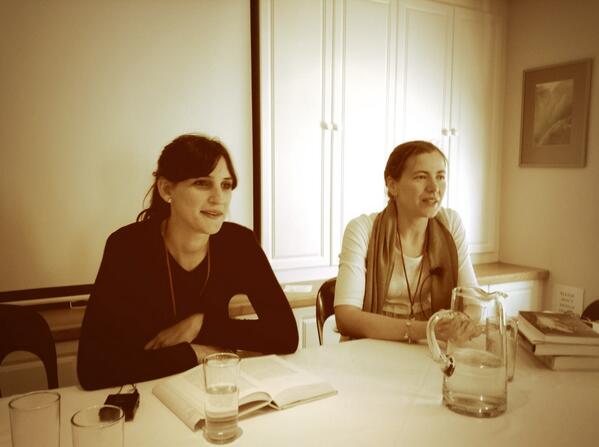
Another FLF has come and gone. It was my first one as a participating author. My event with Nadia Davids was a real joy. Nadia is wonderfully articulate, kind, a pleasure to talk to, and more beautiful in real life than in any photograph. We discovered that on top of everything else we have in common, she left South Africa the year I first arrived here. We seem to be leading these uncanny parallel lives. I hope there will be many more points of contact. We read from our novels, spoke about writing place and history, being first-time novelists, the genres we write in, and our lives as writers and critics.
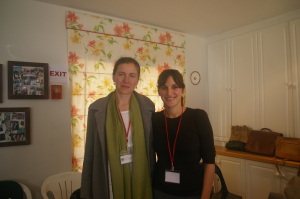
With Nadia
(Jennifer Platt from the Sunday Times twitted live from our event.)

The guest of honour at the FLF this year displayed her eloquence with light, shade and colour, bathing Franschhoek in its autumn glory. This is my favourite time of the year, and the beauty of autumn days like these past two fills me with a sense of wonder like nothing else. (There was this one autumn day in 1990 when my mother was hanging up laundry in our garden in Church Street in Warwick, NY, and I was just there, watching her, surrounded by the reds and browns and yellows of dying leaves, basking in the early morning light, the sun on my back, and silence between us when I thought, This is where love comes from, from the beauty of this world, it is nourished and sustained by it. Despite its craziness, the weekend reminded me of that day.)
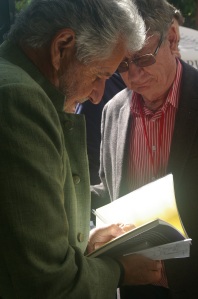
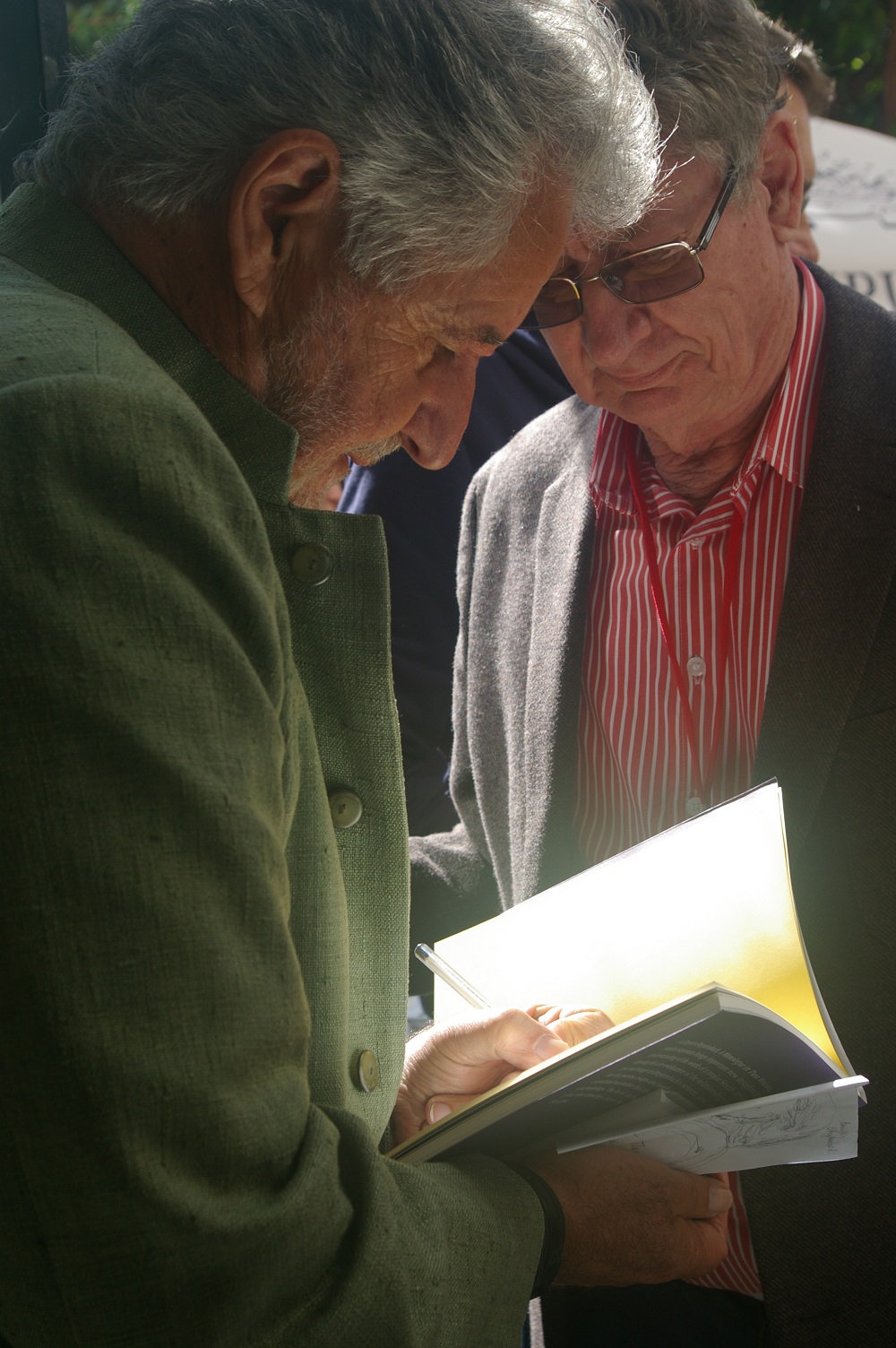
André with Breyten Breytenbach at the FLF

André with Breyten Breytenbach at the FLF

Franschhoek had all its other treats ready for us. Books and book lovers everywhere. The programme offered tons of stimulating encounters. The food and the wines were divine, as always. Gable Manor, the guest house we stayed in, was charming and cosy. In the words of Kgebetli Moele, the author of Untitled, who left a comment in the guest book the day before us: “Perfection!”
All that was missing was the time and space to enjoy it all, but festivals are by nature hectic creatures, especially if one is participating, leaving you dazed and exhausted for days afterwards. There is something about a festival that often puts me on edge. It’s not the participating on stage or being part of an audience, but rather the in-between of awkwardness when these boundaries are blurred.

I attended four sessions and a show during the weekend. The highlight was the show: Pieter Dirk-Uys’s AND THEN THERE WAS MADIBA! I have heard him speak at FLF and other events before, seen him numerous times on TV, and have cooked with Evita for years now, but I had never attended one of his live performances. Now I know that by not making it to one earlier, for years I have been depriving myself of laughter and insight. I will not be so stupid in the future. Dirk-Uys as Madiba or Zuma or Verwoerd was a sight to behold. He was priceless as Winnie. And underneath all the laughter and fun was a profound message of hope and being all together in this beautiful mess we call the New South Africa. There is always hope for a nation capable of laughing at its follies.

The sessions I attended were truly inspiring, worth every cent:

WHO GETS TO DECIDE WHAT’S LITERATURE
Jenny Crwys-Williams talking to Karin Schimke, Lauren Beukes and Imraan Coovadia about the interactions between authors, critics and readers. I found the following comments interesting:

Lauren said that nowadays authors have to be more social and put themselves out there. As Jenny pointed out, Lauren is highly successful in exploiting social media for book-promotion and is one of the few young South African writers who can write full-time because of commercial success. Lauren said that as a social person she counts herself lucky to be able to engage in the world of social media and enjoy it. She also said that she was fortunate in finding an agent who understood her vision. Lauren helps to promote other local writers by hosting The Spark on her blog. When she started with it, the idea was to have a white and a black writer alternatingly, which has proven impossible. It seems that black writers were not responding as readily to her requests as white writers (I had a similar experience when compiling Touch: Stories of Contact for which I was subsequently criticised, but I did approach many more black writers than ended up in the anthology; for various reasons some chose not to participate in the project; both Lauren and Imraan donated their fantastic stories for which I am still very grateful). She also praised her South African editor, Helen Moffett, who allows her to perform all kinds of acrobatic stunts in the air because she knows who is on the ground waiting to catch her if anything goes wrong. (As part of the trio Helena S. Paige behind the Girl series, Helen is not only a successful novelist, but also a sensual poet and a nurturer of South African literary talent.)
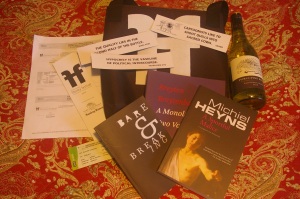
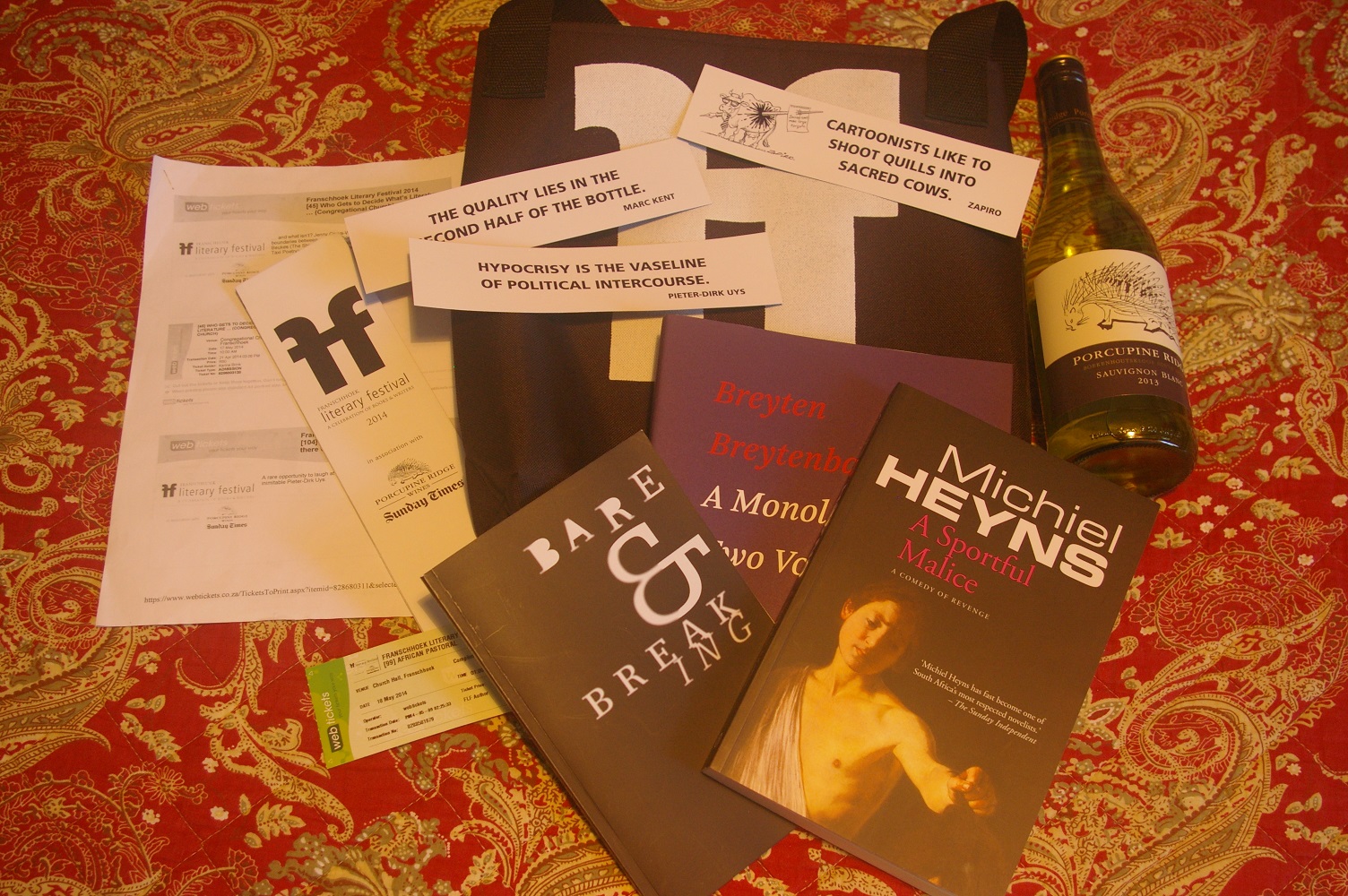
FLF books1Karin conceded that as a journalist she understands that she should be participating in the world of social media, but admitted to finding it exhausting. She made a wonderfully vivid comparison between twitter and being at a crowded cocktail party where all one longs for is a breath of fresh air, but getting to the door proves to be nearly impossible. (I cannot say how grateful I was for that image – I am too frightened to even enter that room – I am the one outside in a quiet corner, sipping the champagne, and reading a book). Karin did not get out of her way to market her book of poetry Bare & Breaking when it was published in 2012. Like most writers, she would love to be able to write in her chosen genre fulltime, but has to make a living otherwise. She has no illusions about being able to live off writing poetry in South Africa, but that is not what it is all about for her. As a writer, one has to understand one’s motives for writing, she said.

Imraan spoke about the difficulty of talking about the reading experience which is deeply personal and not always easily shareable. I loved his comment about the fact that a change in taste is proof of a “living mind”. He also mentioned that for him there are different ways of being a writer in the world. He referred to Damon Galgut who is shy and simply gets on with his writing without unnecessarily putting himself out there. He also said something very interesting: Why spend so much time on publicity if the reason you write is to get rich? Instead, one could invest the time in becoming a billionaire by other, more straightforward ways. For him, writing is about the “book and you”.

(After the session I bought a copy of Karin’s Bare & Breaking. Some time ago, I published a review of four Modjaji poetry titles, three of which I found outstanding, one less so. The positive comments I made about the three books went largely unnoticed. For my comments about the fourth one I got lynched. The heated reaction of the publisher and friends of the author to my negative remarks about the fourth volume sadly put me off further Modjaji titles. This is how I missed out on Karin’s book until now. But some of her comments about the volume and her own approach to writing made me curious enough to ignore my decision to keep away from Modjaji titles. On Saturday evening, I read some of Karin’s poems in the luxurious bath of our room with a view at Gable Manor and the moment I got out, I made my husband read them. We were both bowled over by her “sound-shades”. I look forward to discovering the rest of the volume.)

Here is one gem:

“Morning Work” by Karin Schimke

We are cocked and angled
together like an African chair,
groin-hinged and eye-locked,
small-talking the sun up.
At the join we are genderless
until – out of two flat triangles –
something flowers at us,
blooms bright as though
our eyes are suns
and it must find light.
We give it light, and we laugh,
and then bury it, lids shut,
so it can seed again.

THE CONSIDERED CANON
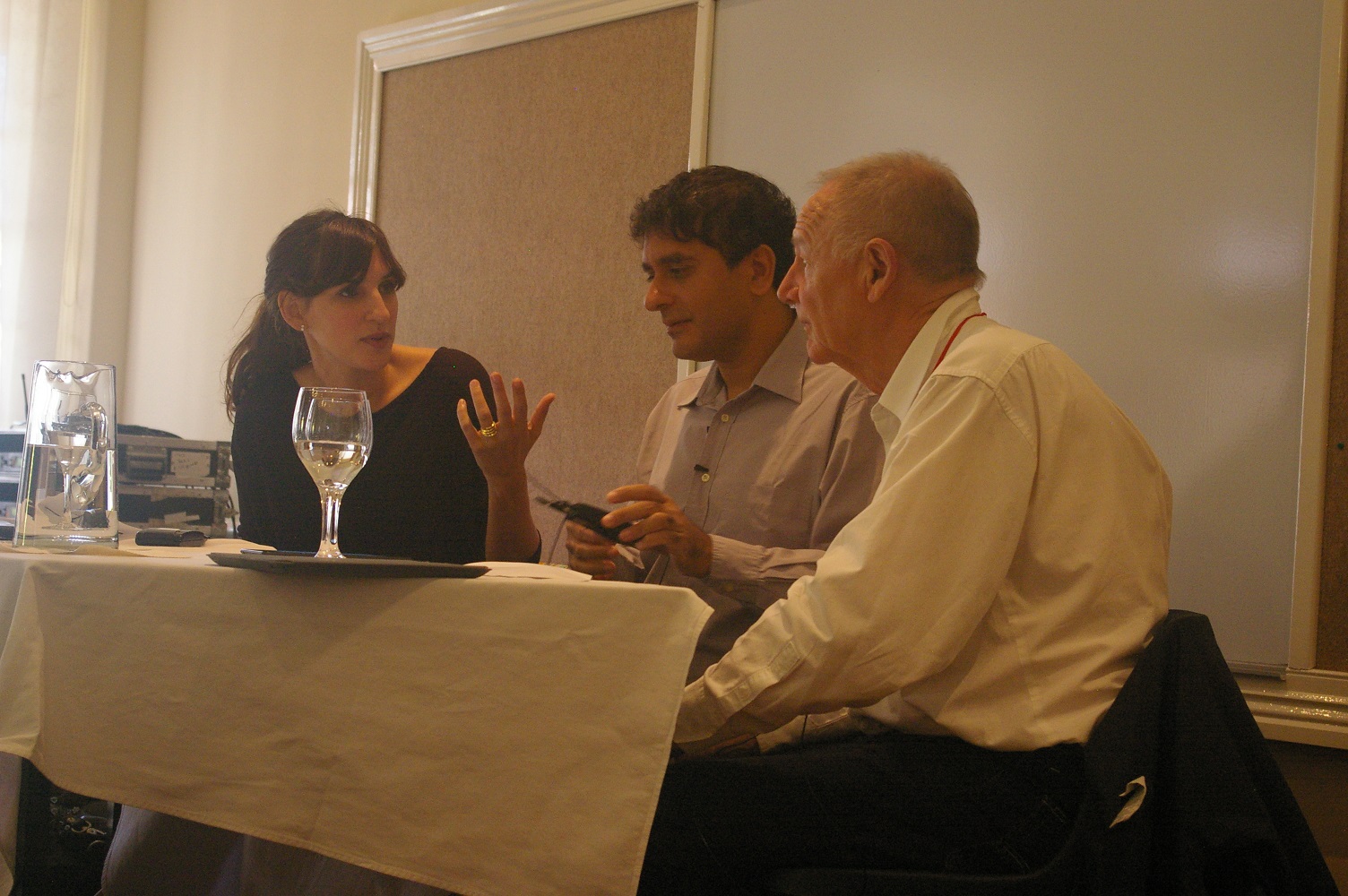
Imraan Coovadia spoke to Nadia Davids and Michiel Heyns about the Western and the South African literary canons. All three are novelists, reviewers and academics.
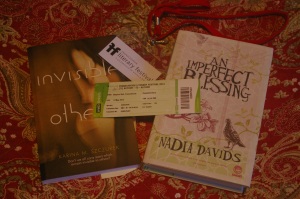
FLF books 2Nadia said something very moving about academics having the “privilege of learning to read deeply”. She sees the text as a social document that operates in the world, not only as something read for pleasure. During our talk the day before, I asked her whether her own novel, An Imperfect Blessing, was an attempt to write a people into history who had been underrepresented until recently, and she said yes, admitting that it was done with the full awareness of the pitfall of representation. That was her reason for including minute details of everyday Muslim family life in her story of specific historical moments (time round forced removals from District Six, the state of emergency in1986 and the year 1993, just before the first democratic elections). Michiel mentioned that while reading Nadia’s novel he was aware of her having read Jane Austen. What a compliment for any writer!
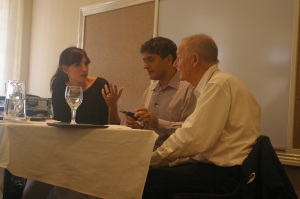
Nadia, Imraan and Michiel at the FLF

Nadia, Imraan and Michiel at the FLF

Imraan, who is an excellent book reviewer with the kind of gutsy eloquence which I lack, quoted from the curious Wikipedia entry about South African literature which made most of the audience shudder. Hope was expressed that people engaged in writing these entries will amend it to reflect less biased views. Imraan asked the panellists to name their own personal South African canons. The Story of an African Farm was there for both Nadia and Michiel. Michiel mentioned Bosman, Paton, J.M. Coetzee (Age of Iron and Disgrace); Nadia added Woza Albert!, The Island, Gordimer and Brink. Outside of South Africa, Nadia made a special mention of Anna Karenina, and Michiel of Middlemarch. Harold Bloom’s conservative take on the Western canon was discussed. Imraan found that according to Google the most mentioned South African books are Long Walk to Freedom, Cry, the Beloved Country, Country of My Skull, Heart of Redness, Ways of Dying, Spud, The Smell of Apples, The Power of One, and Master Harold and the Boys. He added Burger’s Daughter to the list himself, because “it should have been there.” I agree wholeheartedly.

Michiel Heyns is one of my favourite local book reviewers. (For five years, I’d had the honour of reviewing books alongside Imraan and Michiel for the Sunday Independent under the editorial guidance of Maureen Isaacson.) I always say that when I grow up I want to write reviews like his. I also had the privilege of working with him on Encounters with André Brink. Michiel is one of the few South African authors who see the entire world as their fictional playground, daring to write about topics other than local. I applaud him for that! Exciting news is that Michiel’s latest novel, A Sportful Malice, has been published last week. Talking about the Western canon, or any canon for that matter: the title derives from Shakespeare. Definitely something to look forward to! During the discussion, Michiel mentioned merit in relation to Nadia’s reference to the text as a social document. He spoke about literature and the canon as a “moral guide”, of showing you “how to live your life”. A test for any text is whether you are prepared to reread it, he said. I also think of it in terms of whether you want to share it with other people. The moment I find myself buying the same title over and over again for my friends, I know I have encountered a good book.

AFRICAN PASTORAL
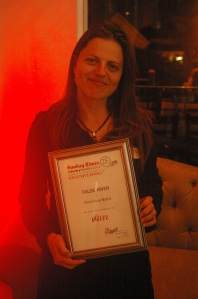
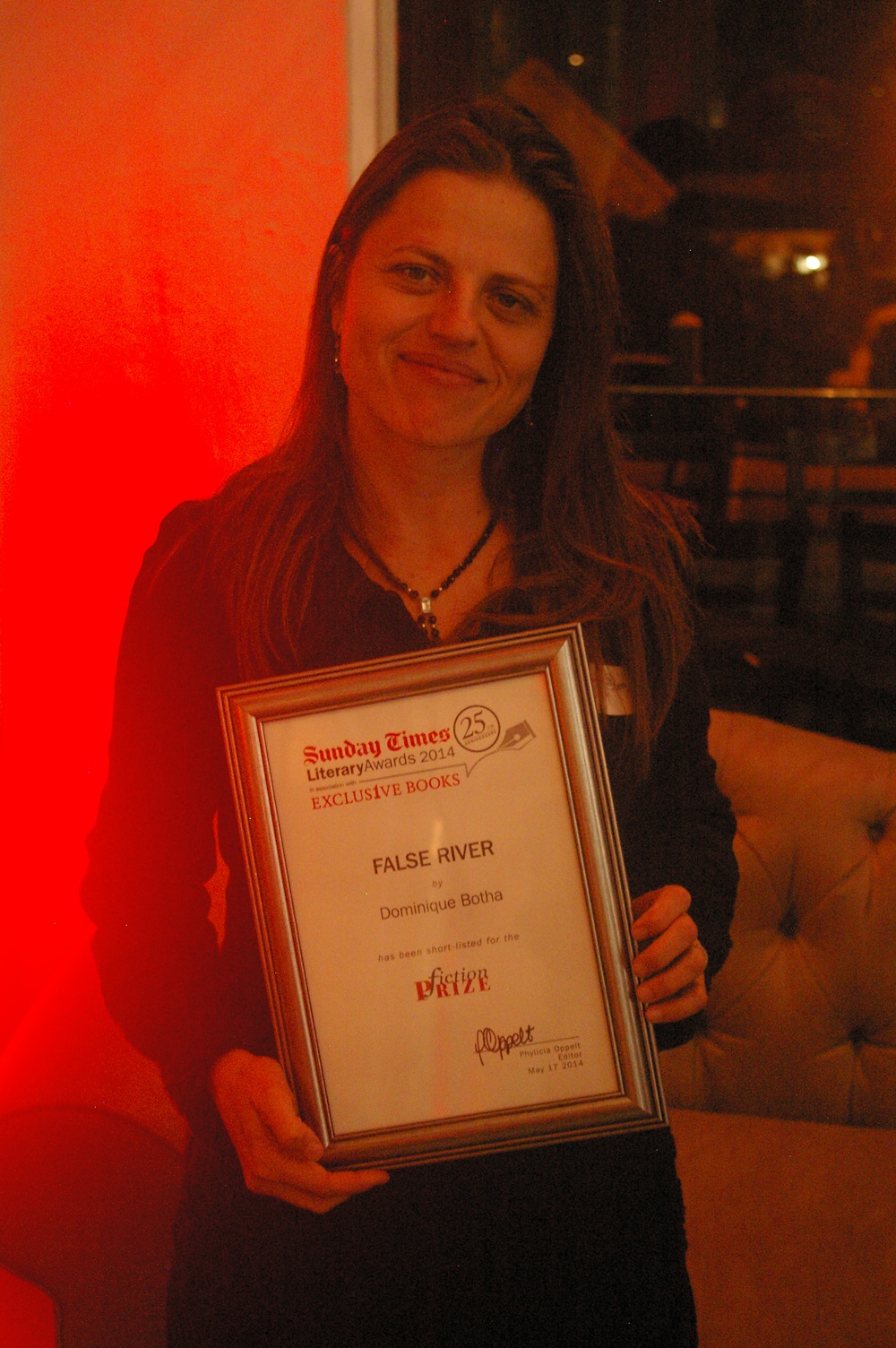
DominiqueHarry Garuba talking to Dominique Botha, Claire Robertson, and André Brink about their latest novels, False River, The Spiral House, and Philida, respectively.

Claire and Dominique are first-time novelists. Like André, Dominique writes in both languages, Afrikaans and English. She recommended to everyone in the audience to write in Afrikaans if they could, as she was thrilled with the kind of enthusiasm and reception she encountered on the Afrikaans literary scene. Her novel is based on her family story and she has kept the names of her family members in the book: “It’s my take on something that may or may not have happened,” she said. She is of the opinion that “it is much better to write truth and call it fiction than to write fiction and call it truth”. (During questions from the audience, I asked about her decision to keep the real names for a fictionalised story. She said the names were beautiful and that changing them would not have removed the problematic aspect of the situation. The people involved would still know that they are being written about, only the larger public not. I’m not entirely convinced. In cases like this, I always try to imagine what it would be like for me: I would feel uncomfortable about my own brother writing a fictionalised version of me and using my name for it in a novel. It simply would feel that it wasn’t me. Why my name then? If he was writing a memoir or biography, and attempting to reconstruct memories in the process without intentionally fictionalising them, I would have no issue with him telling anything about the family past we share and using my name. In a novel based on fact, on the other hand, I feel that a name change signifies that fiction is part of the parcel, that the people are no longer the ones you knew in real life but partly imagined characters who might reflect on real people but are their own creatures. This is particularly true for me when one writes about people who are still alive and who owe their own versions of a story. I don’t want to pretend to have final answers to this complicated process, not even for my own work, but I think it is an aspect of writing that should be treated with utmost care.)

Claire, who had the rare experience in South Africa of having her book go beyond the first impression within a very short period of time, spoke about the idea of a farm novel which not only connects us to the land but to something much larger. After she’d finished her novel, it revealed to her that what she had been writing about is the “urge to perform acts of rescue”. While writing, whether as a novelist or a journalist, she looks for “tragic flaws”, not “wickedness”, in people, whether it is in the men of the Enlightenment or the architects of apartheid.

Tellingly, I forgot to note who during the discussion said that memory is a “very personal and unreliable thing”.
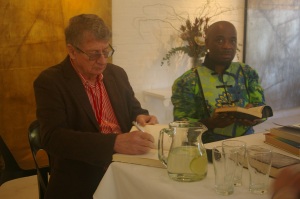
Victor and André

Victor and André

For André, whose novel Philida was born on and delves into the history of the nearby wine farm Solms-Delta, the act of writing begins when fact ends and imagination takes over. Through writing the story of Philida, he felt “enmeshed in my own life”. Philida could voice things which were difficult to communicate otherwise.
In the fourth event I attended (LITERARY DOYEN) Victor Dlamini, an insightful and patient interviewer (and one of my favourite photographers), spoke to André about his career, belonging, and Philida.

A note of thank you: Thank you Liz for all your kind words about my novel (you made my day!). Thank you to all for a weekend of literary delights!

Books sold (that I know of): 1 (thank you Nols – very kind of you! I hope you will enjoy it)
Books bought: 3
(I’m clearly not in it for the money.)

Author-to-Author at the Franschhoek Literary Festival

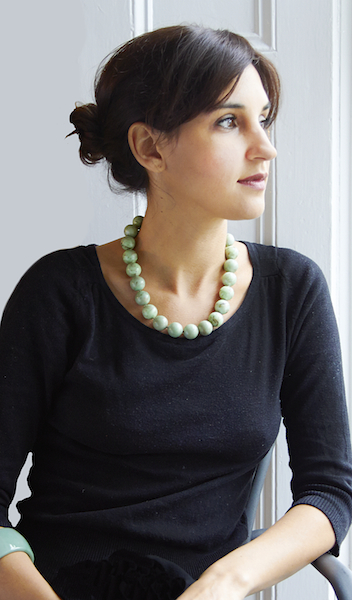
Nadia Davids, photo by John Gutierrez

Nadia Davids, photo by John Gutierrez

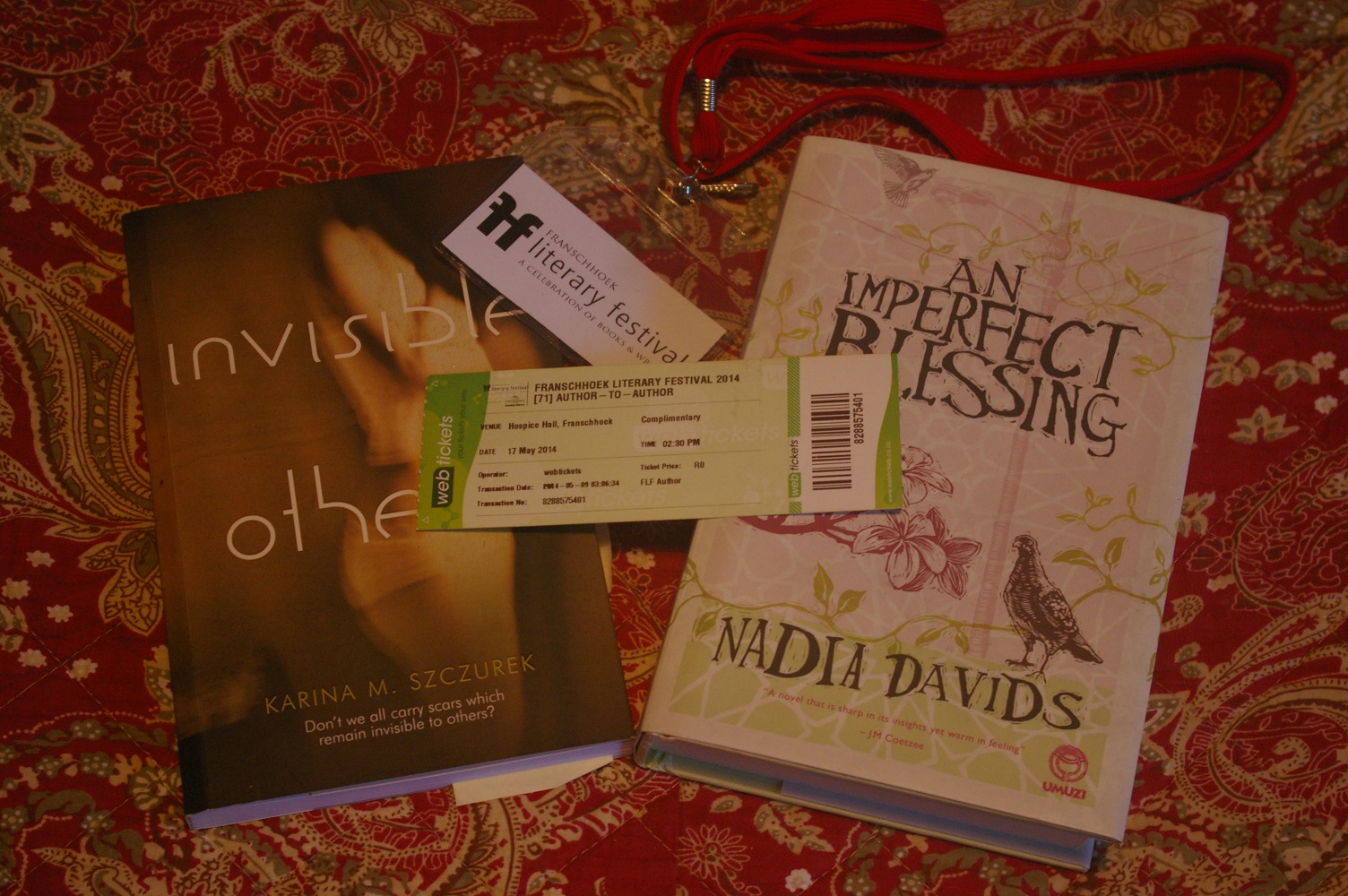
During the highly anticipated Franschhoek Literary Festival this year (16-18 May), I will have the pleasure of discussing our debut novels with the award-winning author Nadia Davids. Our event is scheduled for Saturday 2.30pm and will take place in the Hospice Hall. To buy tickets, click here: Author-to-Author [71] (R60).

Nadia Davids’ work has been published, produced and performed in southern Africa, Europe and the United States. She was awarded the Rosalie van der Gucht Prize for new directors for her play At Her Feet and received three Fleur de Cap Award nominations for Cissie. Nadia holds a PhD in Drama from UCT and lives in London, where she lectures in the drama department at Queen Mary University of London. Her debut novel, An Imperfect Blessing, was published in April.

About An Imperfect Blessing:
“It is 1993. South Africa is on the brink of total transformation and in Walmer Estate, a busy suburb on the slopes of Devil’s Peak, fourteen-year-old Alia Dawood is about to undergo a transformation of her own. She watches with fascination and fear as the national drama unfolds, longing to be a part of what she knows to be history in the making. As her revolutionary aspirations strengthen in the months before the elections, her intense, radical Uncle Waleed reappears, forcing her parents and sister Nasreen to confront his subversive and dangerous past.

Nadia David’s first novel moves across generations and communities, through the suburbs to the city centre, from the lush gardens of private schools to the dingy bars of Observatory, from landmark mosques and churches to the manic procession of the Cape Carnival, through evictions, rebellions, political assassinations and first loves. The book places one family’s story at the heart of a country’s rebirth and interrogates issues of faith, race, belonging and freedom.”

KarinaNadia Davids and I do not know each other in person (yet!), but we have quite a lot in common. We were both born in 1977 and do not live in the countries of our birth. We have academic backgrounds and completed our PhDs in 2008. We are playwrights, short-story writers, and debut novelists this year. I look forward to discussing our novelistic firstborns, An Imprefect Blessing and Invisible Others at the festival.

Nadia Davids’ other scheduled events at the FLF:
Friday 11.30am [9] Playwrights Strut and Fret
Friday 4pm [37] Revelling in South African English
Sunday 11.30am [93] The Considered Canon

Homecoming launch of Invisible Others

Photo by Roma Szczurek

Photo by Roma Szczurek

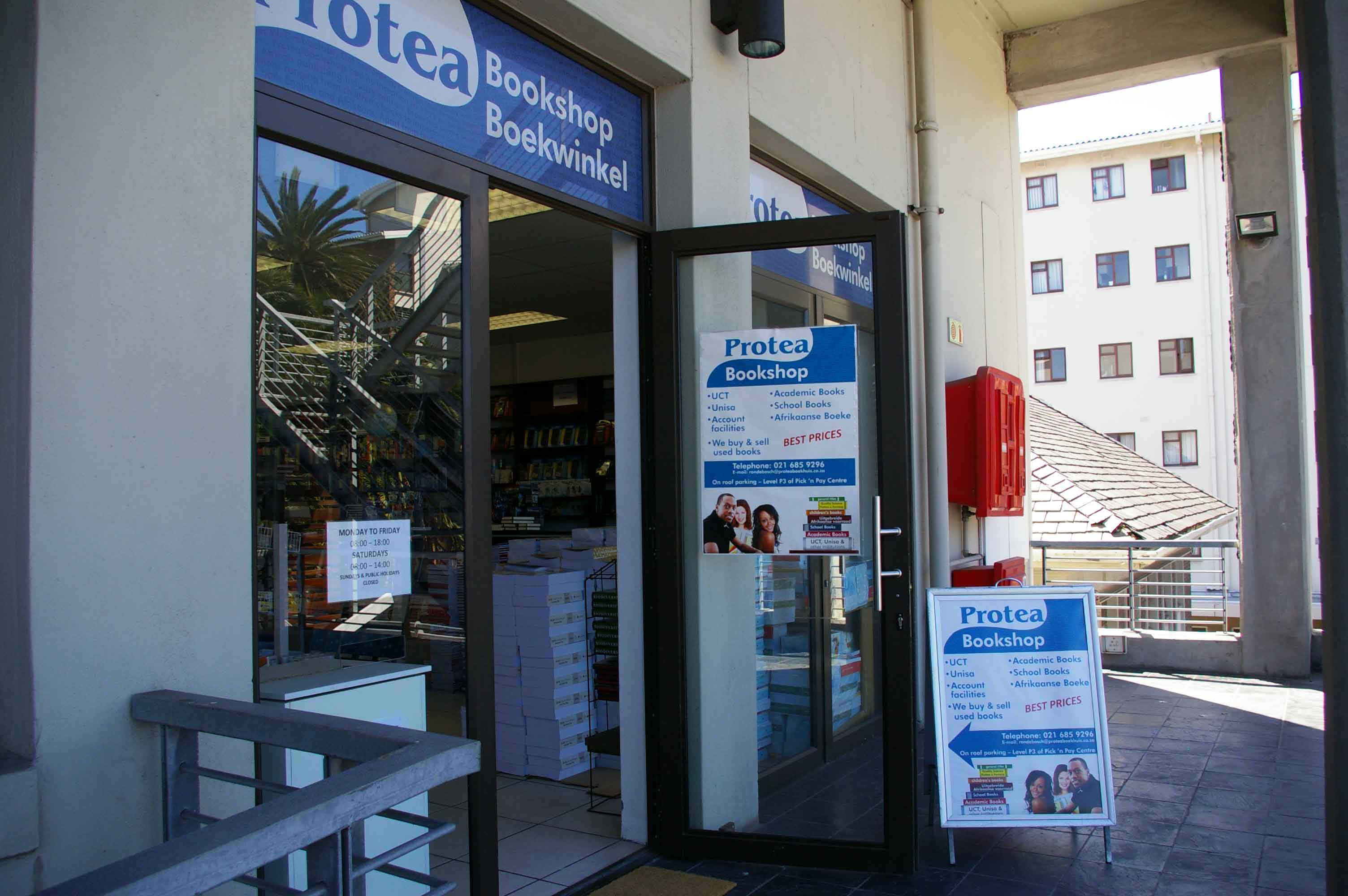
A small but very enthusiastic crowd gathered earlier today at the Protea Bookshop in Rondebosch for my “homecoming launch” of Invisible Others. Thank you to everyone who made this one so special!

The first copies of Invisible Others at Protea Bookshop in Rondebosch, photo by Roma Szczurek

The first copies of Invisible Others at Protea Bookshop in Rondebosch, photo by Roma Szczurek

The shop is beginning to feel like an extension of our lounge. As Johan from the shop remarked, it is located almost in our backyard. I will never forget the first time I browsed there. I think it was Del who asked me whether I needed help. I was looking for a collection of stories by Etgar Keret. The bookshop did not have a copy. I bought another book and then forgot about the Keret. About two weeks later, I was done shopping at the centre and was putting some groceries into my car, parked in the vicinity of the shop, when Del recognised me and came out to say that they now had the Keret book I had been looking for the other day. Did I want to have a look at it?
Of course I did, and I was very impressed by such kindness and service. It is always a pleasure to go back to a bookshop where people care and know about books (which is not a given nowadays – I once had to spell Nadine Gordimer’s name at a bookshop…).

Emma after the launch, reading Siri Hustvedt's The Blazing World

Emma after the launch, reading Siri Hustvedt’s The Blazing World

Today at the launch, I had the honour of being interviewed by the wonderful author Emma van der Vliet. We spoke about the influence of film on Invisible Others, particularly the 1992 film Damage, staring Juliette Binoche and Jeremy Irons. Often when I write, individual scenes come to me in the form of film-like images and the medium is an inspiration for my work. There is one line in Damage which I found haunting: “Damaged people are dangerous; they know they can survive.” Konrad reflects on it in the novel. We also discussed how the novel began, how the main characters formed in my head, and how Cara refused to be written the way I’d first imagined her. The first images of Konrad I had in my mind were connected to a jersey a hitchhiker my Mom and I picked up in Poland many, many years ago wore. The young man told us he’d knitted the jersey himself. Konrad, also an avid hitchhiker in his youth, owns a jersey like that in the novel. Emma also asked about my writing process. When I was still working on my thesis about Nadine Gordimer’s post-apartheid writing, I found many references to her strict schedule of devoting the mornings to her stories. Inspired, I tried to do the same, only to discover that I could not write one decent sentence in the mornings. (Recently, a friend gave me a sign I love for my kitchen: “I don’t do mornings”.) I am an afternoon person. My best time for writing is after lunch and coffee, that is when I am at my most prolific and inventive.

By Renée le Roux

By Renée le Roux

It was great to see Renée le Roux at the launch whose amazing artwork has been an inspiration for Dagmar’s art in the novel. Before encountering Renée’s work, I couldn’t find a way of responding to abstract art, but the first time I stood in a room full of her paintings I understood and felt what abstract art was about. It was such a thrill and discovery. Her images spoke to me like no other. Her “Mommy’s Boys” are in my study and despite their sadness, make me smile every day.

Thank you to everyone else who was there!

Launch cakeThis is the launch cake which Emma and I enjoyed for our breakfast after the talk. The woman who baked it is going to hear from me soon. It is always good to know where to get a divine chocolate cake, definitely one of my all-time favourites.

Thank you for this delicious literary treat: launch, cake and all!

Launch of Invisible Others at Protea Bookshop Rondebosch

Invisible others 26 April 2014.indd The following is an invitation to my “homecoming launch” at the Rondebosch branch of the Protea Bookshop:

“Dear Reader / Geagte Leser,
It is with great pleasure that Protea Bookshop in Rondebosch extend an invitation to what we would like to call the homecoming launch of Karina Szczurek’s Invisible Others, on Saturday morning, 26 April. Karina will be here to discuss her debut novel with Emma van der Vliet.

Dit is met groot genoegdoening dat Protea Boekwinkel in Rondebosch u uitnooi na wat ons graag beskou as die tuiskomsbekendstelling van Karina Szczurek se Invisible Others op Saterdagoggend, 26 April. Emma van der Vliet sal met Karina in gesprek wees oor haar debuutroman.”

Date: 26 April 2014
Time: 11am
Place: Protea Bookshop Rondebosch
Shop 29
Rondebosch on Main
51 – 81 Main Rd
Rondebosch CT, 7700
Tel.: 021 685 9296

Emma, photo by Robert van der Vliet

Emma, photo by Robert van der Vliet

Emma van der Vliet is the author of Past Imperfect and Thirty Second World. I had the pleasure of working with Emma on both, Touch: Stories of Contact and Encounters with André Brink. I love her work and look forward to our discussion next Saturday. Protea Bookshop is located almost around the corner from my home and it is one of my favourite places in Cape Town – excellent staff and a wonderful collection of books. It is indeed a true “homecoming”.