Author Archives: Karina

Unknown's avatar

About Karina

Author living in Cape Town.

Great, even life-changing – the books of 2015

Another great year of reading is coming to an end, although it did not start that way. I am grateful to the love that has returned my passion for reading to me when reading – when life – became unbearable.
books2015
Knowing how few books one can read in a lifetime (I won’t depress you with the estimate), I have become quite selective and wise about what I read. Thus, out of the sixty-three books I have read this year (until today, some not for the first time), almost all were good, thirty-one were great – among them were a few which were life-changing – and only two I did not finish. Of these two, one was brilliant, but I was reading it on 6 February and have not been able to return to it. The other one I had wonderful hopes for, but I was so disappointed and frustrated that after a hundred pages I decided not to waste more of my time on it. In the spirit of the festive season, the perpetrator shall remain unnamed.

The great ones I have finished, I would like to divide among four categories: relevant, delightful, exquisite, and life-changing (whereas some, of course, overlap).

There are old-time favourite authors on my list like Alexandra Fuller and Ivan Vladislavić, but also new discoveries like Pamela Power or Mark Winkler.

Relevant
Ingrid Jonker: A Biography by Louise Viljoen
Back to Angola: A Journey from War to Peace by Paul Morris
A Year of Magical Thinking by Joan Didion
J. M. Coetzee and The Life Of Writing: Face-To-Face With Time by David Attwell
Books That Matter by Marie Philip

Nor can we know ahead of the fact (and here lies the heart of the difference between grief as we imagine it and grief as it is) the unending absence that follows, the void, the very opposite of meaning, the relentless succession of moments during which we will confront the experience of meaninglessness itself.
(A Year of Magical Thinking by Joan Didion)

Delightful
The Unknown Unknown by Mark Forsyth
What Poets Need by Finuala Dowling
Ms Conception by Pamela Power
What I Didn’t See and Other Stories by Karen Joy Fowler
Death and the Penguin by Andrey Kurkov
The Chameleon House by Melissa de Villiers
Embers by Sándor Márai
Tribe by Rahla Xenopoulos
The Penguin Lessons by Tom Michell

I had a very efficient guano maker installed in my bath.
(The Penguin Lessons by Tom Michell)

Exquisite
The Long Dry by Cynan Jones
Leaving Before the Rains Come by Alexandra Fuller
101 Detectives by Ivan Vladislavić
To Kill a Mockingbird by Harper Lee
A God in Ruins by Kate Atkinson
The Dream House by Craig Higginson
The Alphabet of the Birds by SJ Naudé
We Are All Completely Besides Ourselves by Karen Joy Fowler
Sugar Man: The Life, Death and Resurrection of Sixto Rodriguez by Stephen ‘Sugar’ Segerman and Craig Bartholomew Strydom
the myth of this is that we’re all in this together by Nick Mulgrew
Wasted by Mark Winkler
Notes from the Dementia Ward by Finuala Dowling

We have to admit our massive love for people. If we don’t ever need to know its depth, we just feel the light on the surface.
(The Long Dry by Cynan Jones)

Life-changing
Flame in the Snow / Vlam in die Sneeu by André Brink and Ingrid Jonker
Killing Floor by Lee Child
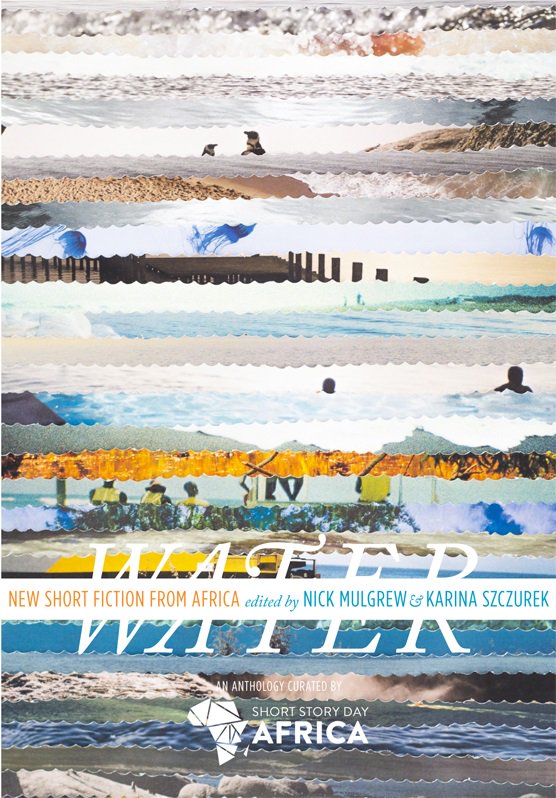
Water: New Short Fiction from Africa
Mountains in the Sea: A Celebration of the Table Mountain National Park by John Yeld and Martine Barker
The Art of the Publisher by Roberto Calasso

I would like to single out two books I haven’t written about. Yet. Kate Atkinson’s A God in Ruins and Roberto Calasso’s The Art of the Publisher.
A God in Ruins
Atkinson’s novel is one of the most exquisite books I have read in my life. Its beauty and its declaration of love for the power of literature to capture eternity, to heal, to open up spaces in us we never even knew existed are staggering. Personally, I will always associate the novel with two seminal moments in my life. While reading it during one of those serene nights when you are at peace with yourself and the world, I saw something beautiful and drew a sketch of the scene at the back of the book. It is also engraved in my heart. And when I finished A God in Ruins, I was crushed by the inability to share it with André, but then something happened which gave me comfort and hope and the book will always be at the source of these feelings when it comes to reading. I hope to write about it before the year is over.
The Art of the Publisher
Calasso’s book speaks about everything I have ever known, felt, dreamt about or hoped for in publishing. I have known for years that one day I would become a publisher myself. The Art of the Publisher made me realise that the time has come to make that day become reality.
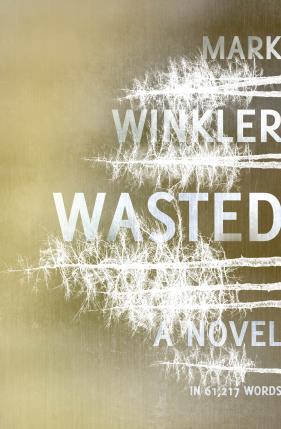
In/sanity: Mark Winkler’s Wasted

WastedWhere does sanity end and insanity begin?

Can anyone who intentionally kills or violates another person be thought of as sane?

Earlier today while driving, I saw a man, probably homeless, standing next to a garbage bin and talking to himself. It might have been the same man who a few months ago passed me in the street and out of the blue started screaming at me, forcing me off the pavement into heavy traffic. I was fortunate that cars avoided hitting me just in time. I wasn’t hurt, but petrified. I haven’t walked that route since.

I still like walking in our neighbourhood though, and do it nearly daily (it helps to keep me sane).

There were times this year when I did not feel sane myself. Grief is not a mental illness, but it is a state of vulnerability that makes you often act insane. I have experienced some really mad stuff since February. There were days when I thought of Valkenberg, and the idea seemed strangely serene. There are times in one’s life where all you want to do is lie down and let others take care of you. Just some peace and quiet, punctuated by kindness. We all have moments when we long for such spaces.

Water coverI finished reading Mark Winkler’s second novel, Wasted (Kwela, 2015), this morning, hence all these thoughts about in/sanity. I picked up the book because of the excellent story Winkler contributed to Water: New Fiction from Africa (forthcoming from Short Story Day Africa). I felt this was an author I wanted to get to know better. I have not been disappointed. Wasted is one of the best novels I have read this year. Well written (with an opening that is impossible to resist, and a middle and end that are even better), tense, darkly humorous, unpredictable and thought-provoking throughout, Wasted is one of those novels that creep under your skin. It strikes an admirable balance between seriousness and entertainment. Winkler manages to pull off that tough task of making you care for quite an unsavoury protagonist: Nathan Lucius is an enigma for most of the book and one approaches the unfolding of his story with trepidation, but you simply need to know what makes him tick.

We know he sleeps with the light on, has a dubious approach towards personal hygiene, does not allow anyone into the sanctuary of his flat where he collects old photographs of strangers he imagines as members of his family, and his relationships with his work colleagues, his widowed neighbour, a friend suffering from cancer, and his real family are unusual (if that is the right word), to say the least. The why behind his behaviour comes as quite a shock around two-thirds into the novel. But even earlier, around one-third into it, we come to the first unsettling revelation. The ending blows your mind.

What fascinates me about the novel is the portrayal of this character who is so recognisable and yet so foreign. You read along, and, if you’re honest, you allow yourself to realise that, yeah, I have done some similarly crazy shit, and, yeah, I have had similarly dark thoughts. The lights, the solitude, the blackouts, longing for forgetting, incapability of dealing with the frustrations of the everyday – been there, done that (perhaps not exactly to such extremes, but the point is that one can associate with it). Not wanting to spoil the surprise, let me just say that fortunately most of us don’t end up like Nathan. But it is a fine line that we all tread. That is what makes him such a great character. It’s easy to feel him.

Winkler is also the author of An Exceptionally Simple Theory of Absolutely Everything (Kwela, 2013) that I hope to get my hands on tomorrow at the celebration of The Book Lounge’s 8th birthday party. Wow, time does fly! Allow me to hope that it heals, too.

How to quench literary thirst?

Water coverSimple: with Water!

There is a wonderful anthology of short stories coming our way at the end of the year, and I am not only saying this because I had the privilege of co-editing it (with the multi-talented Nick Mulgrew): Water: New Short Fiction from Africa, curated by Short Story Day Africa.

Life should be about all those half-full glasses, and this particular one is overflowing with talent and inspiration. The great thing about most short fiction anthologies is that they give you samples of writers’ work which can lead to amazing discoveries. Most of the contributors to Water were new to me, but all of them, without exception, will remain on my radar of literary interests and I will follow their careers with anticipation.

I think that if you can read a short story a few times (which I had to do for all the stories in the collection) and can still enjoy it, discovering new aspects with each turn and deepening your appreciation, then it has to mean something. Next week, I will proofread all of them one more time before the anthology goes into print, and I do not dread the task at all, but actually can’t wait.

Short Story Day Africa has been doing incredible work since it came into being, offering a space for African authors to express their desires about the African story (as writers and as readers), connecting, inspiring, developing ideas, celebrating a genre that is without equals. A good short story is a good short story, and despite all the rumours that nobody writes, publishes, or reads it, the short story will survive and thrive, because many of us LOVE to write short stories, and we LOVE to read them! It’s all very simple, actually.

All of the contributors to the anthology are good writers and I salute them! When I single out only a few in what I am about to say, it is not because of favouritism, but because I feel that I am only at the beginning of a journey which Water is taking me on.

Efemia Chela: Every time she publishes a story, its exquisiteness astounds me. I know three. All three belong to the best of the best I have ever read. This is someone with a talent so precious that it should be cherished and nourished, so that it can grow strong roots in our literary community. One day, Chela might tower over it like one of those majestic baobabs which grace the African landscape.

Alex Latimer: His story in the anthology is bizarre, to say the least, but it speaks about grief in a way that has touched me deeply. Its handling of the emotion is so subtle and so beautiful, it will stay with me for a very long time. As will Alexis Teyie‘s story about the most unbearable of losses. When you get to the last line, it literally knocks you off your feet.

Megan Ross: After reading her story, I cannot wait to get my hands on the novel she is writing at the moment. May the muse be good to her.

Mark Winkler: He has already published two novels which I might not have looked at, hadn’t I fallen in love with his story in Water. I am nearly finished with his latest, Wasted, published earlier this year (the sense of humour and the unusual, totally unpredictable, plot!), and I will read the first, An Exceptionally Simple Theory (of Absolutely Everything) (2013), as soon as I can.

And then there is Dayo Ntwari: His story is exceptional as a story, but the world and the characters he creates in it are so fascinating that one feels there could be more to them than just this one incarnation. I would love to get to know them and the scary futuristic-mythical place they live in (which is such an astute reflection of our own times) better. Any literary agents out there looking for fantasy/speculative fiction/SF from Africa? Look no more. Just saying.

I can’t wait for readers to dive into Water and discover these treasure among twenty-one excellent stories. And I promise to report more on the journey these waters are taking me on.

water6

The heart has spaces – the love letters of André Brink and Ingrid Jonker

Drawing in Ingrid's letter of 15 October 1963
In the beginning there were the women of his past, a ghost among them. André Brink had never been afraid to love. After the life-defining relationship of his youth with Ingrid Jonker, her suicide, and four divorces, at the age of 69 he had the guts to say yes to a delicate possibility.

When we met in Austria towards the end of 2004 I was terribly young, on the verge of a divorce, broken by betrayals, and almost paralysed by mistrust. Continents and cultures apart, 42 years between us, the odds staked against us could not have been higher. Yet we somehow mustered enough courage to dare the impossible and turn it into reality. For ten years, the first thing we did every morning after waking up next to each other was to smile. No matter what. Of course it hadn’t been easy. Nothing worthwhile ever is. And coming to terms with our respective pasts was our greatest challenge.

André first introduced me to Ingrid in a letter on 23 December 2004:

She was a year or so older than me, and light-years older in terms of sexual experience. It was an incredible, hectic, heady, head-over-heels love of extremes, swinging wildly from ecstasy to the depths of misery; and it became just too exhausting and demanding. After two years (and several break-ups and new starts) she started a new love-affair, and then I did too (both of us, I think, grasping at possibilities of getting out of our own relationship which had become suffocating). And so it ended. She had one more mad love-affair, and committed suicide.

Coming to live with André in the South African spring of 2005, I very quickly realised that in order to know him – truly know him – I had to understand what had happened between him and Ingrid 40 years earlier. We both had to. No other woman in André’s life had left as indelible a mark on him as Ingrid. No other haunted me as much in the beginning of our relationship.

I am proud of countless things André and I have achieved together, but the one that made all else possible is the space we created in our relationship for sharing, for being painfully open with each other. André and I met at Vienna International Airport when I went to pick him up and accompany him on the train journey to Salzburg, where he was participating in a symposium I’d helped organise. On that trip we began a conversation which, literally, lasted ten years until I told him I loved him for the last time and closed his lips with a final kiss just before he died earlier this year. It was a stripping of minds and hearts. Time after time, we stood completely soul-naked in front of each other, risking everything, and eventually knowing that love would prevail, always, no matter how terrifyingly ugly the revealed truth – on both sides – was. It is the kind of knowledge which can lay any ghost to rest.

At the end of Everything I Know I Learned from TV: Philosophy for the Unrepentant Couch Potato, my favourite philosopher, Mark Rowlands, writes: “If I could repay you with a wish it would be that you find something in your life so important that without it you would not be the same person. If you’re lucky you’ll have it already.” The relationship with Ingrid was such a thing for André. He wrote in his memoir, A Fork in the Road (Harvill Secker, 2009): “On that memorable afternoon of 15 April, 1963, a group of us were gathered in the lounge of Jan Rabie’s rambling old house in Cape Town, when Ingrid walked in, barefoot and provocative, and the movement against censorship officially began, and the course of my life was changed.” Her influence permeated everything: his personal life, and, just as crucially, his writing. One only needs to look at André’s women characters, walking in Ingrid’s footprints across the pages of his novels, to comprehend what an impact their meeting had on his creativity. And they are only the most obvious example. But despite the evidence, for many years André was exceedingly reluctant to speak or write about Ingrid after her death.

At the time of our engagement in early 2006, together with Antjie Krog and Ingrid de Kok, André was working on the new translations of Ingrid Jonker’s poems which would result in the publication of Black Butterflies: Selected Poems (Human & Rousseau, 2007). It must have been during this period that he showed me his and Ingrid’s correspondence for the first time. He kept the letters in the same place as his diaries which he reread for the writing of the introduction to Black Butterflies, the first text of its kind after many years of silence. An intimate treasure and a chunk of literary history many had wondered about for decades, even back then the letters had an irresistible appeal for me. Although my grasp of the Afrikaans language and literature was shaky at this stage, I understood their importance as a key to André’s life story and to the creative and intellectual forces culminating in the literary movement of the Sestigers. We looked at them together, he told me their story, and allowed me to comment on the translations as well as on the introduction. The title for the collection followed from a suggestion I’d made. Being included felt like a form of exorcism.

I wrote in my own diary of the time: “Dear Ingrid, are you smiling at us after all?”

Continue reading: LitNet

Joanne Hichens, an everyday superhero

If you think that bringing up three kids and paying the bills on your own is tough, you are right. Running a short story competition? Hard work. Writing a book? Yep, also uphill battle. Getting it published? Nearly impossible. Starting your own publishing company? F-u-c-k-i-n-g crazy. Surviving widowhood? Not sure how one does it, not there yet.

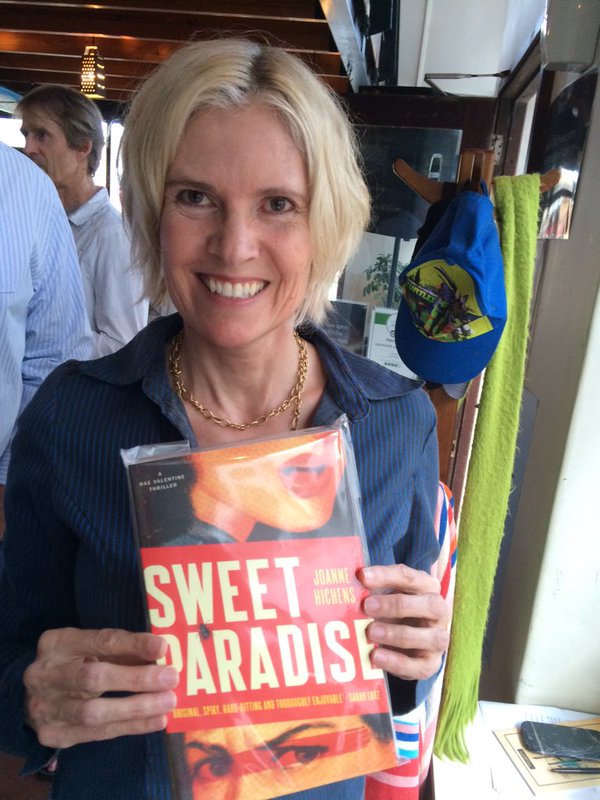
Well, in the past two years, Joanne Hichens has been doing it all. And tonight, she launched her novel Sweet Paradise which is the publishing flagship of her newborn venture, Tattoo Press. Fittingly for the occasion, The Empire Café in Muizenberg was jam-packed with friends and excited readers. The book is dedicated to Joanne’s late husband, Robert, who died unexpectedly in January last year. Joanne stood brave and beautiful in front of the crowd, her three amazing children running the show. She spoke about how Robert encouraged her to write, believed in her as a novelist, how after his death everything became a struggle and all she wanted to do was watch other people’s miseries on TV while hugging a wine bottle. I can relate. There is a very good reason why I don’t keep whiskey in the house or why I know when NCIS’s latest episode is airing. I know what inner strength is required to get up from bed every morning and why sometimes one fails.

Photo by Liesl Jobson

Photo by Liesl Jobson


And yet, here she is with two short story anthologies, a novel, and a publishing house to her name, all achieved within twenty-two months since Robert’s death. Despite her own frailty, Joanne has been a pillar of strength for me on my journey through widowhood. She is not only a hero, but a superhero. Watching her tonight I was once again inspired, as a woman and as a writer. I take my hat off to her.

At the heart of a celebration like tonight’s there is a loneliness that is so dreadfully painful that one has to be a superhero to keep on standing. And I know this because yesterday I held a copy of Vlam in die sneeu for the first time in my hands and I failed.

wow, that Nick Mulgrew is really something

This is not a review, just a Fan Letter of Admiration Addressed to You in Public.

I became aware of somebody called Nick Mulgrew about one-and-a-half years ago, perhaps two. The name definitely stuck by the time I read his award-winning story “Turning” in Adults Only. I knew about his connection to the literary magazine Prufrock, heard that he wrote poetry. Then earlier this year, I got involved in Short Story Day Africa (SSDA) and met Nick in person. First impressions: fiercely intelligent, funny, unassuming. Young.

We were entrusted with co-editing Water, the third SSDA collection of stories. The anthology includes twenty-one pieces from across the continent, among them this year’s finalists and the winner of the competition (still to be unveiled). We began the task and my first impressions of Nick only intensified. Multi-talented, wise, and sensitive were added to the list. He was a revelation to work with. Punctual, understanding, and extremely cooperative. What seemed like a daunting task, turned out to be pure inspiration (I learned so much from Nick!). We also had a fantastic selection of writers to work with. And the stories! I can’t wait for readers to dive into Water. You will find some absolute stunners in there. With SSDA, Rachel Zadok set out to give prominence to the versatility of storytelling in Africa. She was adamant that it’s not all gloom and doom. Water proves it unreservedly.

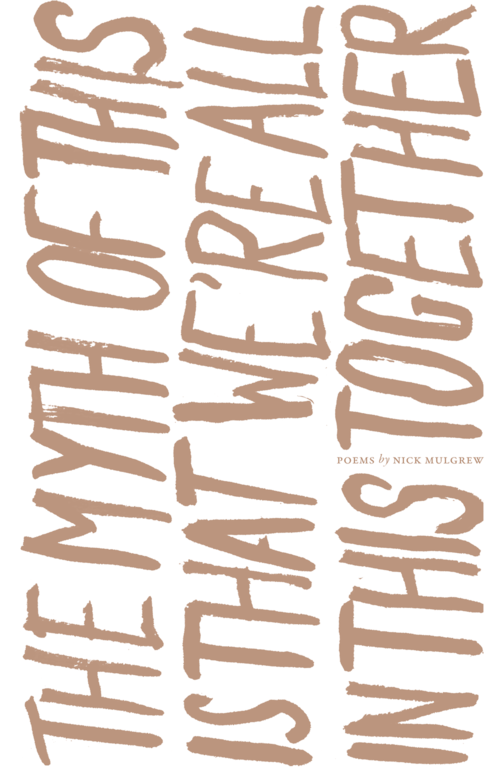
myth-cover_20150830A while back, Nick embarked on another literary adventure by becoming the editor of uHlanga, the hottest poetry publisher on the block, with three debut collections out this month. His among them: Genna Gardini’s Matric Rage, Thabo Jijana’s Failing Maths and My Other Crimes, and Nick’s the myth is that we’re all in this together. I got it yesterday at Sindiwe Magona’s launch of Chasing the Tails of My Father’s Cattle (published by another newcomer, Seriti sa Sechaba Publishers) at The Book Lounge. Before bed, I wanted to dip into it and ended up ditching Jack for the entire collection. Unputdownable.

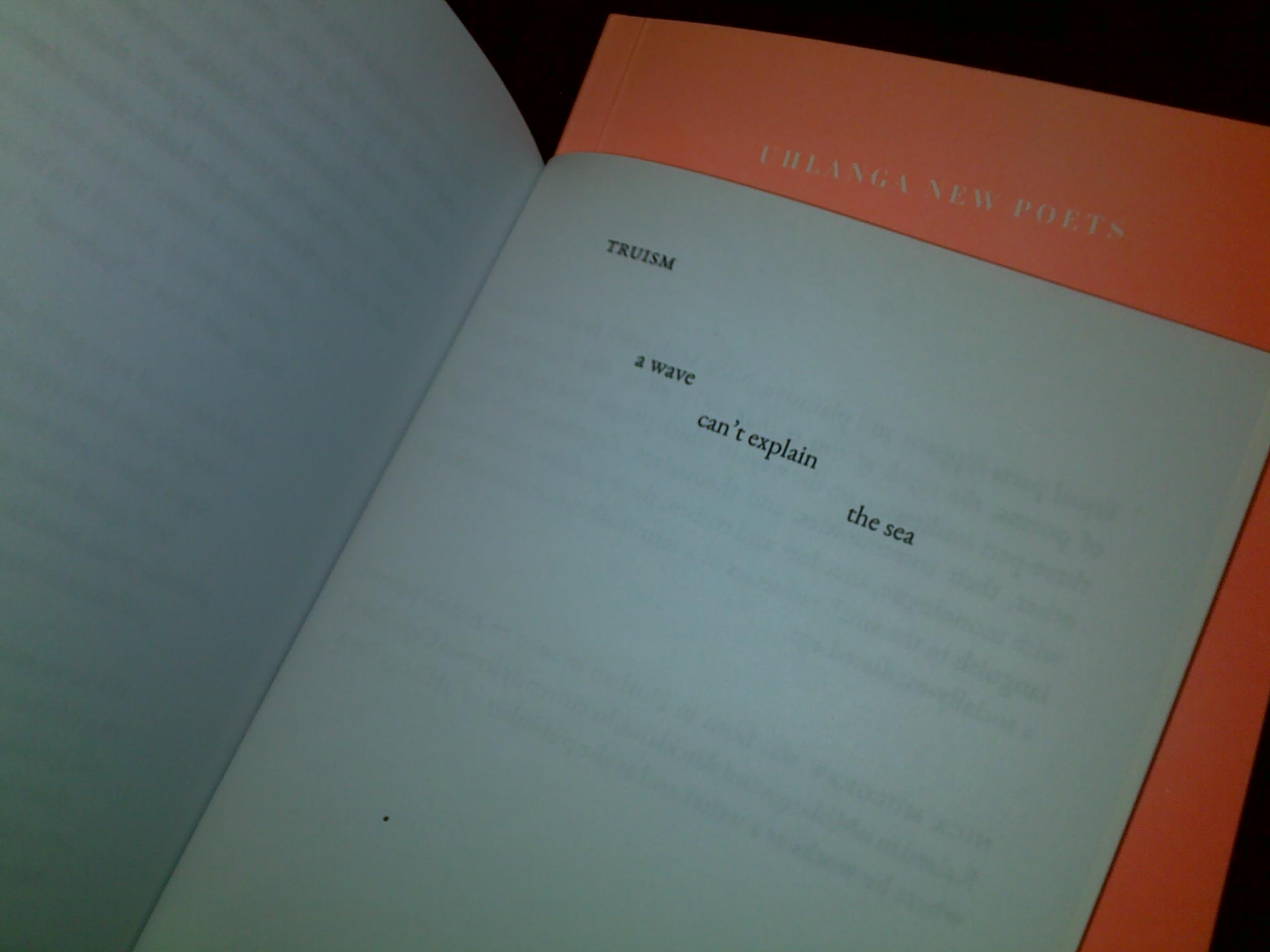
Before I buy a poetry book, I have this weird test. I find one or two short poems in the volume and if I like them, I buy it. If there aren’t any, the first few lines I turn to have to be bloody good to make up for the lack of short gems. Nick’s the myth is that we’re all in this together opens and ends with few-liners. And even the dedication is a poetic gesture of note. I won’t spoil the fun for poetry lovers and tell you what it is, or why the titles of the individual parts of the collection made me smile.

I will share the opening poem:

CONSISTENCY
it’s always the same
sun and it’s always the same
sky

I love its sublime simplicity which says everything about the power of poetry, because, naturally, just as the sun and the sky are never the same to the perceptive observer, every word in a poem in the hands of a true poet is a revelation, every time.

Or watch the seeming ‘blah, blah’ of the first lines of “feature pitch” turn to “… whether it’s expression or provocation / or minesweeping for echoes in this confluence / of galaxies, or inside the thoughts of another person, / one who sits at their computer at seven-thirty … nursing small sadnesses”.

Or the ease of “on watching Notting Hill for the thirteenth time” which ends with “aware giddily of his own unawareness”.

Or the poignancy of “maybe-gay”: “I say thank you in as deep a voice I can muster.”

Or the maturity of “testament”: “a recipe to give to a child who / in a few years might be someone like me / but in many ways better”.

Or the devastating truths of “first readers”, a poem anyone who had their intellectual and physical property violated will relate to.

There are the intimate moments of poems like “eyebrows” (“as you look / and kiss / in all those places that / no one really looks at”) or “a June missive” (“you / were alone as I was”), and the social consciousness of others like “barrier” (“things that would be small knowledge / that would make me morally obliged / to learn small things about him too”) or “Boxer Rebellion” (“… but really this world is too / vast, this past too deep, for us to / ever really know anything about / each other ever”).

And the longest poem “commitment” includes these lines about friendship, “a soft and strange peace to which you / could return sometimes but not rely on. / I think that might be useful to you,” and it is so long because “… my friend is / locked up – that isn’t just a thing you can / condense into another thing nonchalantly.”

At the core of it all are language and our ability to mis/communicate, especially now in the digital age that is revolutionising what it means to be human in a world of global calamities, fraught with the insanity of the everyday.
truism
I. Am. In. Awe.

“and readers will read it and be like,
wow, that Nick Mulgrew is really something,”
(“feature pitch”)

He is. And he is only 25. I mean, like, really!?

How to Survive Christmas

It hit me the other day that Christmas this year is going to be bloody awful to survive. And yesterday, I was hit by another thing which almost made it unnecessary to survive anything else as it nearly killed me: a tome of André’s collected short stories. It fell on me from a high shelf while I was reaching for other books. I suppose a fitting end to someone like me who lives for books, but Lady Fate decided that it was not my time to go yet. So I still have some surviving to do next month…
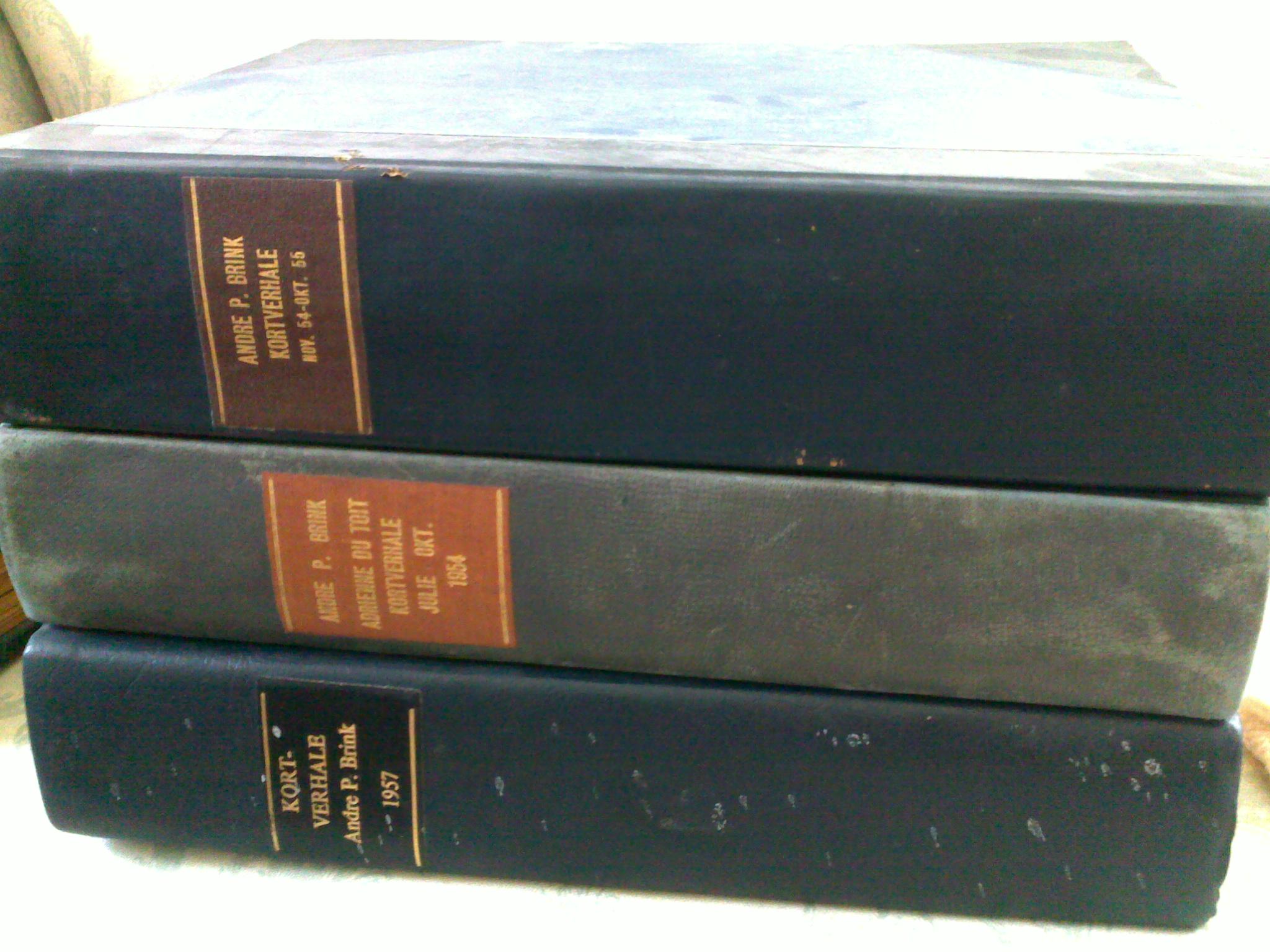
tomes
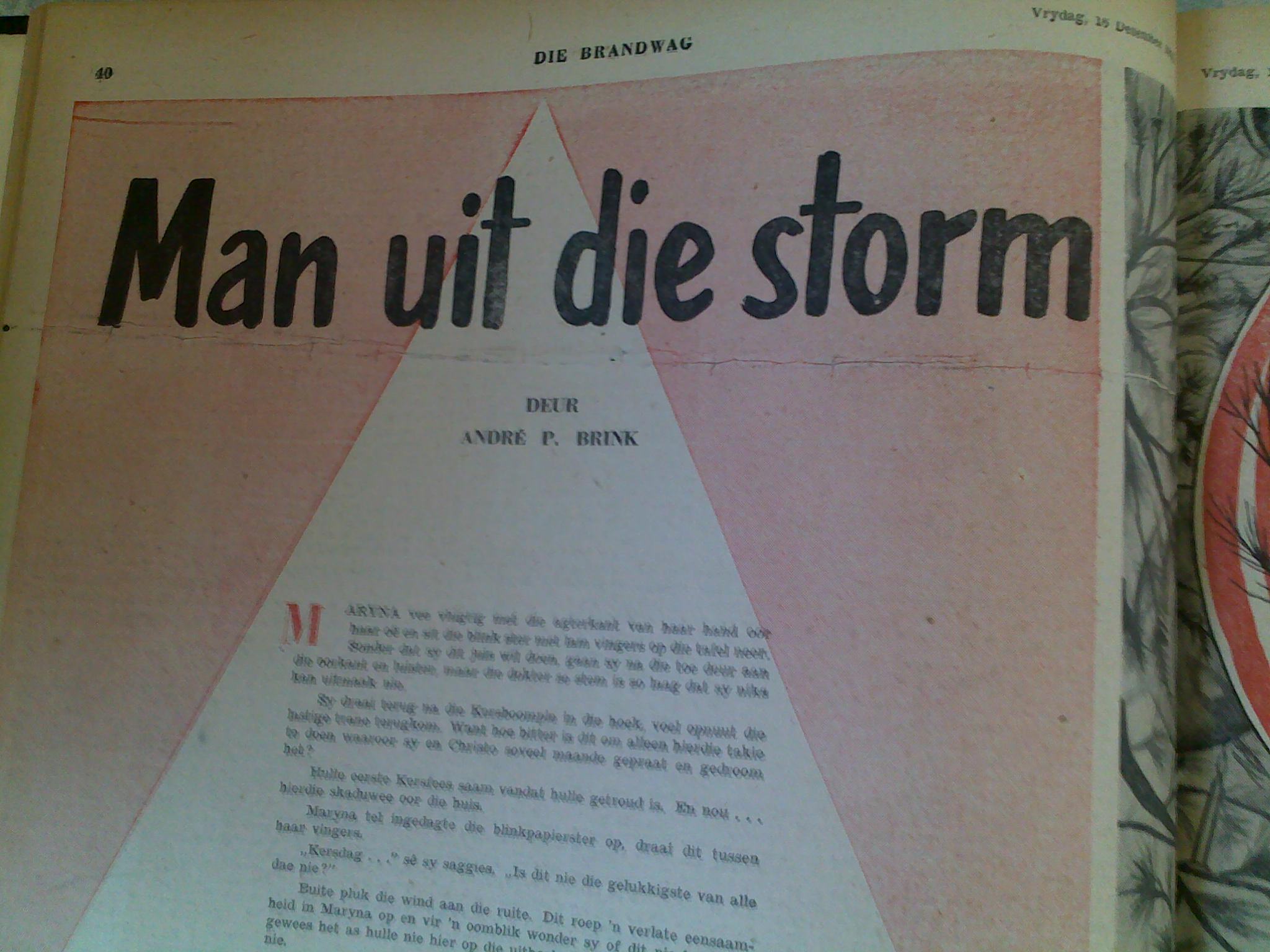
André always maintained that he was not a short story writer, but in fact he started off as one. Short stories are a fine way to “cut your teeth”, as a friend who visited today remarked when I told her about it. Indeed. Back in the day, it was also a way to earn some serious pocket money, and so to support himself in his student days André wrote short stories for magazines in the 1950s (he was barely twenty years old at the time – sigh! – some writers were born with a pen in their beautiful little chubby hands). He collected the individual magazine copies and had them bound into big leather tomes. I estimate there should be just over a hundred stories. Early André Brinks. How exciting is that! I knew about the collected tomes as they are stored in the little André Brink Library next to my study. But until recently I did not feel confident enough in my grasp of Afrikaans to attempt reading them. However, I do now!

When Christmas revealed itself as the nightmare that it is going to be this year, I started compiling a list of survival strategies. Since travelling is a bit of an issue, I can’t go to my family in Austria or Poland. And anyway, being away from home this year is simply impossible to imagine. So, Christmas in Cape Town it is going to be.

Karina’s How to Survive Christmas this Year List:

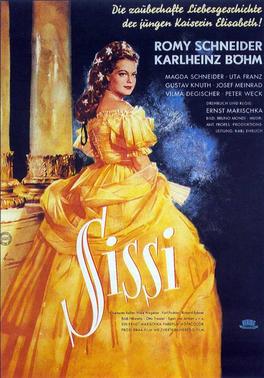
One: Watching all Sissi movies (for the hundredth time – hey, anything to survive!).
Sissi_film_poster
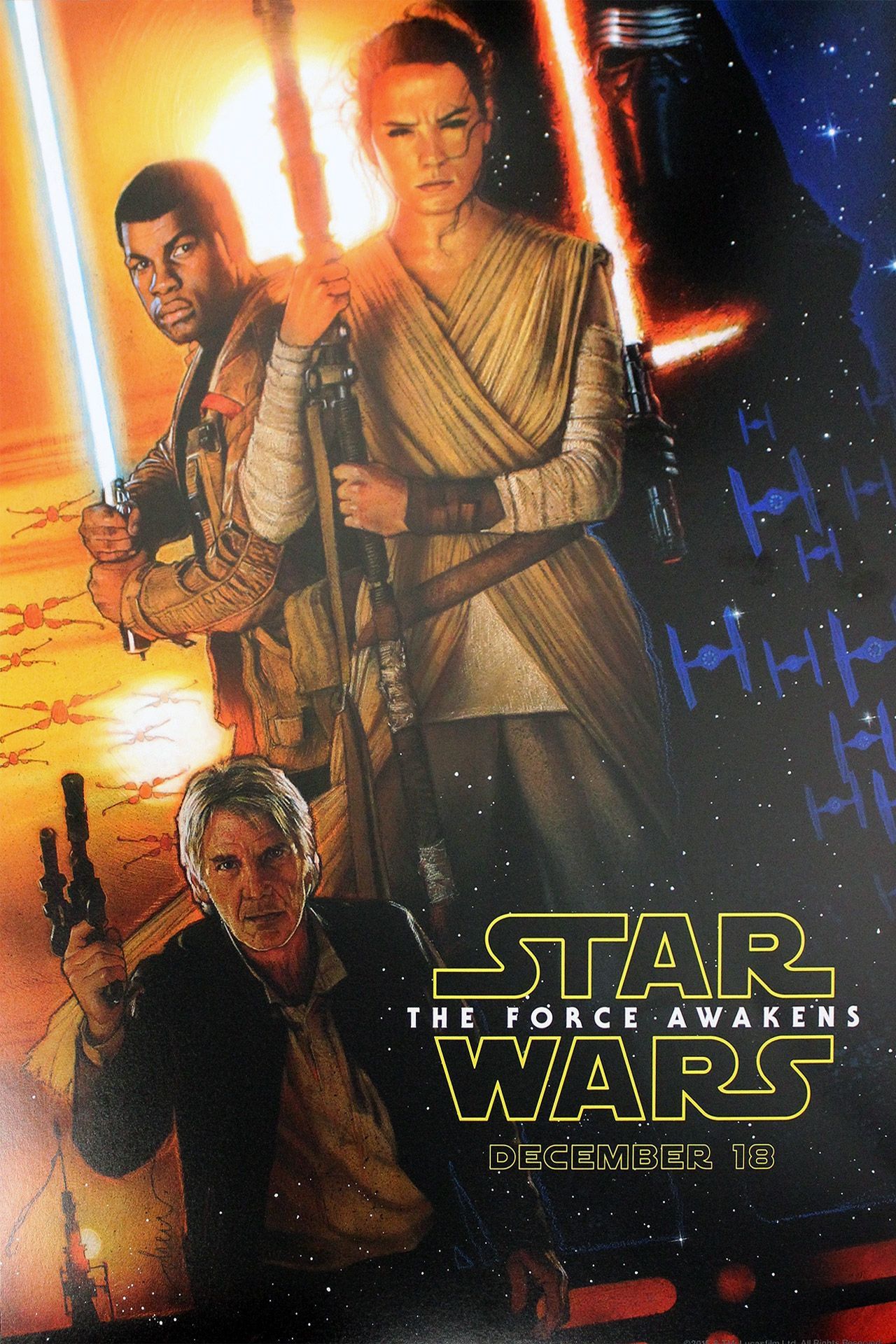
Two: Star Wars (whoever planned the release date for the latest Star Wars movie can pick up a really passionate kiss of gratitude from me, anytime – all yours, whoever you are!)
star_wars_poster_full_0_0
Three: Throwing the Christmas Party of the Year for my friends, divine Polish Christmas dishes and fireworks included.
Four hit me on the head: Reading all of André’s early short stories (some were written especially for Christmas!).
story1story2
Five was added this morning: I was invited and accepted to spend Christmas Eve and Christmas Day with my other family, the families of dear friends.

If I won’t be killed by falling books in December, I might be around for 2016! Pray for me.

Why Jack?

jack_reacher_the_affair
It might have been the attitude with which he left the diner. Or his ice blue eyes. Perhaps the way he had his coffee.

He arrived, as always, unexpected. Without a clue how badly he was needed.

Nobody calls him Jack. Not even his mother. But that is who he is to me.

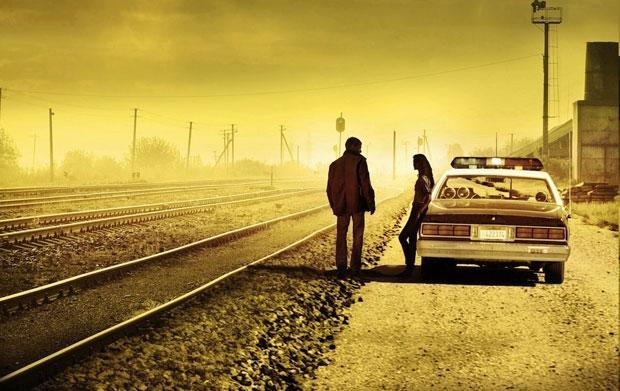
I reached out to Killing Floor at a time in my life when everything had become difficult, including breathing. And to stay alive, I need breathing as much as I need reading. It is a matter of survival, of being who I am. In the early stages of widowhood, I had to learn everything anew. How to breathe, to sleep, to eat. To smile. I picked up books in the hope of reclaiming a little bit of myself, a sense of stability, some solace, and an escape from my unbearable new reality, but every page was a struggle. Books which would have taken me two or three days to read, lasted for long agonising weeks. I was desperate. Until I picked up Jack Reacher on a roadside, typically hitchhiking out of town.

Lee Child’s hero is 21st-century’s Mr Darcy. “All men want to be like him and all women want to fuck him,” as Reacher was introduced to another fan who related the comment to me.

But why? Ungainly tall, mostly scruffy, socially awkward, a man of few words, he is not exactly the most attractive individual out there. But his allure is undisputed. Millions of fans around the world breathlessly awaiting the publication of the next instalment in the series every September can attest to the fact.

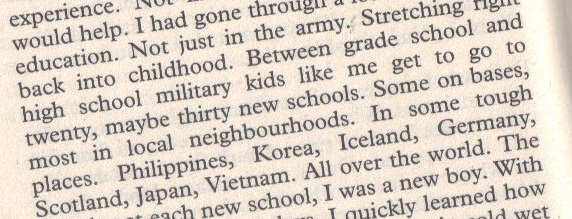
Jack Reacher grew up as a military brat, a third-culture kid, at home everywhere and nowhere. I relate to that. We have a coffee habit and a thing for numbers in common. When we know what we want, we go for it. We don’t do regrets.
Jack1
Jack went to West Point, served thirteen years in the military police and retired in the rank of Major. Since then, he roams the American landscape (with only occasional detours abroad), a folded toothbrush in his pocket and some cash in the bank, taking on odd jobs when necessary, stepping in whenever injustice crosses his path. He has a heart of gold and an admirable integrity. He never walks away from a situation before both are satisfied.
Jack2
Killing Floor (1997), the first in the now 20-titles strong series, is breathtakingly good. I was hooked after only a few pages. The exhilaration of devouring a book again at breakneck speed came with such a relief that I immediately bought the next one, and the next, and the next (once I even ventured out into a freezing and rainy Sunday night at quarter to nine and sped like a maniac through town to Exclusive Books before they closed because I’d just finished a Reacher novel and couldn’t bear to face a night without the following in my hands). By about the third or fourth, I was telling all my friends and all strangers willing to listen about my fascination (obsession or addiction might better describe it), and my gratitude (infinite). With the Reacher books, my hunger for all kinds of reading returned to me. Back in full force, it is the only thing from my past which has pulled through the greatest loss of my life unscathed.

With the exception of the latest, Make Me (which I simply could not resist), and Worth Dying For (which I turned to when I couldn’t find a copy of 61 Hours in time), I am reading the series in the sequence of publication. I intend to trace all the Jack Reacher short stories next. And then, the long wait until next September will set in. But like Jack, I am extremely patient.

It has been interesting to see how the series and the protagonist develop, responding to technological innovations (cell phones, ATMs, WWW) as well as changing socio-political realities (for example, Gone Tomorrow’s astute post-9/11 commentary), or ageing, human vulnerabilities. As the series progresses, chapters become shorter, cliff-hangers more irresistible. The writing is great. Just great. Child switches between first- and third-person, exploiting the diverse advantages both offer (although I do prefer the former). The dialogue is crisp and intelligent. The sense of humour deliciously dry. I enjoy the feminist touches: women are treated as equals in all respects. Jack has no ‘type’: the women he falls for come from different backgrounds, and are all strong, independent characters. Descriptive passages (landscape, weather, architecture, and especially the fight choreography) are intricately balanced between fast pace, slow motion, and, at times, pure poetry.

“It was raining and grey on the western peaks, and in the east the sun was slanting down through the edge of the clouds and gleaming off the tiny threads of snow in the high gullies.”
(The Visitor)

Child can capture the essence of a character in a few phrases.

“She looked like a solid, capable woman. She was about sixty years old, maybe more, white, blunt and square, with blond hair fading slowly to yellow and grey. Plenty of old German genes in there, or Scandinavian.” (Worth Dying For)

Consider a few of the opening lines:
“I was arrested in Eno’s diner.” (Killing Floor)
“The cop climbed out of his car exactly four minutes before he got shot.” (Persuader)
“They found out about him in July and stayed angry all through August.” (Without Fail)
“Moving a guy as big as Keever wasn’t easy.” (Make Me)

I can no longer count how many people I got into Jack. Only one person was disappointed with my recommendation. All others are as addicted as I am. It has been delightful to discover which of my friends had been fans for much longer than I. I keep getting messages of thanks. We all share stories of how Jack features in our lives. To me, he has become a trusted, reliable friend. I turn to him for adventure and smart entertainment – always a bloody-good read!
Jack3
Tense, entertaining, intriguing and never predictable, the Jack Reachers thrillers belong to the best of their kind.

And! The sex is good.

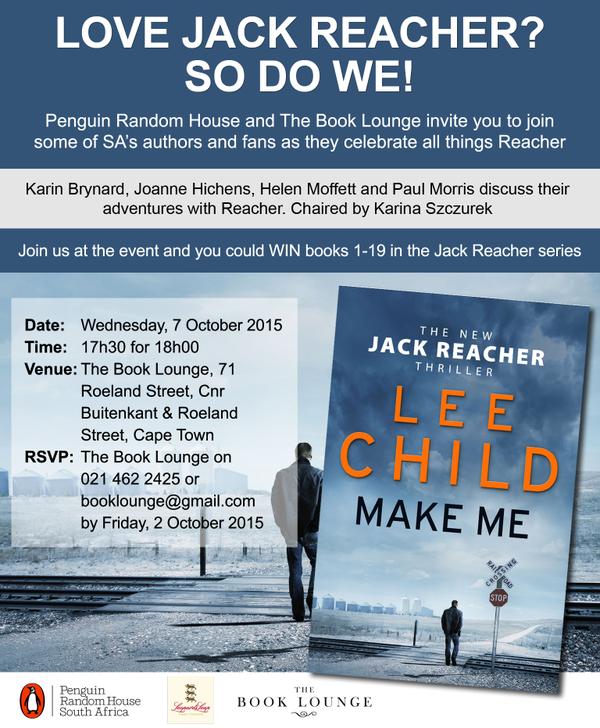
To find out more, join us for Cape Town’s celebration of Jack Reacher, and get Make Me at a 20% discount on the night!
Jack invite_new
IF IN DOUBT, READ REACHER!

Under my skin

It is one of those moments that has the potential to alter your entire life. Your hand and mind freeze. Time passes. Tentatively, you begin to move your fingertips again. Touch. Feel. You remember to breathe, but your thoughts are racing towards denial.

Finding a suspicious lump in your breasts is one of the most frightening experiences. And no matter how much you are aware of what needs to be done under the circumstances, for at least a while you live in a limbo of trying to explain the reality of the find away. It took me a few days to make an appointment with a doctor. I suspect that it might have taken me even longer if it hadn’t been for the second lump I discovered: much smaller than the first one, but so painful I could no longer put on a bra.

I made the call. In the afternoon I watched the doctor’s worried face as she examined me, finding many more lumps. I confessed that I had been too scared to touch my breasts after the second discovery. The doctor said that what we were feeling was most likely caused by hormonal changes that come and go and that I had nothing to worry about, but there was one lump – the first – that was unusual and that it was better to check it out. She immediately phoned the radiologist and made an appointment.

Driving home, it was tough not to give in to tears and despair. I have been through so much this year, but the last few weeks have been different, more stable, calmer. And suddenly I was facing another possible game changer all over again. I felt suspended, unable to grasp the options unfolding in front of me. I remembered the good advice of one of my Austrian doctors: “Karina, go home, go for a brisk walk along the Mattig, drink a glass of red wine, and go to bed,” he said. I was lying with my head down on his desk, so ill that I thought I would never get healthy again.

“But I have a serious fever, am taking antibiotics, it’s minus ten outside, and snowing,” I mumbled into the desk.

“Do as told, go!” he ordered.

I did. After the walk and the wine, I fell into a deep sleep on my brother’s couch. When I woke up hours later, I felt better. It was a turning point. After weeks of struggling with terrible infections, I began to recover.

And so, remembering the good doctor, I drove home, went for a long walk along the Liesbeek River, had a glass of red wine and went to bed with a book (yes, Jack Reacher).

A week passed in which I tried to keep the fear at bay, tried really hard not to think about the near future too much. On the day of my mammogram (my first ever), driving to the hospital, I was fully aware that this could be the day when everything changes and life is never the same again.

The examination was nothing like I heard or imagined. Painless, quick and done with a lot of care and understanding, despite the fact that apparently bony women with tiny breasts experience the most discomfort. I am both, but I didn’t. The ultrasound afterwards was more unpleasant, but also performed with so much care that I felt safe and in the best of professional hands.

I didn’t have to wait long for the results. All clear. All benign. Nothing sinister.

The relief was so enormous I wanted to jump and dance at the hospital. Instead I sent messages to friends who wanted to know my news. Two were waiting with coffee and croissants. We celebrated. The day did not turn out to be THAT DAY. I am lucky. But many other women go through the trauma of a cancer diagnosis on days like these. For them life changes irrevocably. Many recover, but not all. Moira died earlier this year. She was my age. When she was diagnosed, it was much too late to do anything. I wonder whether she had felt the threat, but was overwhelmed by denial for too long to be saved.

October is breast cancer awareness month. Be wiser than me: Don’t wait, don’t let the fear paralyse you, act. Please.

Sugar Man: The Life, Death and Resurrection of Sixto Rodriguez by Craig Bartholomew Strydom and Stephen ‘Sugar’ Segerman

“I remember her tongue sliding into my mouth,” a friend tells me, his eyes sparkling, mischief playing on his lips. A pause follows while everyone around the table is trying to recall their first French kiss. “Yeah, ‘Sugar Man’ was playing in the background,” he says eventually, snapping us out of our respective reveries.

“I wonder how many times you had sex”, Sixto Rodriguez sings in “I Wonder”, one of the songs on his debut album, Cold Fact, which was released in South Africa in 1971. The South African release is the beginning of one of the most incredible stories. Ever.

Years of enthusiasm and dedicated research, countless unbelievable coincidences, and an Oscar-winning documentary later, Sixto Rodriguez has risen from decades-long obscurity to enjoy the world-wide recognition he and his music deserve.

Sugar Man coverAnd now, the two men who refused to give up on a crazy idea and started it all, Craig Bartholomew Strydom and Stephen ‘Sugar’ Segerman, have written a fascinating book chronicling the quest.

Many of my South Africa friends have a Rodriguez story to tell. Like Strydom and Segerman, most of them first heard the music in the army. All believed the rumours that Rodriguez had committed a spectacular suicide. But unlike the authors of Sugar Man: The Life, Death and Resurrection of Sixto Rodriguez (2015), they did not set out to find out what exactly had happened to the singer with an astounding cult following in South Africa.

I’d never heard of Rodriguez until I saw Malik Bendjelloul’s remarkable documentary Searching for Sugar Man (2012). The soundtrack immediately crept under my skin. I shed tears of unbelief and joy watching the amazing story.

I cried again every few pages while reading. With infectious passion, Strydom and Segerman offer an incisive behind-the-scenes look at the Rodriguez Saga. Divided in four parts – The Mystery, The Man, The Music and The Movie – Sugar Man: The Life, Death and Resurrection of Sixto Rodriguez is full of gems Rodriguez fans will love, including two generous photo sections. The writing is great, and the beauty of reading the story is that you can slow down at leisure and savour the magic of every step along the authors’ journey.

I met and heard Strydom and Segerman for the first time at the Open Book Festival in Cape Town earlier this month. Listening to them speak about Rodriguez and their involvement in his story was magical, reliving it all once more through Sugar Man: The Life, Death and Resurrection of Sixto Rodriguez even more so. Their generosity, die-hard dedication and integrity (there is no glossing over the difficult bits in the book) is truly inspiring.

Craig Bartholomew Strydom and Stephen ‘Sugar’ Segerman with Andrew Donaldson at Open Book 2015 (Photo: Books Live)

Craig Bartholomew Strydom and Stephen ‘Sugar’ Segerman with Andrew Donaldson at Open Book 2015 (Photo: Books Live)


Malik, who heard the news with Brittany by his side while on a trip to Los Angeles, was finally able to exhale. It was as if he had been holding his breath for four years. He was now only one step away from the moviemaking’s greatest accolade. Craig went for a long walk after the announcement, remembering his statement to his army friends in 1984: ‘I am going to find out what happened to Rodriguez.’ His words may have dissipated into the ether, but they had been the genesis of an idea. An idea that was later energised by the liner notes of a CD and eventually realised. Now, thanks to an indefatigable Swede and a young record dealer who literally begged for the rights to re-release the music of the rock star who never was, that idea, that story, was world-famous. And so, at long last, was the withdrawn poet-sage-musician-activist who started it all.
(Sugar Man: The Life, Death and Resurrection of Sixto Rodriguez, 234-5).

For all Sugar Man news: The Official Rodriguez Website