Category Archives: Events

Why Jack?

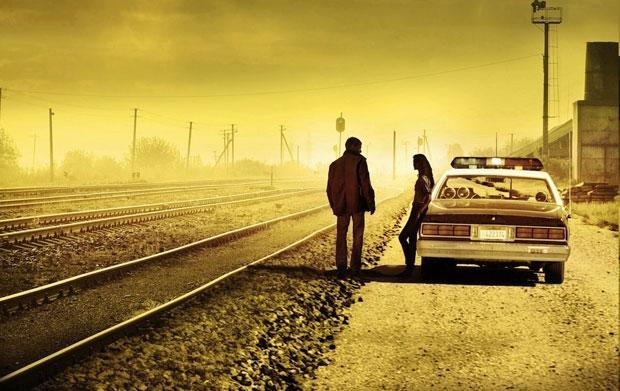
jack_reacher_the_affair
It might have been the attitude with which he left the diner. Or his ice blue eyes. Perhaps the way he had his coffee.

He arrived, as always, unexpected. Without a clue how badly he was needed.

Nobody calls him Jack. Not even his mother. But that is who he is to me.

I reached out to Killing Floor at a time in my life when everything had become difficult, including breathing. And to stay alive, I need breathing as much as I need reading. It is a matter of survival, of being who I am. In the early stages of widowhood, I had to learn everything anew. How to breathe, to sleep, to eat. To smile. I picked up books in the hope of reclaiming a little bit of myself, a sense of stability, some solace, and an escape from my unbearable new reality, but every page was a struggle. Books which would have taken me two or three days to read, lasted for long agonising weeks. I was desperate. Until I picked up Jack Reacher on a roadside, typically hitchhiking out of town.

Lee Child’s hero is 21st-century’s Mr Darcy. “All men want to be like him and all women want to fuck him,” as Reacher was introduced to another fan who related the comment to me.

But why? Ungainly tall, mostly scruffy, socially awkward, a man of few words, he is not exactly the most attractive individual out there. But his allure is undisputed. Millions of fans around the world breathlessly awaiting the publication of the next instalment in the series every September can attest to the fact.

Jack Reacher grew up as a military brat, a third-culture kid, at home everywhere and nowhere. I relate to that. We have a coffee habit and a thing for numbers in common. When we know what we want, we go for it. We don’t do regrets.
Jack1
Jack went to West Point, served thirteen years in the military police and retired in the rank of Major. Since then, he roams the American landscape (with only occasional detours abroad), a folded toothbrush in his pocket and some cash in the bank, taking on odd jobs when necessary, stepping in whenever injustice crosses his path. He has a heart of gold and an admirable integrity. He never walks away from a situation before both are satisfied.
Jack2
Killing Floor (1997), the first in the now 20-titles strong series, is breathtakingly good. I was hooked after only a few pages. The exhilaration of devouring a book again at breakneck speed came with such a relief that I immediately bought the next one, and the next, and the next (once I even ventured out into a freezing and rainy Sunday night at quarter to nine and sped like a maniac through town to Exclusive Books before they closed because I’d just finished a Reacher novel and couldn’t bear to face a night without the following in my hands). By about the third or fourth, I was telling all my friends and all strangers willing to listen about my fascination (obsession or addiction might better describe it), and my gratitude (infinite). With the Reacher books, my hunger for all kinds of reading returned to me. Back in full force, it is the only thing from my past which has pulled through the greatest loss of my life unscathed.

With the exception of the latest, Make Me (which I simply could not resist), and Worth Dying For (which I turned to when I couldn’t find a copy of 61 Hours in time), I am reading the series in the sequence of publication. I intend to trace all the Jack Reacher short stories next. And then, the long wait until next September will set in. But like Jack, I am extremely patient.

It has been interesting to see how the series and the protagonist develop, responding to technological innovations (cell phones, ATMs, WWW) as well as changing socio-political realities (for example, Gone Tomorrow’s astute post-9/11 commentary), or ageing, human vulnerabilities. As the series progresses, chapters become shorter, cliff-hangers more irresistible. The writing is great. Just great. Child switches between first- and third-person, exploiting the diverse advantages both offer (although I do prefer the former). The dialogue is crisp and intelligent. The sense of humour deliciously dry. I enjoy the feminist touches: women are treated as equals in all respects. Jack has no ‘type’: the women he falls for come from different backgrounds, and are all strong, independent characters. Descriptive passages (landscape, weather, architecture, and especially the fight choreography) are intricately balanced between fast pace, slow motion, and, at times, pure poetry.

“It was raining and grey on the western peaks, and in the east the sun was slanting down through the edge of the clouds and gleaming off the tiny threads of snow in the high gullies.”
(The Visitor)

Child can capture the essence of a character in a few phrases.

“She looked like a solid, capable woman. She was about sixty years old, maybe more, white, blunt and square, with blond hair fading slowly to yellow and grey. Plenty of old German genes in there, or Scandinavian.” (Worth Dying For)

Consider a few of the opening lines:
“I was arrested in Eno’s diner.” (Killing Floor)
“The cop climbed out of his car exactly four minutes before he got shot.” (Persuader)
“They found out about him in July and stayed angry all through August.” (Without Fail)
“Moving a guy as big as Keever wasn’t easy.” (Make Me)

I can no longer count how many people I got into Jack. Only one person was disappointed with my recommendation. All others are as addicted as I am. It has been delightful to discover which of my friends had been fans for much longer than I. I keep getting messages of thanks. We all share stories of how Jack features in our lives. To me, he has become a trusted, reliable friend. I turn to him for adventure and smart entertainment – always a bloody-good read!
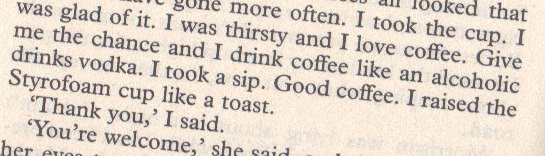
Jack3
Tense, entertaining, intriguing and never predictable, the Jack Reachers thrillers belong to the best of their kind.

And! The sex is good.

To find out more, join us for Cape Town’s celebration of Jack Reacher, and get Make Me at a 20% discount on the night!
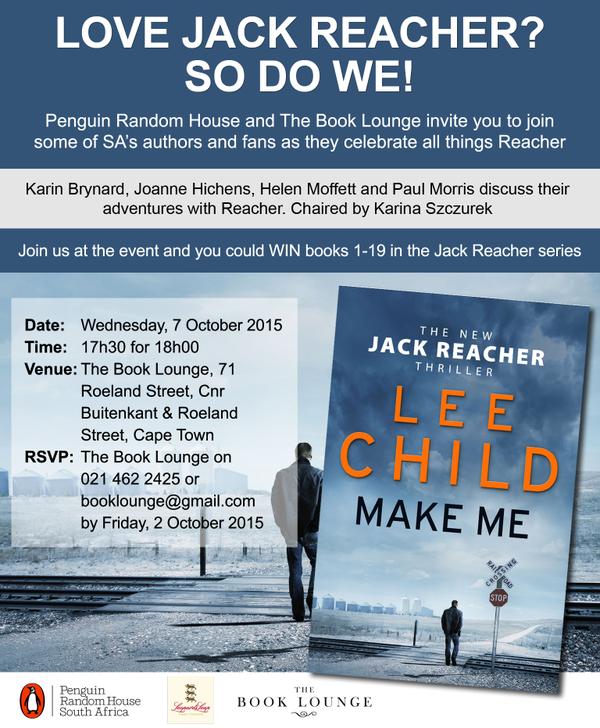
Jack invite_new
IF IN DOUBT, READ REACHER!
Sugar Man: The Life, Death and Resurrection of Sixto Rodriguez by Craig Bartholomew Strydom and Stephen ‘Sugar’ Segerman

“I remember her tongue sliding into my mouth,” a friend tells me, his eyes sparkling, mischief playing on his lips. A pause follows while everyone around the table is trying to recall their first French kiss. “Yeah, ‘Sugar Man’ was playing in the background,” he says eventually, snapping us out of our respective reveries.

“I wonder how many times you had sex”, Sixto Rodriguez sings in “I Wonder”, one of the songs on his debut album, Cold Fact, which was released in South Africa in 1971. The South African release is the beginning of one of the most incredible stories. Ever.

Years of enthusiasm and dedicated research, countless unbelievable coincidences, and an Oscar-winning documentary later, Sixto Rodriguez has risen from decades-long obscurity to enjoy the world-wide recognition he and his music deserve.

Sugar Man coverAnd now, the two men who refused to give up on a crazy idea and started it all, Craig Bartholomew Strydom and Stephen ‘Sugar’ Segerman, have written a fascinating book chronicling the quest.

Many of my South Africa friends have a Rodriguez story to tell. Like Strydom and Segerman, most of them first heard the music in the army. All believed the rumours that Rodriguez had committed a spectacular suicide. But unlike the authors of Sugar Man: The Life, Death and Resurrection of Sixto Rodriguez (2015), they did not set out to find out what exactly had happened to the singer with an astounding cult following in South Africa.

I’d never heard of Rodriguez until I saw Malik Bendjelloul’s remarkable documentary Searching for Sugar Man (2012). The soundtrack immediately crept under my skin. I shed tears of unbelief and joy watching the amazing story.

I cried again every few pages while reading. With infectious passion, Strydom and Segerman offer an incisive behind-the-scenes look at the Rodriguez Saga. Divided in four parts – The Mystery, The Man, The Music and The Movie – Sugar Man: The Life, Death and Resurrection of Sixto Rodriguez is full of gems Rodriguez fans will love, including two generous photo sections. The writing is great, and the beauty of reading the story is that you can slow down at leisure and savour the magic of every step along the authors’ journey.

I met and heard Strydom and Segerman for the first time at the Open Book Festival in Cape Town earlier this month. Listening to them speak about Rodriguez and their involvement in his story was magical, reliving it all once more through Sugar Man: The Life, Death and Resurrection of Sixto Rodriguez even more so. Their generosity, die-hard dedication and integrity (there is no glossing over the difficult bits in the book) is truly inspiring.

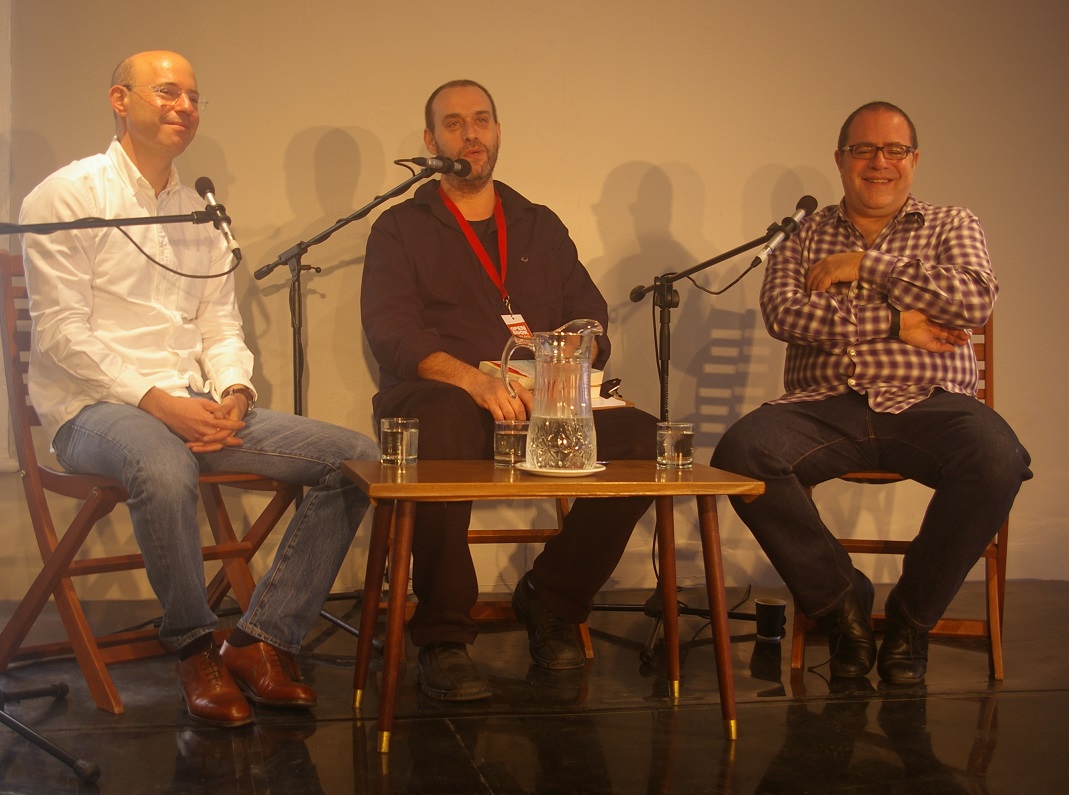
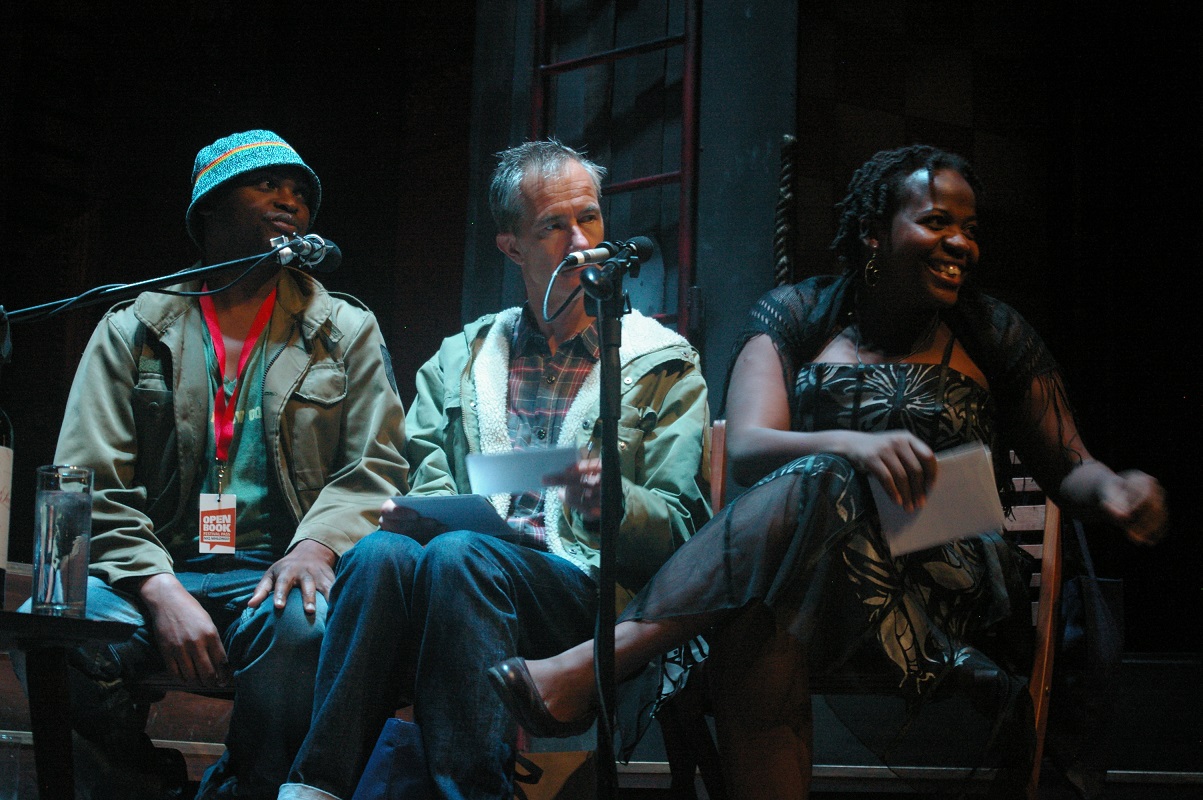
Craig Bartholomew Strydom and Stephen ‘Sugar’ Segerman with Andrew Donaldson at Open Book 2015 (Photo: Books Live)

Craig Bartholomew Strydom and Stephen ‘Sugar’ Segerman with Andrew Donaldson at Open Book 2015 (Photo: Books Live)


Malik, who heard the news with Brittany by his side while on a trip to Los Angeles, was finally able to exhale. It was as if he had been holding his breath for four years. He was now only one step away from the moviemaking’s greatest accolade. Craig went for a long walk after the announcement, remembering his statement to his army friends in 1984: ‘I am going to find out what happened to Rodriguez.’ His words may have dissipated into the ether, but they had been the genesis of an idea. An idea that was later energised by the liner notes of a CD and eventually realised. Now, thanks to an indefatigable Swede and a young record dealer who literally begged for the rights to re-release the music of the rock star who never was, that idea, that story, was world-famous. And so, at long last, was the withdrawn poet-sage-musician-activist who started it all.
(Sugar Man: The Life, Death and Resurrection of Sixto Rodriguez, 234-5).

For all Sugar Man news: The Official Rodriguez Website

The magic of Open Book 2015

Helen MacdonaldSo, who else has fallen in love with Helen Macdonald during Open Book 2015 in Cape Town? H is for Hawk has been on my radar for a while, but I’ve only decided to get the book when I heard about Macdonald’s generous endorsement of Stray: An Anthology of Animal Stories and Poems, edited by Diane Awerbuck and Helen Moffett (all royalties donated to TEARS Animal Rescue). How cool is that? Macdonald showed up at the Open Book Stray Readings and stole my heart reading the passage in which she first saw and fell for Mabel, the goshawk who helped her cope during her time of bereavement. At one of her other Open Book events, Macdonald spoke about how you can’t tame grief and how sometimes you have to do mad things in order to survive it.

This was my first Open Book since André’s death. Last year, we were still mourning Nadine Gordimer – together. We’d thought that we might celebrate the tenth anniversary of our first and only public interview (at Schloss Leopoldskron in Salzburg in 2004) with an event at the festival, but André was recovering from a knee operation and did not feel up to it. We did pay tribute to Nadine: with Margie Orford, Billy Kahora and Imraan Coovadia reading from her work and sharing stories about her influence on their lives and writing. André read from his own work at another event. We attended a few others, gathering memories which all returned to me this year when I was walking around The Fugard Theatre – alone.

At the opening ceremony, Mervyn Sloman said that every year Open Book is infused with magic. How true. “You’re a magician,” someone magical in my life said to me once. Perhaps I can conjure miracles when inspiration and desire strike, but I would like to think of myself as a magician of a different kind, one who can recognise the magic of the everyday. Even when suffocating in the clutches of grief.

with SallyMagic was all over The Book Lounge and The Fugard Theatre during Open Book this year. In the stories I read preparing for the festival (discovering my love for the work of Karen Joy Fowler, Melissa de Villiers and Andrey Kurkov in the process); in the warmth of a friend’s grip around my arms at the opening ceremony; in Karen Joy Fowler’s humour; in the melody Petina Gappah sang during her interview with Lauren Beukes; in a walk in the sun between events; in Stephen Segerman’s and Craig Bartholomew Strydom’s devotion to the Sugar Man story; in Claire Robertson’s mesmerising reading voice; in seeing the first cover designs for the special edition of Flame in the Snow; in Elleke Boehmer’s, Henrietta Rose-Innes’s and Craig Higginson’s inspiring eloquence; in a dim sum lunch, a bubbly and a Glenfiddich shared with friends; in Beverly Rycroft’s moving honesty; in a friend’s sparkling eyes which could have been clouded by loss but weren’t; in the hospitality of Fugard’s Iris who with her colleagues took such great care of all of us; and, last but not least, in S.J. Naudé’s careful thoughts about our craft – the magic and beauty of it all.

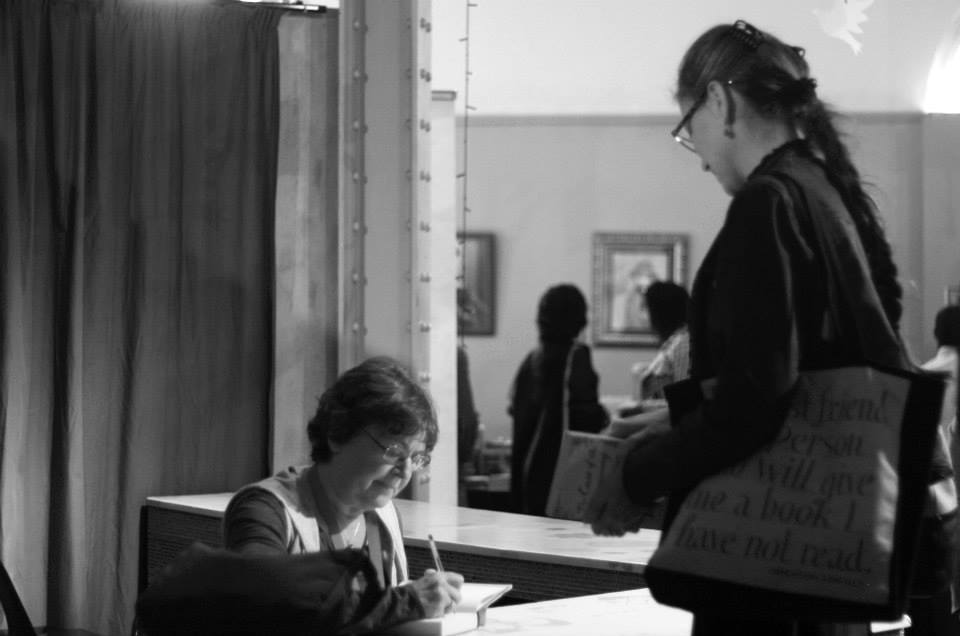
with KarenI loved chairing the three events I was asked to. I loved seeing old friends and meeting new ones. I loved interacting with writers whose work has meant so much to me over the years. I loved buying books and talking about literature with people who care. I loved being asked to sign my novel. I loved feeling that I was close to returning to my own creative writing. I loved every single memory from the past. I loved making new ones.

Thank you, Mervyn, Frankie and all the other magicians at The Book Lounge.

You can’t tame grief. Grief is this creature that moves into your home when death strikes. It lurks, ready to pounce at all times, especially when you least expect it. It never leaves again. You can’t tame it, but you can tame the way you react to it. And live. And experience joy again, in a story and in your life. And smile. And appreciate the magic. That moment.
with Andrey and Andrew

(Photos: Books Live and PEN SA)

Interview: Ivan Vladislavić and 101 Detectives

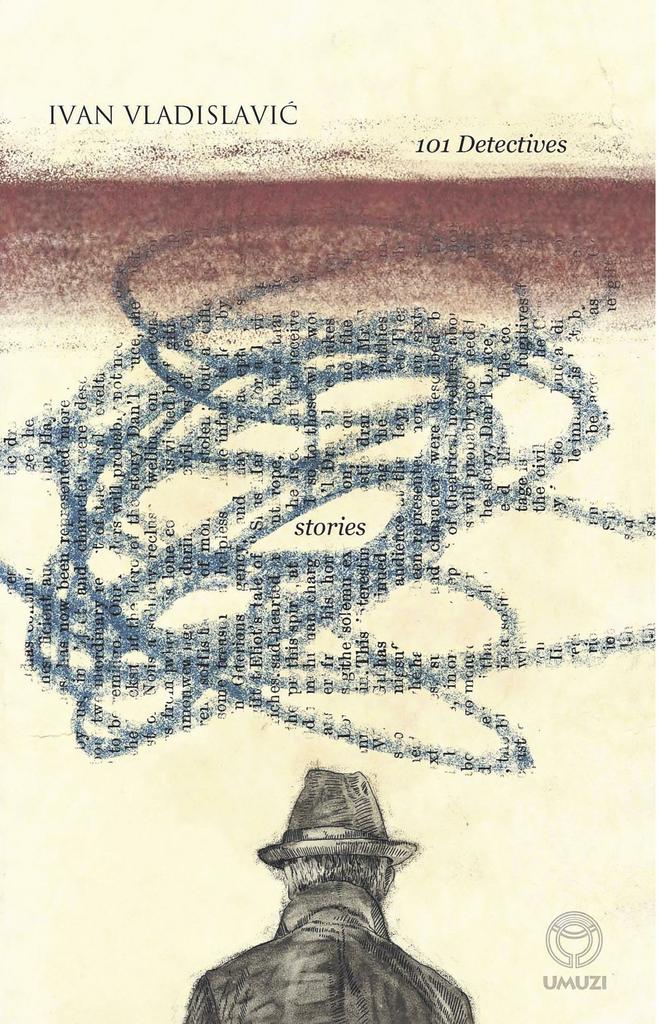
101 DetectivesThe FollyMy first encounter with Ivan Vladislavić’s writing took place in a multidimensional construct of language and fantasy that is his remarkable novel The Folly (1993). It must have been around a decade ago when I moved to South Africa. Since then I have always returned to his books with a great sense of anticipation which has never been disappointed. His latest collection of stories, 101 Detectives, is no different, although it baffled me in the beginning. The first three pieces made me think a lot about the intellectual playfulness of The Folly. Some of the stories are set in recognisable and yet shifted or alternative realities which are quite uncanny. In a recent e-interview I asked Vladislavić whether this was his way of avoiding the cliché trap, of challenging the impression of one of his characters that “no matter what I do or say, or how I remember it or tell it, it will never be interesting enough” (“Exit Strategy”)? He hadn’t gone about it “deliberately”, he wrote, and mentioned that in his youth he read “a lot of sci-fi and was taken with writers like Ray Bradbury, who could twist the ordinary into the alien very skilfully through a kind of estranging lyricism”. Of his own early work he says that “the strangeness is more a product of language and imagery than of constructed setting.” More recently he had read speculative fiction again, “which may account for the atmosphere of a story like ‘Report on a Convention’. Many ordinary contemporary spaces are strange. One grows accustomed to it, but the precincts and lifestyle estates often have a weirdly layered, compelling artificiality to them. They’re at such an odd angle to the surrounding world that ‘shifting’ them would make them feel less rather than more peculiar.”

Reading and listening to Vladislavić, the key word I associate with his work is “intellectual”, especially in conjunction with “stimulation”, and it is the main reason why I read him. He challenges me, inspires me to question reality and literature, to perceive both more consciously and often with deeper appreciation. I delight in the engagement. When I think Vladislavić, I also think art, photography, beauty, language, and, perhaps above all, Johannesburg. Few have written as perceptively about Johannesburg as he, “mapping and mythologising” the city (in the words of Elleke Boehmer). Few can employ language to capture not only the beauty of experience, but the beauty of language itself to such stunning effect. Few have entered collaborations with artists of different media, as victoriously enhancing the disciplines in the process. In 2010, together with the South African photographer David Goldblatt, Vladislavić published TJ & Double Negative, a novel with photographs. More recently he worked with Sunandini Banerjee on an illustrated novella titled A Labour of Moles (2012), and 101 Detectives also includes a “Special Feature”: a gallery of photocopies of dead letters, ie letters never delivered to their intended recipients because of address errors and suchlike, referred to in the story “Dead Letters”. There are also images of the places they were supposed to have reached, taken from an exhibition in Poland dedicated to them.

What appeals to Vladislavić in this kind of exchange? I wondered…

Continue reading: LitNet

1 July: Talking love and loss with Réney Warrington at Love Books, Johannesburg

invite vir love books
Next week at Love Books in Johannesburg, I will have the pleasure of talking to the author and photographer Réney Warrington whose debut novel October (also published in Afrikaans as Oktober) was one of my favourite reads of last year. At the moment, Réney is also exhibiting at the Circa Gallery in Johannesburg. From the few glimpses I have had of it online, I can’t wait to see the entire exhibition.
Apart from sharing a publisher (Protea Book House), being debut novelists, and writing about sexuality and the trials and tribulations of relationships, Renéy and I have something in common which has resulted in a meaningful exchange of letters and messages in recent months: grief. We have both lost Loved Ones at the beginning of the year and are trying to find our feet in a reality completely changed by the experience.

Philida van de Delta

I remember the pages of the manuscripts spread all around our lounge floor: Afrikaans, English, several versions of each, all a complete muddle. André and I going around with scissors and Sellotape, piecing the different scenes together, then transferring the final ‘cut’ to the computer, editing, correcting, arguing, crying, laughing, and every inch of the way loving the story and the remarkable woman at its centre – those were the final stages of André’s last novel, Philida (2012), longlisted for the Man Booker later that year just in time for the publication.
Philida4

She arrived like all stories do, unexpected.

A phone call from a man who’d bought a farm near Franschhoek. An uncanny family connection. A museum opening. A barefoot girl with a heart full of courage. No wonder André fell in love with her. She walked straight into his imagination. And now she is stepping out of the pages of his book into the songs of her descendants.
Philida3
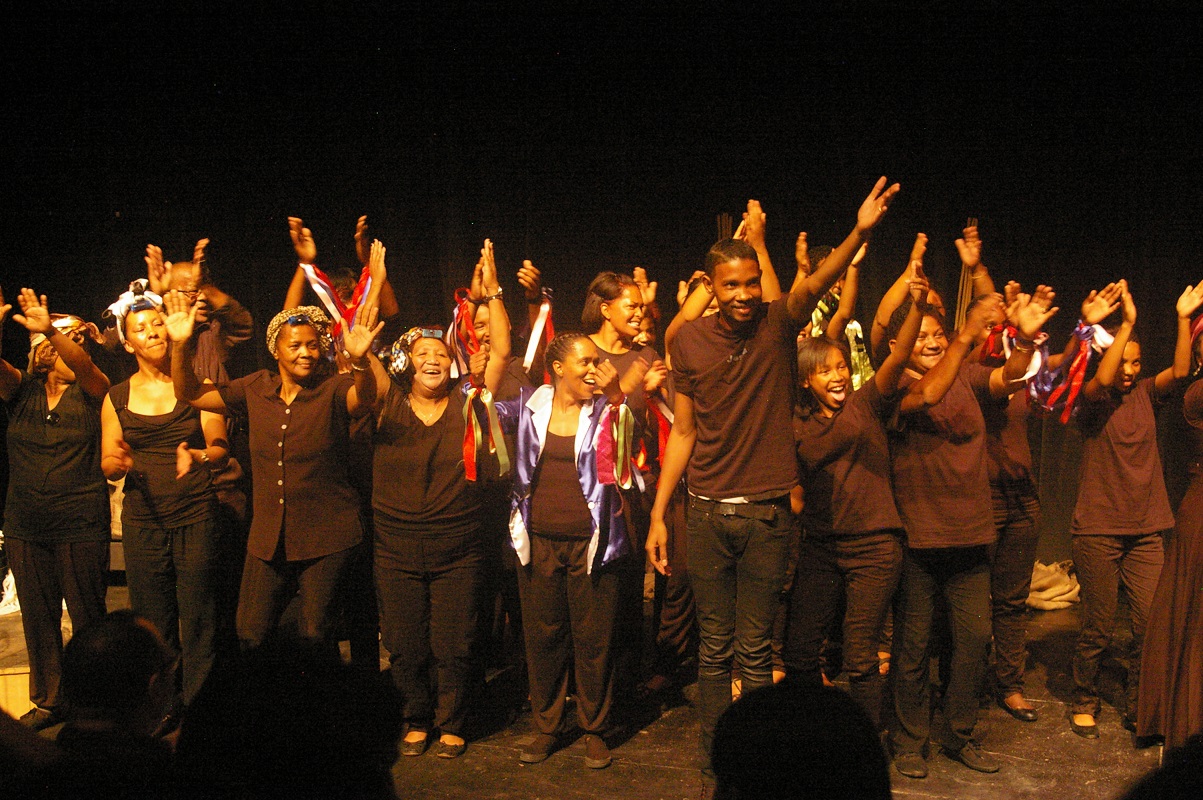
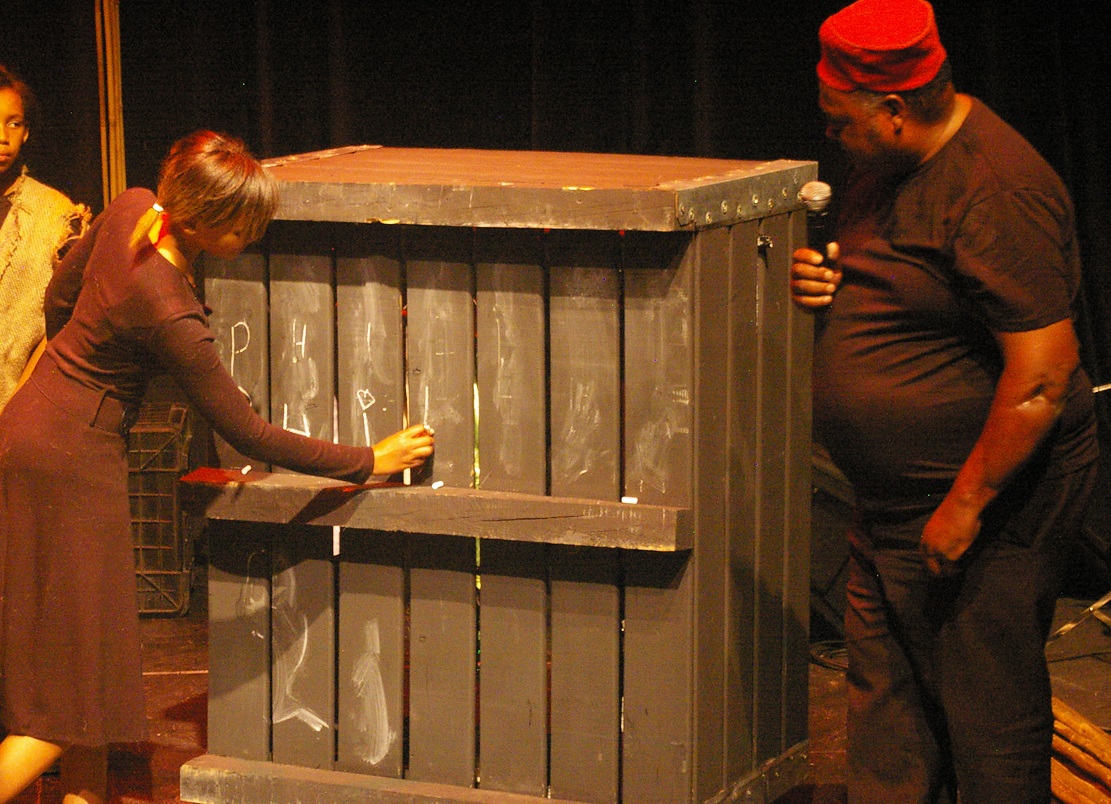
The people living, working and making music at Solms Delta have read Philida and turned her story into a musical.

I was invited to see the premier at the Baxter Theatre last night.
Philida1
Since André’s death, I have been unable to predict what will give me joy, what will hurt me. Everything is different now. What I believe will be difficult for me, turns out to be easy. At times, the easy stuff becomes impossible. Yesterday’s performance was utterly beautiful in all respects – simply stunning! Yet, it completely broke me. I wasn’t the only one who’d shed tears while following Philida’s moving story. I sat next to Tracey Randle, the wonderful historian who’d helped André do research for the book, and to Beverley Scott, mother of the late Alex van Heerden who, with his talent, charisma and enthusiasm, had brought music to the farm in the first place. We all cried, but I was the only one who had to leave, sobbing uncontrollably, just after the show.
Philida7
André and Alex should have been there last night, not only in the words and the music on stage, not only in our hearts…
Philida2
The beautiful young woman who sang Philida was the embodiment of André’s vision. He would have wept with all of us had he seen her come alive across space and time at the Baxter last night. The entire cast and the musicians were pure magic. They made my heart sing. The evening, though, broke it, too. And I was not prepared. I wish I could have said thank you or at least goodbye, but all I was capable of was finding refuge in the spare bedroom of my friends’ house which since early February has been on standby for such moments when being alone is not a viable option for me.
Philida5
I am humbled by the experience in all kinds of ways, and grateful. So many lives have been touched, changed, transformed for the better in all these years since we first heard Mark Solms’ message on our answering machine, that he wanted to meet, to tell us a story…
Philida9
Thank you.

PHILIDA VAN DE DELTA
at the 5th Annual Zabalaza Festival at the Baxter
Philida6
Company – Solms Delta
Writer – Members of Delta Soetstemme choir, facilitated by Amelda Brand
Director – Amelda Brand
Cast
Lyrics:
Delta Soetstemme choir, facilitated by Adriaan Brand, Leonore Bredekamp, Nick Turner, Amelda Brand and Jervis Pennington
Songs arrangement – Delta Langbroek band, musically facilitated by Adriaan Brand and Carlo Fabe
Language(s) – Afrikaans
Philida8
Performance Dates & Times:
22 March @ 18h00 – BAXTER FLIPSIDE THEATRE
27 March @ 16h00 – BAXTER Concert Hall

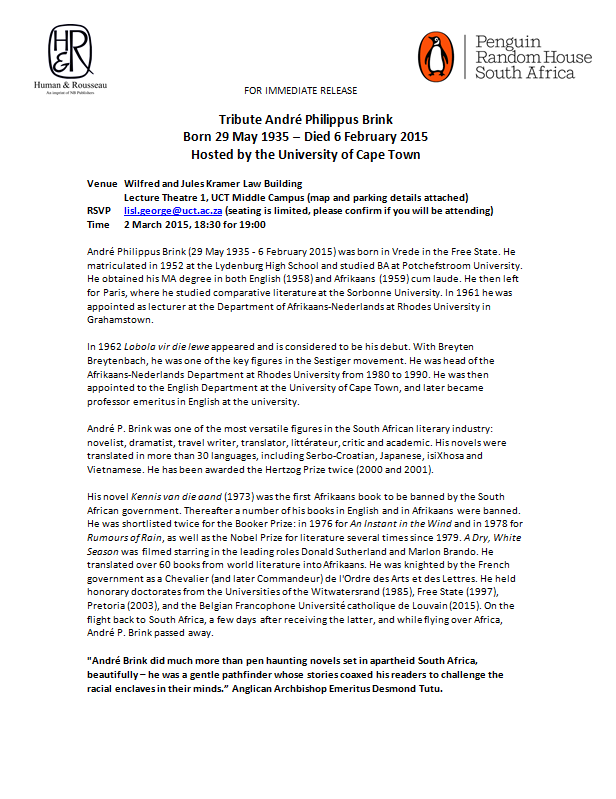
André Brink Tribute at the Woordfees

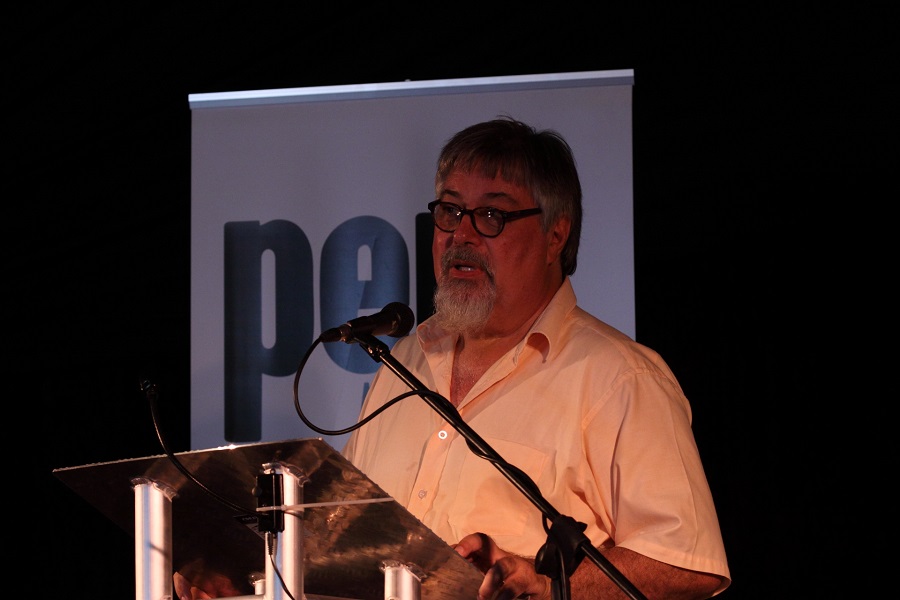
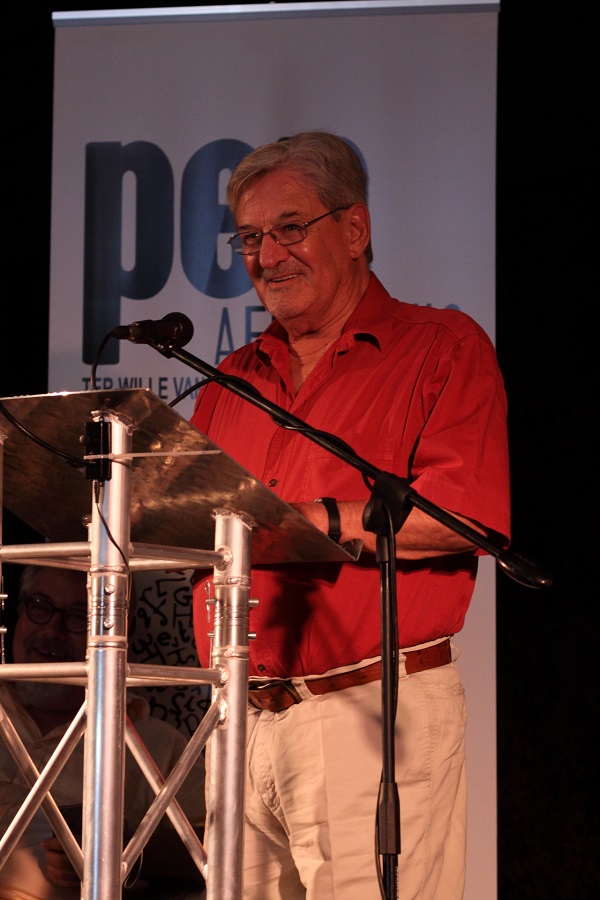
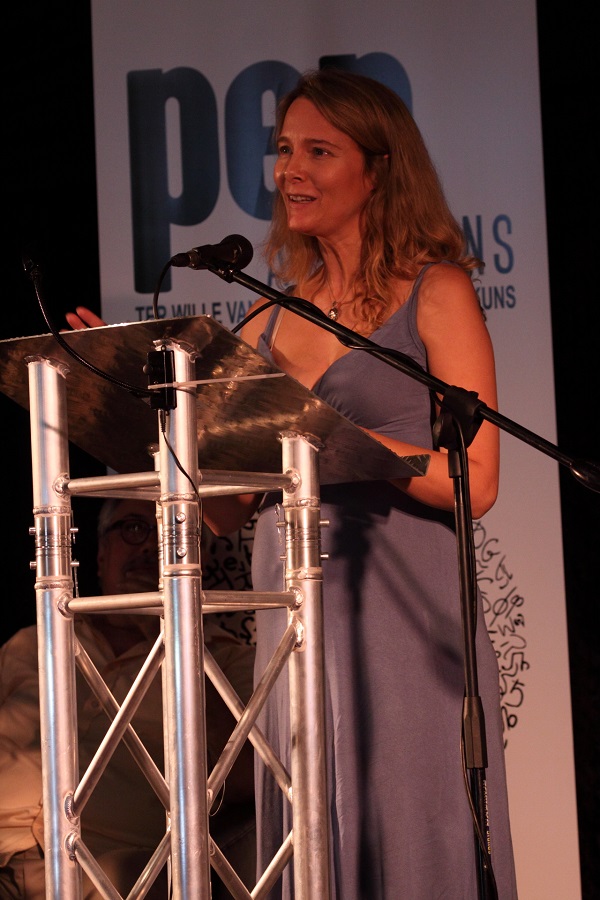
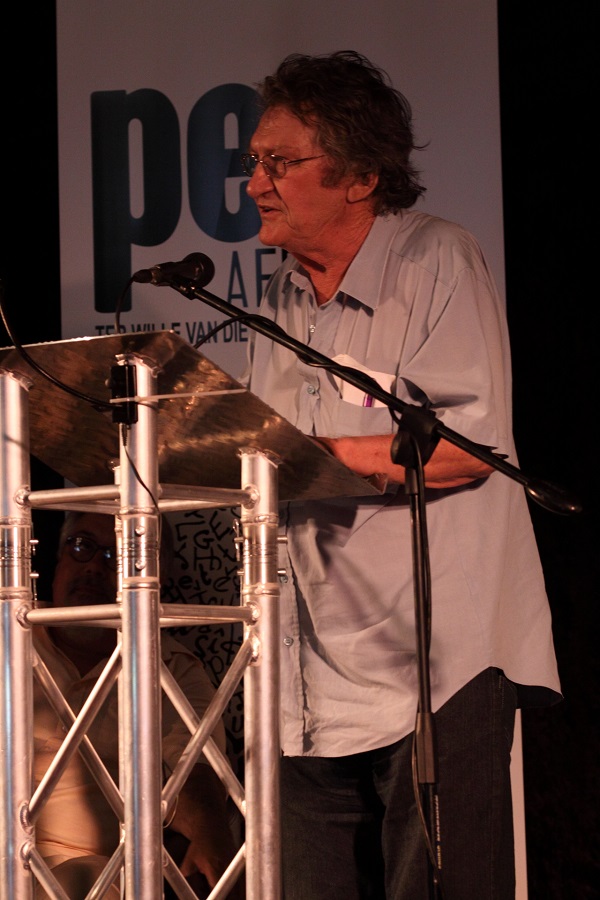
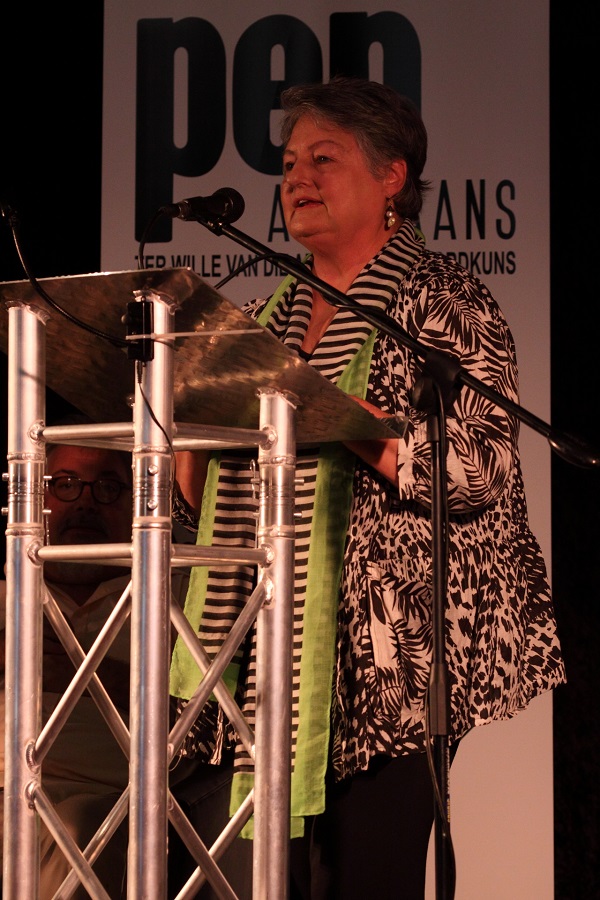
Writers, family and friends gathered on Saturday, 14 March 2015, in the afternoon at the Woordfees Book Tent to read from André’s work and correspondence, paying tribute and sharing stories. The event was organised by PEN Afrikaans & the Festival.

WoordfeesTribute1

Kerneels Breytenbach, friend, publisher, writer
WoordfeesTribute2

Sonja Brink, daughter
WoordfeesTribute4

Naas Steenkamp, friend, writer
WoordfeesTribute5

Abraham Phillips, writer
WoordfeesTribute6

Willemien Brümmer & Matthias, friend, writer, journalist
WoordfeesTribute7

Abraham H. de Vries, friend, writer
WoordfeesTribute8

Pieter Fourie, friend, playwright, director
WoordfeesTribute9

Antjie Krog, friend, poet, writer
WoordfeesTribute10

Ingrid Winterbach, friend, writer, painter
WoordfeesTribute11

Bettina Wyngaard, writer, activist
WoordfeesTribute12

Hettie Scholtz, friend, publisher, literary godmother
WoordfeesTribute13

Danie Marais, poet
WoordfeesTribute14

& I
WoordfeesTribute3

(Photographs: Krystian Szczurek)

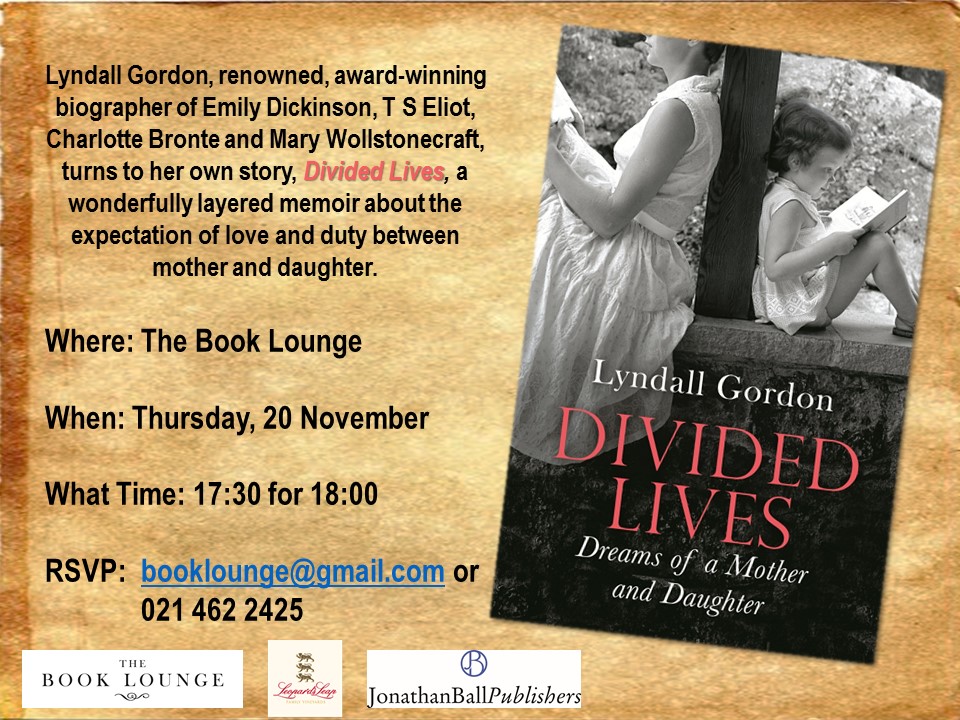
Launch of Divided Lives by Lyndall Gordon at the Book Lounge

Next week, on Thursday, 20 November, it will be my pleasure to speak to Lyndall Gordon at the Book Lounge launch of her latest memoir, Divided Lives: Dreams of a Mother and Daughter.

lyndall-gordon-launch

lyndall-2-12“Lyndall Gordon grew up in Cape Town where she studied history and English, then nineteenth-century American literature at Columbia in New York. In 1973 she came to England through the Rhodes Trust. For many years she was a tutor and lecturer in English at Oxford where she is now Senior Research Fellow at St Hilda’s College.

Virago has published her six biographies and two memoirs. Lyndall is a Fellow of the Royal Society of Literature and member of PEN. She is married to Professor of Cellular Pathology, Siamon Gordon; they live in Oxford and have two grown-up daughters.”

SharedLivesTSVirginiaEmily

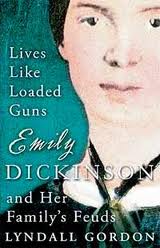
The first time I encountered Lyndall Gordon’s work was when her biography Lives Like Loaded Guns: Emily Dickinson and her Family’s Feuds was sent to me for for reviewing in 2010:

“In Lives Like Loaded Guns: Emily Dickinson and her Family’s Feuds, Lyndall Gordon considers the two unassailable facts of Emily Dickinson’s life: the family feud over the affair Emily’s brother, Austin Dickinson, had with Mabel Loomis Todd, and the poet’s letters and poems about her unnamed sickness. In the process Gordon debunks the many myths created around the unique woman who spent most of her time in her own home, writing, gardening and baking prize-winning bread for her family.

Through a meticulous reading of letters, court evidence, publishers’ papers, medical prescriptions and other archival records, as well as most importantly, the lines of her poems, Gordon distils the essence of Emily Dickinson and allows her to emerge in a completely different light. Not as an eccentric, disappointed, white-clad spinster, but a woman of genius who lived fully and loved passionately, while choosing a seemingly quiet ‘Existence’ – one she insisted on spelling with a capital E.”

For me, the review was the beginning of an enlightening journey. Gordon’s remarkable books arrived in my life when I most needed them. They sustained me through periods of doubt and gave me strength to continue on my own literary path.

For my review of Divided Lives see LitNet.

“The people Gordon portrays in her biographies glow with their inner lives, and our appreciation of their work also catches fire.”

Divided LivesCharlotteHenryMary

For Lyndall Gordon’s other events in South Africa see Blake Friedmann.

The Image of a Pie: Reflections on Open Book 2014

Niq Mhlongo, Chris Beukes, Malaika wa Azania and Natalie Denton
I cried twice. No matter how much I tried to control myself, the tears kept coming and I was grateful for the pack of tissues I had in my handbag. I should have started shedding tears at the beginning of the event, when the woman who is our national treasure, Sindiwe Magona, noticed that we were only a few people in the audience while the whole of South Africa should have been attending. But it was only when Sixolile Mbalo, the soft-spoken, beautiful author of Dear Bullet, Or A Letter to My Shooter (2014), pointed to herself with her most articulate hands and used the possessive pronoun “my” to refer to the man who raped, shot, and left her for dead, that the dam of anguish broke inside me. In my own personal reality I speak of “my friend”, “my brother”, “my husband”. To have to survive a reality where a rapist is internalised into “my rapist” is nearly unbearable to think of, and yet, as Ekow Duker, the third panellist of the Open Book Festival event presented by Rape Crisis, mentioned, “We get more upset when our soccer team loses than when a woman is raped.” That is the reality Mbalo lives, and courageously survives, every single day of her life. All of us should take note and salute her. Any moment, her fate could become that of “our friend”, “our sister”, or “our wife”.

“Women are ghost heroes in our struggle.” – Niq Mhlongo

This year’s Open Book unfolded over five days from 17 to 21 September in Cape Town. It was filled with insight and inspiration. Apart from the moment described above, laughter dominated. The second time I shed tears, they were also an expression of joy. Speaking about her touching Good Morning, Mr Mandela (2014), Zelda la Grange told Marianne Thamm that Madiba destroyed all her defences just by holding her hand when they met. La Grange’s life bears testimony to one of Thamm’s remarks: “Mandela made us better people; that’s what good leaders do.” The conversation between these two powerhouse women was undoubtedly a highlight of the festival. Judging by the faces and comments of people present at the event, most felt its magic.

“Let it all come out and let us talk about it.” – Mandla Langa

Sixolile Mbalo’s and Zelda la Grange’s life stories capture the immense span of the spectrum of South African everyday experience. And it is essential for our humanity to pay as much attention to the one story as to the other, even though it is in our nature to gravitate towards happiness and success.

“Memory is always a fiction we tell ourselves.” – Rachel Zadok

Continue reading: LitNet.

Jonny Steinberg, Mervyn Sloman and Mark Gevisser
Niq Mhlongo, Geoff Dyer and Zukiswa Wanner
Raymon E Feist, Deon Meyer and Andrew Salomon
Zelda la Grange and Marianne Thamm