Tag Archives: Cape Town

Our Brass Bed

Home AwayBraunau am Inn | Geretsdorf | Salzburg, Austria, 7 p.m.

You are like me. You feel safer on the right side of the road, sitting on the left in the car, changing gears with your right hand, looking over your right shoulder to reverse. The little white Daihatsu was an unexpected gift from your father; he bought it for peanuts and renovated it so that you could have a car of your own. You should actually sell it now. Ever since your move to Cape Town, you drive it only during occasional visits to your parents, at most a few weeks every year. For the rest of the time, the reliable little car loiters in the yard gathering dust. It is much smaller and less comfortable than the respectable Mercedes you and your husband share at home, yet you feel safe in it. The idea of parting with it is painful to you, even though you know this would be the sensible thing to do. It’s what your father urges you to do every time you come to visit. He sees no point in keeping it. But no matter how hard it is to admit, even to yourself, you see it as another loss of part of your life. You have experienced too many losses; you can’t reduce it to an ordinary transaction of exchanging money for an object. This object is too special. The car and you share a history.

You have always been an intrepid traveller, and the Daihatsu has taken you to many remote corners of Europe. It has never let you down. When you were at university, you drove it to Salzburg every day, fifty kilometres each way. You would rather have it stand around and rust in the backyard of your parents’ house than sell it to a stranger. The thought of returning to it is always comforting. There was a moment when you seriously considered having it shipped to South Africa, but you soon realised that the transfer costs would have exceeded the car’s worth. It was a silly idea.

Your plane landed yesterday. You travelled from Cape Town to Munich via Amsterdam, and took the train from the airport to Simbach, Braunau’s twin, where your brother Krystian picked you up from the station. Nowadays, with the borders in the European Union abolished, the two towns are divided only by the Inn River and the usual neighbourly mistrust. For many years you lived in Braunau am Inn, Hitler’s Austrian birthplace, until your parents decided to move to the countryside and bought a house in the nearby village of Geretsdorf. Still at university, you moved with them because you had no other choice. All your life you had little say in the places you learnt to call home. Until now, that is. You moved to Cape Town because you wanted to – a traumatic liberation.

You do not visit your old house in Braunau any more. You went once and it broke your heart to see the building modernised, its small fairy garden replaced by a standard lawn, all the trees reduced to stumps. The old staghorn sumac which leant on the garage wall and in whose branches you used to read was gone. So were the deceptively straggly-looking plum trees which bore baskets of fruit every second year. Worst was the complete disappearance of the tall emerald arborvitae hedge which surrounded the entire property and gave your family privacy in the densely populated area. The place looked stripped and exposed. You felt just as violated.

You remember the time when you moved into the house after living in the States for more than two years. It was small and dilapidated, but with combined effort your family quickly turned it into a home. Here you listened to your brother dream-laugh in the bedroom next to yours; your mother filled the house with the smell of plum jam in autumn; your hard-working father fell asleep on the kitchen bench every evening after supper. This suddenly became the place where all your journeys began and ended. Even today returning to Braunau feels like a homecoming to you; it was the longest pause in your itinerant life. Nine years may not seem long, but it meant nine years of certain stability you had not experienced before.

In the early nineties, Braunau became a place of safety, in spite of its many contradictions. As an Ausländer – a foreigner – you had to stay at home when thousands of neo-Nazis descended on the town each April to celebrate the Führer’s birthday. But on other days you took your friends and visitors to the front of the house where he was born to have a look at the monument placed there. Brought over from the concentration camp in Mauthausen in 1989, the stone commemorates the victims of fascism: Für Frieden, Freiheit und Demokratie. Nie wieder Faschismus. Millionen Tote mahnen. (For peace, freedom and democracy. Never again fascism. Millions of dead warn.)

It is not a warning the generals of the former Yugoslavia took to heart when the wars broke out in 1991. You remember watching the daily media reports from the region just across the Austrian border and translating for your grandma who was staying with you at the time. The images brought back her own memories of war and displacement; it was the only time you heard her speak about that distant past. Every day she wanted to know how many more aid trucks with medicine, blankets, food and clothing had left Austria for the conflict zones. Thousands and thousands, you assured her. Somebody pointed out to you that it was not only a humanitarian gesture, but also a way of keeping the flow of refugees into Austria under some kind of control. Many came anyway. For a few months of high school you ended up sitting next to a tall, dark-haired girl whose face you still see but whose name escapes you. She told you in broken English that she didn’t know where her father and brothers were, whether they were still alive. She’d escaped only with her mother. You did not dare imagine the horrors she must have seen, the courage it must have taken to flee, what and whom they’d had to leave behind. Your own refugee past – escaping communist Poland in the late 1980s, going through refugee camps, and migrating through the world for four years – was insignificant in comparison. Your life had never been in danger. Staying at home on Hitler’s birthday to avoid creepy looks and verbal abuse from neo-Nazis hardly seemed relevant.

Earlier today, with history on your mind, you passed the Mauthausen stone monument on your way into town. The medieval Stadtplatz, the main square, was bustling with activity. The place had first been mentioned as Prounaw in an official document from 1120. As you drove into the centre, it struck you how ancient all these buildings were in comparison to the place where you lived now. Your Victorian house or even the Castle in Cape Town seemed like toddlers when compared to these Methuselahs.

In August, the light is still bright in the evening, but you had to hurry before the last shops closed at seven. Your flat in your parents’ house in Geretsdorf had stood empty for a couple of months. All day long you swept, vacuumed and dusted; then you unpacked your heavy suitcase and rushed to town to buy a few essentials. Suddenly, German was all around you. You feared to open your mouth, afraid that nothing would come out, the language you’d been speaking most of your life somehow forgotten, engulfed by a terrified silence. In the chemist, you carried a tube of your favourite toothpaste and panty liners (you always schlep both to Cape Town because you cannot find satisfying local substitutes for them) to the counter and tried your luck: Ich möchte bitte mit der Bankomatkarte zahlen. (I want to pay with my debit card.) The words flew out of your mouth, automatically. You remembered the pin code for your Austrian debit card. The woman at the counter looked familiar. At Billa you bought some Leberkas, the traditional Austrian sausage meatloaf, and a few bottles of Uttendorfer beer from a local brewery. You would have one in a hot bath later.

Now, driving back from Braunau to Geretsdorf, you think how easy it is to return, to go unnoticed, to pass as one of the locals again. The Daihatsu slides through the Upper Austrian landscape, surreally lit by the setting sun. With your right hand you smoothly shift the gear to accelerate for a takeover manoeuvre. Just as smoothly your mind shifts into a narrative mode and you describe the surroundings to yourself in your head. The kitsch pastoral scene, suddenly outrageously beautiful in the setting sun, demands some concentration: The ink-smeared horizon, the bruised horizon, dotted with eerie clouds, punctuated by clouds, glowing orange, blushing orange, from the touch of setting sunrays … The words swirl in your mind like candy around a child’s tongue. Shocked, you spit them out as you drive on and stare at the sun setting over the barley fields, the grand square, white farmsteads, the small herd of cows, and you force yourself to describe the scene in German: Der Himmel, der Horizont, blau, die Wolken, die Sonne, orange. Individual words and their particles come to you, but they refuse to turn into smooth, peppermint-sweet images. You are startled.

***

Once you’d mastered all three, you divided your languages into favourites. Polish for speaking. German for writing. English for reading. Since your move to Cape Town you have been assimilating Afrikaans into the mix, for socialising. Driving towards Geretsdorf, you recognise that a shift has taken place. The carefully ranked categories no longer apply. English has taken over.

It shouldn’t surprise you. You lived in the States for over two years, continued learning English at school in Austria, and later you studied English literature at university for twelve years. Since 2005, you’ve been living in Cape Town where it is the lingua franca. You and your husband speak English to each other and you are at home with it; it is at home with you. English has inadvertently become the language you work in, as a critic and finally – yes, finally – as a writer. You know that this last shift is the crux (even if at this very moment you have to look up the exact meaning of ‘crux’ in a monolingual dictionary to make sure that it is actually the word you mean).

English has become the language of your creativity; your intimacy with it derives from living in South Africa. But you’ve only just realised it now, on this road from Braunau to Geretsdorf. It unsettles you, this shift of paradigms which has happened so automatically, so unconsciously, and you need time to take it in; you need to think it through. In English. You recall the Chinese-Canadian writer Ying Chen speaking in Lyon about her mother tongue and the tongue of her fiction; she compared one to an arranged marriage and the other to a love affair. You can identify with the idea of English as your lover.

You arrive in Geretsdorf enlightened, in love, park the car in front of the house, and do not lock the door. At home in Cape Town, long before you get to the garage you have to start checking whether you aren’t being followed. In Geretsdorf, there are no security bars on your parterre windows, no alarms, no terrifying daily Neighbourhood Watch reports, no stories of friends’ hijacked cars, no neighbour arriving at your gate with knife wounds in his face, no phone calls from your stepdaughter traumatised after an armed robbery, no funerals of murdered family members, no foreigners burnt alive in the streets. At least not since 1945.

You derive pleasure from the unlocked car door. You enter the house with a smile and open the terrace door wide open to celebrate this sense of freedom, and to let in some fresh air before the sun sets completely. The only reason to lock up later will be to keep the mosquitoes out of your bed tonight.

From upstairs your mother calls that dinner will be ready at eight. You have a while to relax, to settle further in to one of your many former homes where everything is still so familiar. You moved into this flat after your return from a student-exchange year in Wales, and lived here for four years before you decided to make South Africa your home. It was in this very study, on this desk in front of you, where you’d planned your first journey to Africa, on a research grant for your PhD on Nadine Gordimer’s post-apartheid work. Most of your books, travel guides and maps are still here, now filed away with the photographs and study materials you’d brought from South Africa in 2004; the defended and published thesis added to the collection in 2008. There is also the photograph of you with your future husband and other participants from the ‘South Africa in Perspective’ Symposium you helped to organise at the University in Salzburg at the end of 2004. Next to it is a postcard of the picturesque Schloss Leopoldskron, where the last event of the symposium took place and where you fell in love with the man who would become your husband, even though you did not dare admit it at the time. You and your husband have returned time and again to Salzburg, the city you both love so much, the city that brought you together, with its centuries-old architecture, dignified opulence, and mummified socio-historical structures, all glossed over with gold and red for Sound of Music fans descending in their thousands, clicking away pictures in tourist-crowded alleys, stuffing themselves with grilled chestnuts or oven-baked potatoes topped with sour-cream and chives, buying useless gifts at the rustic Christmas Market, gathering next to the cathedral around the handsome Russian balalaika player, drinking hot chocolate or iced coffee at Tomaselli, ascending in cable cars to the medieval fortress that squats on top of the miniature mountain (which sometimes reminds you of another that you can see every day from your stoep in Cape Town), attending endless music concerts, trampling on the roses in the Mirabell Garden where Copernicus sits wondering whether he is German or Polish. And yes, yes, Mozart! Mozart is everywhere, more golden and reddish than anything else in the famous city of Salzburg, reclaimed covetously by a place that never wanted him during his lifetime.

You know there is more to Salzburg; it’s hidden, quiet, small, a little grey – yours. Alone, one January evening before midnight, you walked the fog-veiled streets of the old town and decided to leave Salzburg, Geretsdorf, Austria – for good. The final link in a long chain of events which began in 1999, when Edwin Hees (now a dear friend), arrived in Salzburg to share his passion for the arts of the Beloved Country and brought your whole world to a standstill. After his lecture, you rushed into the departmental library with burning cheeks and a famished mind and tried to absorb everything possible about South Africa’s past and present. You were overwhelmed by the intensity of the historical moment only five years after the first democratic election. You were moved by the promise of a new future, by the vibrancy of the emerging post-apartheid literature. History was happening then and there, at the multilingual tip of the foreign continent; it was not something confined to outdated school books. It was a time of chaos and possibility.

Travelling to South Africa for the first time in 2004 only confirmed all you’d learnt and hoped about the country in the five years since Edwin’s first lecture; strangely, you felt instantly at home in this distant, foreign, multitudinous place. No wonder that a year later, you had come home for good. South Africa was a forge, shaping history as you watched, shaping you as you lived. You abandoned the shadow of a medieval fortress, unchanged for centuries, and exchanged the crystallised reality of Europe for the muddle of a lived present. Its complexity finally tipped you over the edge of impassivity and allowed the creative impulse that you’d been harbouring for years to emerge onto the stark white light of a published page.

Now, on this visit to your parents, you sit in your old study in Geretsdorf and stare at the books that represented South Africa before it became your home. On the desk is a little pile of presents you brought for your family, among them a collection of short stories which includes one of your own. You take up a pen and dedicate the book to your parents and your brother, relieved that the content has nothing to do with them. The story is about rape and domestic violence. As one of the lucky ones, you have never experienced anything like it in your own life, but it is part of the reality of your new home, and you constantly feel the need to confront it in your writing.

South Africa is in constant flux. Positive and negative forces of change are entangled and nothing is clear-cut or easy. You sometimes think that living compartmentalised lives is the only way to survive in this fractured place. But you still want to have coffee with your gardener on the stoep while discussing the rain clouds and the mole invasion. Surely that shouldn’t be so much to ask for? Yet you know the mere suggestion makes the poor man want to sink into the nearest mole hole. (Madam?) And no matter how hard you try to explain this to your European mother, she doesn’t understand. You foolishly thought you could apply your straightforward idealism to a country that was anything but ideal. South Africa is far from unique in this respect, but this doesn’t make anything right, just more desperate. This society’s vibrancy comes at a high price. You aren’t going to change the world. The world is changing you. To try to understand, you write.

You live in a country at war with itself. It’s not paranoia, or some obscure statistics; it’s reality. Daily, thousands of people are dying around you, of preventable diseases, preventable crime, preventable poverty and, most recently, preventable xenophobia. You realise that this time the keyword of hate speech had been makwerekwere. What if the next time it is whites; will you burn to ashes in the streets with bystanders watching you helplessly or, worse, with joy? But you need not even think that far. Every day, other words are pronounced with hatred around you: baby, woman, HIV positive, privilege. There is always somebody too vulnerable for their own good. And the disquiet, the omnipotent force of history – ironically – is gathering to pounce again. But you do not stand up and fight, nor do you leave for safer shores; paralysed, from a vantage point of relative safety on your private island, you watch the ongoing catastrophes around you as if in slow motion, hoping it won’t happen to you, knowing precisely that you might be next.

Waking up from nightmares, you sometimes indulge in daydreams of fleeing, and think about the old Victorian brass bed you share with your husband, with its soft, duck-down pillows (a Christmas present from your parents), fresh linen with cream-and-yellow flower patterns (a wedding gift from your Aunt Zosia), and the luxurious, snow-white duvet cover (a token of gratitude from your Italian friend Michela).

***

Selma. Her name was Selma. You remember. The tall, dark-haired girl from Yugoslavia. What a coincidence; she shares an initial with the heroine of Slavenka Drakulić’s As If I Am Not There, the 1999 novel that has been haunting you for weeks, ever since you saw the photo of the man burning in the street.

It’s a simple, cruel story: “S. is a teacher in a Bosnian village; twenty-nine, gentle, clever and pretty, with a love affair and an apartment of her own. Until one spring day a young Serb soldier walks uninvited into her kitchen and tells her to pack her bag, and her life is interrupted. As the sky turns black with smoke behind her, S. enters a new world, where peace is a fairytale and there are no homes but only camps: transit camps, reception camps, labour camps, death camps.”

Still in her kitchen, at first S. is too shocked to do anything but offer the soldier a cup of coffee. She had known something terrible was about to happen, all the signs were there. There was time to flee, but she’d clung to a hope that it wouldn’t be necessary. She didn’t want to give up her familiar, ordinary, happy life.

S. ends up in a camp where she is repeatedly raped and tortured. She falls pregnant. After liberation, in exile in Sweden, she gives birth to a child whom she decides to keep and nurture. Slavenka Drakulić’s novel is fictitious; it doesn’t tell the story of any particular woman, but it is the story of thousands of women in the Balkans, of women all around the world. In your nightmares, it is your story.

***

Under extreme pressure, you imagine how relatively easy it would be to return to Geretsdorf or Salzburg, to make a new-old life for yourself and your husband there. In these visions you see yourself taking him by the hand, grabbing your passports, putting your cats in their transport cages and taking the quickest route to the Austrian consulate or directly to the airport. In your mind, you are ready to pack and go anytime. You’ve done it in the past, as an Eastern European refugee, moving from one place to another, always in a hurry, hardly ever allowed to take anything with you. You know you can survive.

***

Ultimately, nothing can happen without loss. Two things represent all: a language and a bed. You fear the necessity of having constantly to negotiate between a husband and a lover. You have made your bed, and now you want to sleep in it. The affair is too passionate and precious to end. You do not want the practicalities of living in a German-speaking world to invade this space. You fear your adulterous mind, knowing how flippantly it had switched before, making you dream, think, live in another language. But it had never been as creative as in English, in this turbulent, divided country that you call home.

Yes, you choose to continue waking up from nightmares next to your husband and your cats in your old Victorian brass bed – this silent witness to over a century of marital bliss, estrangement, passion and loneliness. This is the place where your family gathers, where you sleep, make love, eat, watch rugby on TV, read, laugh, talk, pick your way around the cats. Where you listen to the sounds of the house and the constant low hum of the city at night, fearing malevolent footsteps.

Should you ever decide or be forced to leave, the bed – and almost everything else – would have to stay.

***

You aren’t good at dealing with this kind of loss. You grow instantly attached to objects. You surround yourself with charms, dream-catchers; Rudolf, your small, plush guardian angel, never leaves your side; hundreds of books (As If I Am Not There among them), clothes (the black top you found in Aberystwyth), mugs you collect (the tall handmade dark-blue one from the Norwegian island Ona), furniture (mostly bookshelves), a few jewels (the silver peacock brooch with turquoise stones from your grandma), photographs (of you with your husband and Madiba), shoes (the beige slippers from Paris), paintings (a Jan Vermeiren commissioned by your husband for your twenty-ninth birthday), mirrors (the one that waited a year for you at the Naked Truth in Stellenbosch), a laptop (with your creative output saved in it), cameras (both from your father), the camera bag from your mother, the stuffed rag rat your Aunt Iwona made for your namesday when you were fourteen, the circle-of-friends candleholder from your best friend Isabella, the Swatch your father gave you fifteen years ago, the Winnie-the-Pooh eraser from your brother, and the white lace tablecloth from your great aunt. These items are worthless, but priceless. Like your small Daihatsu, standing unlocked in front of your windows, you want to keep it all, to collect it even in writing.

But whereas you don’t have to worry about the little car or anything else you own in Austria, all these precious possessions are in danger in Cape Town, if not of being stolen (who would want you great aunt’s lace tablecloth?), then of being left behind if worst comes to worst. The mere idea of it makes you ache inside. You want to curl up somewhere safe and not think about it. Throughout your migratory childhood and youth you didn’t allow yourself to grow too attached to people; it was safer to grow attached to the few things you could carry.

The Victorian brass bed in Cape Town embodies your new-found creativity. The thought of losing it fills you with a dread greater than the fear of finding a soldier in your kitchen. You understand S., even though nothing about all this is rational. You are a bundle of intuitions and anxieties. Split in half, you know you should be leaving, and yet you insist on staying on your island, hoping against hope, against all facts, against the statistics of the reality around you. Instead you dream, love, laugh and put your creative energies to good uses. Every day, you stand on your stoep and look up at Devil’s Peak and know you will never want to trade it for a medieval fortress. And in the small hours of the night, you lie awake in the brass bed, waiting for your soldier to come, to serve him coffee.

***

Dziecko, kolacja gotowa.’ (Child, dinner’s ready.) Your mother calls from upstairs and you look at your Swatch; it’s eight. You get up from behind your desk and, hugging the dedicated book to your heart, you close the terrace door with your right hand to keep the mosquitoes out at night. It is almost dark, the sky the colour of spilt ink. Your Daihatsu looks grey in the twilight. The emerald arborvitae hedge your parents planted around their new property is almost as tall as the old one in Braunau, but you can still see the lights going on in your neighbour’s house across the street. After dinner you will call your husband at home and wish him goodnight. You will miss him and the cats for the next ten days of your visit. You will have a bubble bath with an Uttendorfer. The practical IKEA double bed you have in Geretsdorf will seem empty and cold, even in the middle of summer. You will read before falling asleep, marvelling at the silence of the countryside around you. You will be preoccupied with the corrections to an essay about the recent xenophobic attacks in the country; there will be no foreign footsteps invading these thoughts. When your light is off and the silence absolute, nobody and nothing will disturb your dreams about your old Victorian bed in Cape Town.

***

I am like you. It’s terrifying.

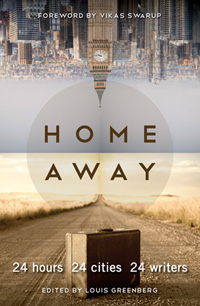
First published in Home Away, edited by Louis Greenberg (Zebra Press, 2010).
Honey, We’re Having a Book

Authors of both genders relate the process of writing and publishing books to having children. Karina Magdalena Szczurek spoke to Lauren Beukes, Mary Watson and Emma van der Vliet about writing and motherhood.

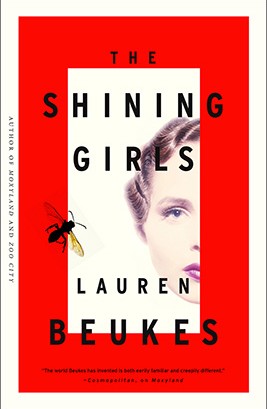
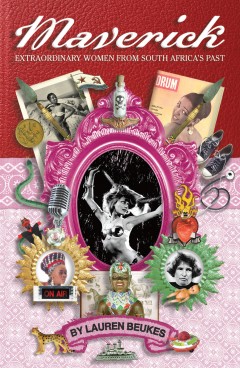
maverick-coverLauren Beukes is a literary mother of two and soon to be a biological mother of her first child, a daughter, to whom she has dedicated her debut novel Moxyland: “To bright possibilities”. Lauren is also the author of the non-fiction collection of stories about extraordinary women from South Africa’s past entitled Maverick (2004). Nominated for the Sunday Times Alan Paton award, it seems to have been only the beginning of a highly successful career.

Since she was a toddler, Lauren has been addicted to the written word. Early on she became impatient with her parents’ pace of reading bedtime stories and took the matter into her own little hands. At five she read her first novel, no other than Tolkien’s The Hobbit. “I highlighted all the difficult words in yellow, then my parents had to explain what they meant.” At about the same time, upon hearing that Enid Blyton had earned £1 million with her books, Lauren decided to become a writer herself: “It had never occurred to me before that you could get paid to make up stories.”

Lauren and her younger brother grew up in a house full of books. Their parents encouraged them to read and to make up stories. The family led a culturally inclusive life and Lauren often visited Alexandra as a child. “My parents were involved in the church support group called Friends of Alex. My mother worked with the women of Alexandra to make culturally accurate china dolls from Zulu brides to Xhosa initiates for the tourist market. My brother and I were fortunate to have had such a liberal upbringing.”

This upbringing equipped Lauren to seek out and face the challenges that form the everyday of her life. She jokingly describes herself as “a recovering journalist”, for many years her primary occupation. For the last three she has been working as a scriptwriter at Clockwork Zoo Animation in Cape Town. The acclaimed SABC sci-fi kids’ series URBO: The Adventures of Pax Afrika is one of her babies. “It’s been great to create a coherent world that tackles big issues head-on and I am proud of our inspiring multidimensional heroines.”

Lauren feels strongly about being a woman and is excited about having a daughter. She wants to raise her as more than the stereotyped Bratz princess that seems endemic to 21st century girlhood. At the same time, she does have fears about imminent motherhood. “It’s a scary thing. I don’t begrudge other women their choices, but I would never want to be ‘just’ a mom, the same way I’m not ‘just’ a wife. I don’t want to give up my job, nor my interests. There will certainly be less time for creativity, the necessary ‘headspace’ for writing, and I will have less energy, but undoubtedly I want to continue working. My new novel is already incubating and I have some ideas for smart and slightly dark children’s books.”

Lauren wants to be there for her daughter, to be entirely involved in her life. But the fulfilment her work offers is also very important to her. “Having a wonderful, supportive partner makes things a lot easier.” Lauren’s husband, Matthew, works with her at Clockwork Zoo Animation. “We wanted to have our baby now. Moxyland was accepted for publication at the beginning of the year, and we decided that it was the right time to consider parenthood.”

Moxyland began as an MA thesis in Creative Writing at UCT. After some initial false starts, the manuscript ended up on the desk of one of Jacana’s editors and was accepted for publication literally within hours – “one of the fastest book deals ever,” Lauren recalls proudly. It is a brilliant, generically pioneering (in the South African literary context) novel which can be compared to the best of its kind worldwide. Margaret Atwood’s Oryx and Crake (2003) or Jeanette Winterson’s The Stone Gods (2007) come to mind immediately. It presents a frighteningly believable near-future vision of the city of Cape Town and has all the ingredients of becoming a cult novel.

Lauren wants to continue writing the kind of literature that asks questions and does not necessarily offer simple solutions. “I’m absolutely a feminist, or maybe I should say a humanist, in that I believe women are entitled to choice. But I balk at describing myself as a ‘woman writer’, I’m just a writer. Gender – and genre – are too often used to ghettoise. There seem to be certain expectations of women writers, just as there are of science-fiction writers. I’d like to avoid labels.”

Glinka with Lauren Beukes's Moxyland toy

Glinka with Lauren Beukes’s Moxyland toy

The marketing of Moxyland transcends expectations as well. A mini merchandise empire has sprung up around the novel, including an official soundtrack CD from African Dope which captures the futuristic urban vibe of the book, and the fabulous Moxy toy, a mutant clone of the Moxyland cover monster. It is produced by the Montagu Sew & Sews, a collective of impoverished women in the Klein Karoo set up by Lauren’s friends especially for the project, in keeping with the sense of communal responsibility Lauren inherited from her parents.

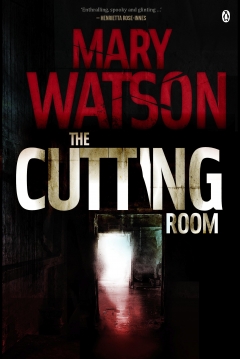
Before her daughter is born in September, Lauren would like to finish her part of an experimental novel she and three other authors (Henrietta Rose-Innes, Diane Awerbuck and Mary Watson) from Cape Town are co-writing, Exquisite Corpse, a collection of intertwined but independent stories set in a glossy shopping mall on the day before Christmas. The book promises to be another literary success.

MossMary Watson gave birth to Liam, her first baby, in May. She has been a literary mother since 2004 when Moss, her volume of interlinked short-stories, was published. The first story in the collection, “Jungfrau”, won the prestigious Caine Prize for African Writing in 2006. Mary dedicated Moss to her parents and siblings. “When I was small my sisters read to me more than my parents, but my parents introduced us to books. On Saturdays they would take all of us to a second-hand bookshop where we would explore the shelves for hours.” Mary could read before she went to school and had to wait patiently for the other kids to catch up with her skills. “I read like a demon and loved writing activities at school. My imagination was working overtime, I invented my own stories. I already wrote and illustrated my first book at about the age of 5 or 6. Literature was my first love.”

Liam’s nursery is already full of books, but Mary will only start reading to her son in a few months. Her husband Cathal played the fiddle to their baby when he was still in the womb. Now Mary sings to him in what she calls her “unlovely” voice. “Really, you have to hear it, I can’t sing but Liam doesn’t mind.”

The pregnancy was for her “the most uncreative, unproductive time.” She struggled to write anything during the whole nine months. “Before I became pregnant I imagined that my pregnancy would be a wonderful time for creativity, but I guess all my creative energy went into growing my baby.” Looking at Liam, one cannot help but see that he is more beautiful and precious than any work of art.

After giving birth, Mary is again bursting with creative energies. “For me, the writing process is like André Breton’s ‘phrases knocking at the window.’ There was a lot of silence during my pregnancy, but now the sentences are back and I hear them knocking all the time. Once motherhood becomes more manageable, I’ll go back to writing.”

When the time comes, Mary will be finishing her contribution to Exquisite Corpse and her first novel. “The novel is going to be more ‘realistic’ and it will be more about ‘real’ people than Moss. It is an altogether different book, a lateral take on ghosts and haunting.” By mid-October Mary will also be going back to her work at UCT where she is a lecturer at the Centre for Film and Media Studies.

Mary’s doctoral thesis explored “disruptions in cinematic realism and the construction of alternatives such as magical realism and surrealism through the use of specific editing techniques.” She thinks of film and media studies as “another way of doing English.” When she entered the field it was a growing discipline and offered good opportunities for development.

Mary’s academic and creative interests intertwine. The characters in Moss (2004) slip in and out of reality into fairytale-like places, most notably the moss garden, their stories however being anything but fairytales. It is as if the dark psychological states and the violent reality the characters have to deal with are too much to be faced on the level of realistic descriptions.

Like Moxyland, Moss is set in Cape Town. But in Moss the reality of the urban setting is not subverted by dystopian imaginings, but rather by myths, legends, and fables, no less disturbing. Many of the stories in Moss portray dysfunctional familial relationships. The title story “The Moss Garden” explores the difficult topic of incestuous child abuse. It did not come “knocking on the window”: “The story came to me in a dream. In the same dream I also saw myself writing it.”

Mary is a master of the short story form. Seldom does one see the kind of control over the genre which her work demonstrates. Although she enjoys the challenges of novel writing, she is fascinated by the “completeness” of the shorter form. “A story is this small, perfect thing that you can make. It’s like poetry with more of a narrative. The art of the short story excites me. The novel can also offer you the scope to expand on a single, small moment. Ian McEwan does this so excellently in Enduring Love or Atonement.”

In the coming weeks Mary wants to concentrate on all those special moments she is experiencing with her biological firstborn. “Right now, my life evolves around Liam’s needs. We are still figuring out motherhood together.” But she is firmly set on returning to work and writing as soon as possible. “I need to go back, but for now it’s just one project at the time.”

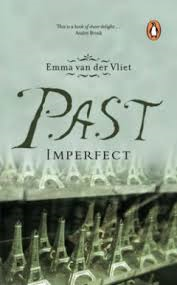
Past ImperfectThe experiences of giving birth to a baby and a book have been always uncannily connected to one another for Emma van der Vliet. On Valentine’s Day in 2003 she felt like a “barrel on legs” when she finally handed in her MA thesis in Creative Writing at UCT. A few hours later she gave birth to her first son, Oscar. “It felt like a comedy of errors at the time. I was stressed before handing in, hadn’t had a day off before the time and precisely on that day I couldn’t find parking and was frantic because of the deadline running up. Luckily, my mom was there to support me. After I finally submitted the thesis, I couldn’t feel any movement in my womb and was worried, especially since it was one month early before the set date. My mom suggested that we go for a scan, but I ended up staying at the hospital and Oscar was born that day.”

Two years later, the submission of the thesis for publication – a novel entitled Past Imperfect – coincided with the birth of her second son Leo. Today, Emma is pregnant with her first daughter who is due in October. Shortly beforehand, in August, Emma is submitting her doctoral thesis at the Centre for Film and Media Studies at UCT where, like Mary, she is a lecturer.

Emma’s literary firstborn Past Imperfect appeared in 2007 and was dedicated to her mother. “I was read to a lot as a child, especially by her. The first book I remember reading (and rereading) myself was Alice in Wonderland. Ever since, I’ve been fascinated by children’s Gothic stories. I also lived out books and my own imaginary worlds. One of my favourite games was playing ‘lost in the woods.’ I constructed houses, applied make-up, invented costumes and staged plays which all the visitors to the house had to watch. I became obsessed with Victorian literature and society early on. The Brontë sisters remain among my favourite authors.”

Nowadays, reading to her own children is one of Emma’s favourite activities. “I can always calm them down with reading. At the moment they are obsessed with nature books but they also love stories. I think I would feel terribly bereft if they didn’t like reading.”

Emma grew up in a family of teachers and academics. When it was time for her to choose a course of studies she decided on languages, drama, journalism and media. During a two-year break in her studies she worked as a photographer and publicist for the theatre and travelled around Europe. “I also acted on stage in children’s theatre. I always played the baddies, the vampire or the evil witch.” The progression to film came naturally to her. “The medium combines my visual and verbal interests.” She spent a decade in the film industry, doing a great deal of production as well as writing, directing and designing props. “But after a while I felt that my brain was atrophying. I also had to live in constant crisis management mode, with little time for anything and not enough intellectual stimulation. I was already writing bits and pieces at the time and felt that writing offered me the solitary time that I needed for myself.”

When Emma was 7, her teacher at school told her mom that one day Emma would become a writer. In 2000, at the same time as she began her work at UCT, she embarked on her creative writing course. The result, Past Imperfect, embodies chick lit at its very best, and Emma is one of the champions of the genre. This kind of writing style is her “Holy Grail: enjoyable, intelligent, slightly left-leaning woman’s fiction that might make people laugh.” And while Past Imperfect will make you laugh yourself into stitches, it is also one of the best-written novels recently published in South Africa, our own local Bridget Jones, or even better. No wonder the initial print run is almost sold out.

Like many other debut novels, Past Imperfect is slightly autobiographical. However, the relationship between the heroine Clem and her mother is not. “I have a very strong, close bond with my own mother. I really cherish it. The dysfunctional relationship between Clem and her mom is the complete opposite. They only become reconciled in the course of the novel. By portraying them is such a way I have somehow exorcised one of my biggest fears and it felt like another form of homecoming.”

Emma is planning to set her next novel in the film industry. She is also thinking of writing about the way children influence people’s lives. “Children force you to see the world in a different way, your priorities shift, you take small things less seriously. They also fill up everything. Before my children were born, writing took place in the cracks between the responsibilities of my day job. Now, there are no cracks, so something has to give to make room for creativity.”

Emma plans to take some time off work next year and tackle the second book syndrome head-on. “I am quite desperate to write,” she confesses. And anyone who has had the pleasure of reading Past Imperfect will be desperate for the publication of her next baby.

First published in WORDSETC 3 (September 2008).

Since then:
30SecondWorldzoo-city-award-coverfacebook-broken-monsters-sa--267x409CuttingRoomThe-Shining-Girls-Mulholland-cover-267x409

At Home in China

China1
Unexpectedly, it felt like a homecoming. Our Dragonair flight from Hong Kong to Beijing landed in the late afternoon. From the moment we left the arrivals hall something in the air made me want to curl up inside myself and simply return to where we came from. And it was not the chilling wind; nor the constant drizzle.

The grey architecture’s sharp and unimaginative lines, the bleak atmosphere, the poverty and hopelessness of masses, the condescending attitudes of people in any kind of authoritative position, the schemers operating below the radar of the system, and the uncanny impression of being constantly watched as if surrounded by an omnipotent, unpredictably scary, presence – almost instantly I was transported back to the time I was growing up in Eastern Europe still under the thumb of communist rule, before the political changeover of the late 1980s. Something engrained in my bones, but dormant for so many years, resurfaced in recognition.

The traffic policeman in charge of the taxi flow at the Beijing Capital International Airport shoved us aside and signalled for us to wait. It transpired that we were judged to have too much luggage to fit into an ordinary taxi, with no other kind of taxi in sight. There were three of us, each in possession of a suitcase and a piece of hand luggage. We tried to suggest that we could at least attempt to load the luggage into a car or separate and take two taxis, but both ideas were rejected. After a while of hopeless waiting, a rickety minibus arrived, clearly not an official taxi. The driver ‘generously’ offered to take us all to our hotel for about twice the usual fee. We did not have a choice but to accept.

An insignificant scene, one could say, but it was just the beginning. For the reminder of the trip I was constantly aware of this familiarity between the Poland of my childhood and the present-day China and I marvelled again at the destructive power of the ideology behind the resemblance, at how two countries of such diverse cultural backgrounds – Eastern European and Asian – could be reduced to eerie similarity under the pressures of a single system of thought.

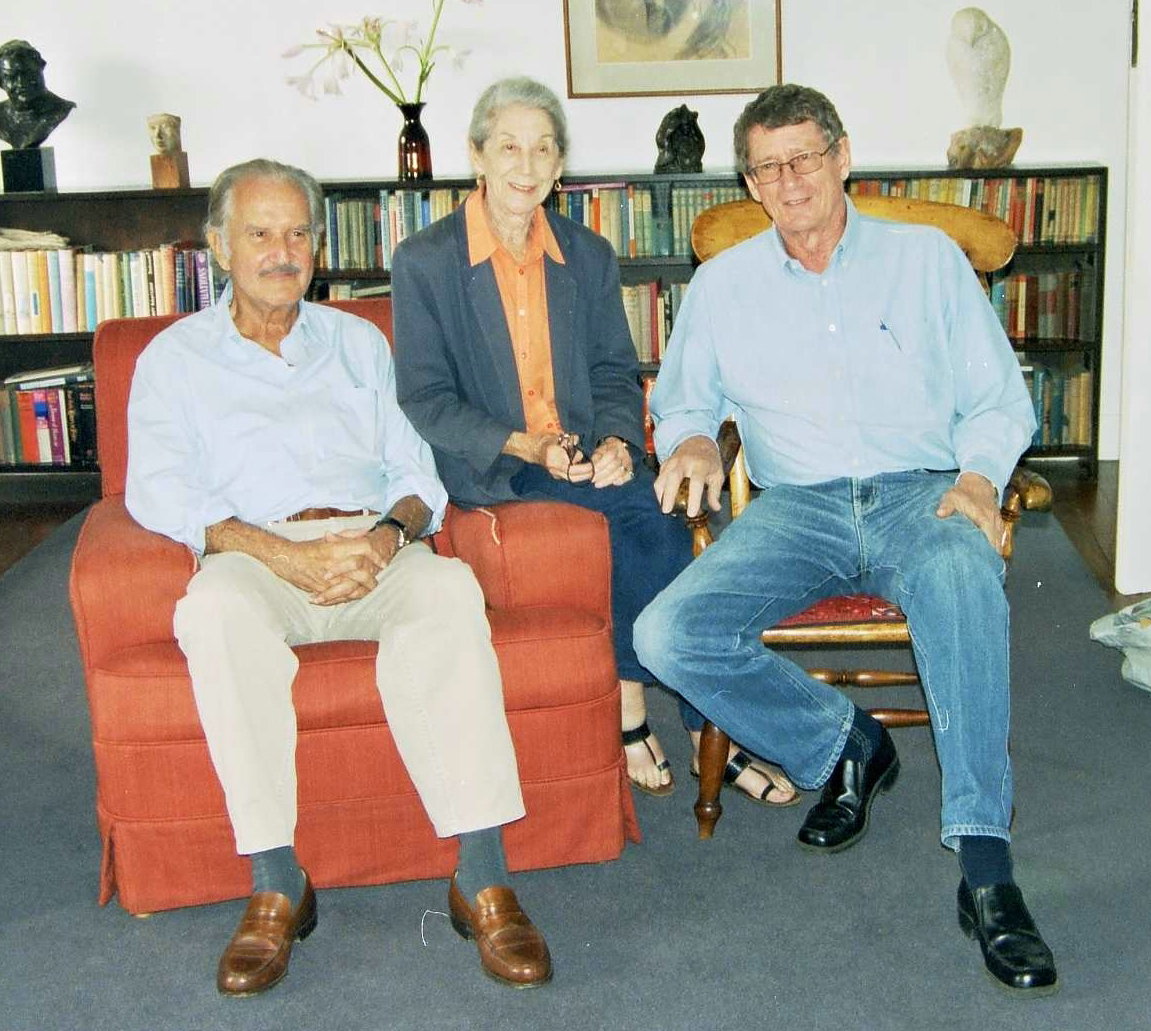
But beside the ache in my bones, the experience of discovering a few spots of China was one of the most memorable ones of my entire travelling life. For the first time, I realised what Americans were doing when they ‘did’ Europe in two weeks. Our attempt was of a similar nature. My husband André Brink and I visited China to attend two literary festivals, in Hong Kong and Shanghai. The invitation was facilitated by a dear friend of André’s, Gary Kitching, who kindly offered to accompany us not only to the official literary events but on most of our journey through the Land of the Dragon. Apart from visiting the two festival cities, we used the opportunity to fulfil lifelong dreams of walking on the Great Wall and seeing the warriors of Emperor Qin Shi Huang’s Terracotta Army.

It was our honour and pleasure to share parts of the journey with another South African writer, Mandla Langa who, like André, was a guest of both literary festivals. Mandla Langa’s latest novel, The Lost Colours of the Chameleon (2008) won the Commonwealth Writers’ Prize for Africa Region in 2009. During the two festivals Mandla read from the novel and spoke very movingly about his work, the hardships of exile, and the tragedy of having to cope with his brother’s death at the hands of the ANC. At shared events, Mandla and André discussed the different sides of the literary and political struggle they were both involved in during apartheid. On a more positive note, they shared with their enthusiastic audiences their feelings of optimism about the explosion of creativity in the New South Africa.

In Hong Kong at one of the literary events, together with Mandla, André was interviewed by Rachel Holmes, author of The Secret of Dr James Barry (2002) and The Hottentot Venus: The Life and Times of Saartjie Baartman (2007). She reminded them of the occasion they had met in London when Mandla was still in exile. André described the encounter in his memoir, A Fork in the Road (2008). He went to see Mandla and Essop Pahad at the time. As he took his leave, André was offered a packet of ANC coffee from Kenya and was told that they would drink it together when they were all allowed to come home “one of these days”. “The coffee will still be fresh,” André was reassured. Mandla accompanied him to the tube. André recalls in the memoir: “I walked huddled over the small packet I was carrying like precious loot under my arm. Mandla walked inclined towards me as if he, too, wanted to claim possession. Perhaps we were both imagining the flavour of that coffee: the smell of tomorrow. One of these days.”

For both of them, and for myself, the time of tasting freedom has arrived when at last we all found ourselves living in democratic countries, post-1994 South Africa and Austria respectively. But while we were travelling in China, signs of the ongoing repression and fear were everywhere: the Rio Tinto trial began in Shanghai amongst secrecy and doubt in the fairness of the process, Google was finally on its way out of the country refusing to accept the censorship imposed on the search engine, and an interview with the outspoken Chinese artist and activist Ai Weiwei, a victim of censorship and state violence, was repeatedly shown on BBC World. Very tellingly, there were hardly any Chinese readers attending the festival events.
China3
Even before arrival in the country, while applying for our visas we were told not to mention the fact that we were writers, academics or had any associations with the media. This might have either endangered the positive outcome of the application or at least made the process much more tedious, we were warned. So, André travelled as a retired teacher, I as a housewife. Neither was a direct lie, but both statements were far removed from the truth. The application went smoothly. To our great surprise, the Chinese Consulate in Cape Town even distributed free DVDs about the Dalai Lama. We did not dare take one when applying for the visa, suspicious of the unexpected offer (a possible test of the worthiness of the applicant?), but could not resist bringing it back home once the visas had been granted. We were curious whether it was a piece of propaganda. But it turned out to be shrewder than that. We only managed to watch thirty minutes of what seemed a factually correct documentary. Then we fell asleep; it was so boring. Clever, we thought.

We also discovered that in spite of being widely publicised in the print and online media, the literary festival in Shanghai we attended was strictly speaking illegal. This kind of schism is also part of the system I remembered from growing up. You constantly live your life on the border of legality. Your actions are tolerated until you overstep a line. Where that line is precisely located you never know until you cross it, and then all which has been ignored till then will be counted against you.

As a special administrative region, reflecting the policy known as “one country, two systems”, Hong Kong still enjoys a high degree of autonomy in all areas except defence and foreign affairs. The city hosted its literary events officially. Celebrating their tenth anniversary with a bang, the festival organisers invited the likes of Alexander McCall Smith, Junot Díaz, Louis de Bernièrs, Linda Jaivin, and Mo Zhi Hong whose debut novel The Year of the Shanghai Shark (2008) won the Best First Book for South East Asia and Pacific of the Commonwealth Writers’ Prize 2009 (the same year as Mandla won with The Lost Colours of the Chameleon).

The Hong Kong and Shanghai festivals often collaborate in bringing authors to the their audiences. So some faces were more or less familiar when we arrived in Shanghai. Contrary to expectations, literary festivals or conferences seldom offer good opportunities of getting to know other writers, especially if one is rather shy by nature, which, maybe surprisingly, many writers are. In spite of many organiser’s efforts to put them into social situations, writers often end up lonely in hotel rooms, passing the time from one event to another with TV or mini-bar content (more often than not, both), or if the gatherings take place in interesting settings, desperately trying to see as much of the area as possible. The latter happened to us, when André and I spent every free minute exploring Hong Kong and Shanghai instead of listening to other guests of the festival, no matter how alluring.

We did however, even if only briefly, catch up with Linda Javin, Louis de Bernièrs, and Mo Zhi Hong in Shanghai. On the terrace of the fabulous “M on the Bund” Restaurant (venue and one of the main sponsors of the festival), over James Bond martinis and the exotic Dragon’s Pearl cocktails we listened to the wonderfully flamboyant Linda Javin, author of the best-selling A Most Immoral Woman (2009), talking about her latest project, a traditional Chinese opera based on a story from a Ming Dynasty novel for which she has been asked to write the libretto. We actually managed to attend Louis de Bernièrs’s official event during which he delighted the audience with a reading of “Obadiah Oak, Mrs Griffiths and the Carol Singers”, a story from his recent collection Notwithstanding (2009), and charmed us all with his infectious sense of humour. With Mo Zhi Hong we shared a taxi to the airport in Shanghai and after a brief conversation were very sorry not to have been able to spent more time in the company of this erudite young man. The festival over, he was on his way back home to Auckland and we were travelling to Xi’an for our appointment with the world-famous Terracotta Army.

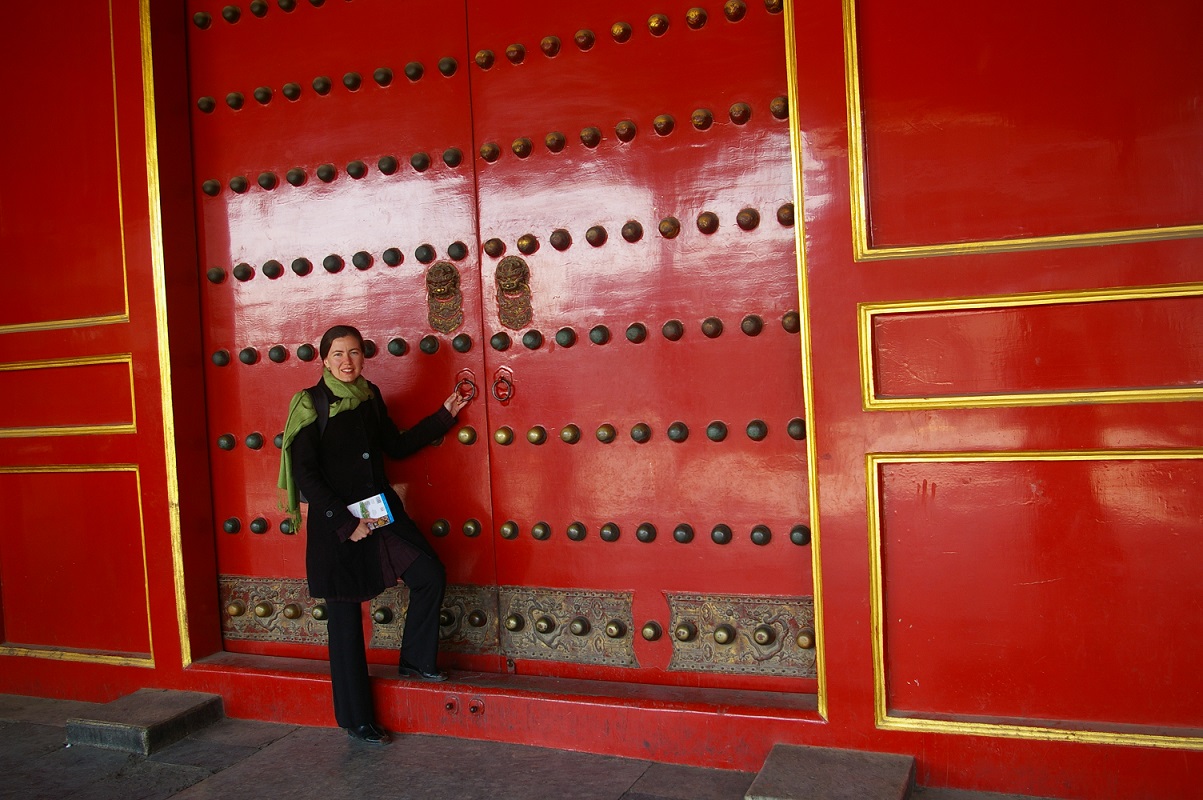
One of Emperor Qin Shi Huang’s megalomaniac ventures, the terracotta warriors are a sight to behold. What struck me most about visiting China’s well-known places of interest was that in spite of seeing them numerous times on television programmes or in photography books, one is not prepared for their size. Constantly I had to readjust the images in my head to the real thing. The Great Wall of China (also Emperor Qin Shi Huang’s brainchild) does not impress with its height, as I expected. It is actually quite low and narrow for most of its unfathomable length. But when you stand on one of its vantage points and it stretches away from you in both directions over the mountain ranges like a ribbon carelessly discarded on the seemingly impenetrable landscape, it takes your breath away. In Beijing, the infamous Tiananmen Square is so vast that one can hardly see from one side of it to the other and walking across it in bitter cold was quite a challenge. The Forbidden City is actually a city within the capital. We began our tour of it at the northern entrance and it took us over four hours of almost continuous walking to reach the South Gate where Chairman Mao’s portrait overlooks the scene of the terrible massacre which took place in 1989.

Similarly, no matter how often one had seen them on television, the enormous excavation pits near the city of Xi’an where the Terracotta Army stands exposed after thousands of years of existing only in legends, are simply awe-inspiring. Each individually crafted and meticulously reassembled after centuries of being buried in mud, the warriors testify to the outrageous and murderous dreams of a single individual. Thousands of craftsmen and workers were tortured and killed during the execution of Qin Shi Huang’s vision of the army that was to protect him in the afterlife. Since their discovery just over thirty years ago, thousands of archaeologists, scientists and helpers have been meticulously putting the warriors’ remains together to make them, and what they stand for, known to the world. I walked around the pits and was terrified by the hunger for power and greatness which called this army into being. It was a chilling experience, but I admired the incredible reconstruction work on site and the amount of knowledge experts have gathered about ourselves and our past from the excavation pits. If only we would learn from it.

Other ‘visionaries’ ruled the land. After the so-called Cultural Revolution of the late 1960s when China’s innumerable treasures were destroyed and a whole generation of artists annihilated, the country is in the throes of another ‘cultural revolution’, this time brought about by Big Money and Big Mac. Like many other fast-growing economies, China is in constant flux, its authenticity challenged by the same forces which are at work in South Africa and other westernised parts of the world. Recently modernised for the Olympic Games, China still looks like one gigantic building site. Entire cityscapes are dominated by high-rise flat buildings which function as dormitories for the expanding population. Transport networks, shopping malls, factories, office buildings, and all kinds of institutions rise from the ground like mushrooms after the rain. The one constant is forests of cranes. Higher, bigger and faster seems to be the motto for everything. I can imagine that architects must have a field day in a country where their imaginations are required to go beyond all limits.

One of the most spectacular modern sites we saw was the architecturally mind-boggling Pudong skyline in Shanghai, the characteristic Oriental Pearl Tower dominating the scene. Over the last two decades the district has become home to China’s commercial and financial buzz. Just across the Huangpu river from Pudong is Shanghai’s best-known historical landmark, the Bund. While we were visiting, we witnessed the exciting preparations for the World Expo all along its beautiful promenade.
China2
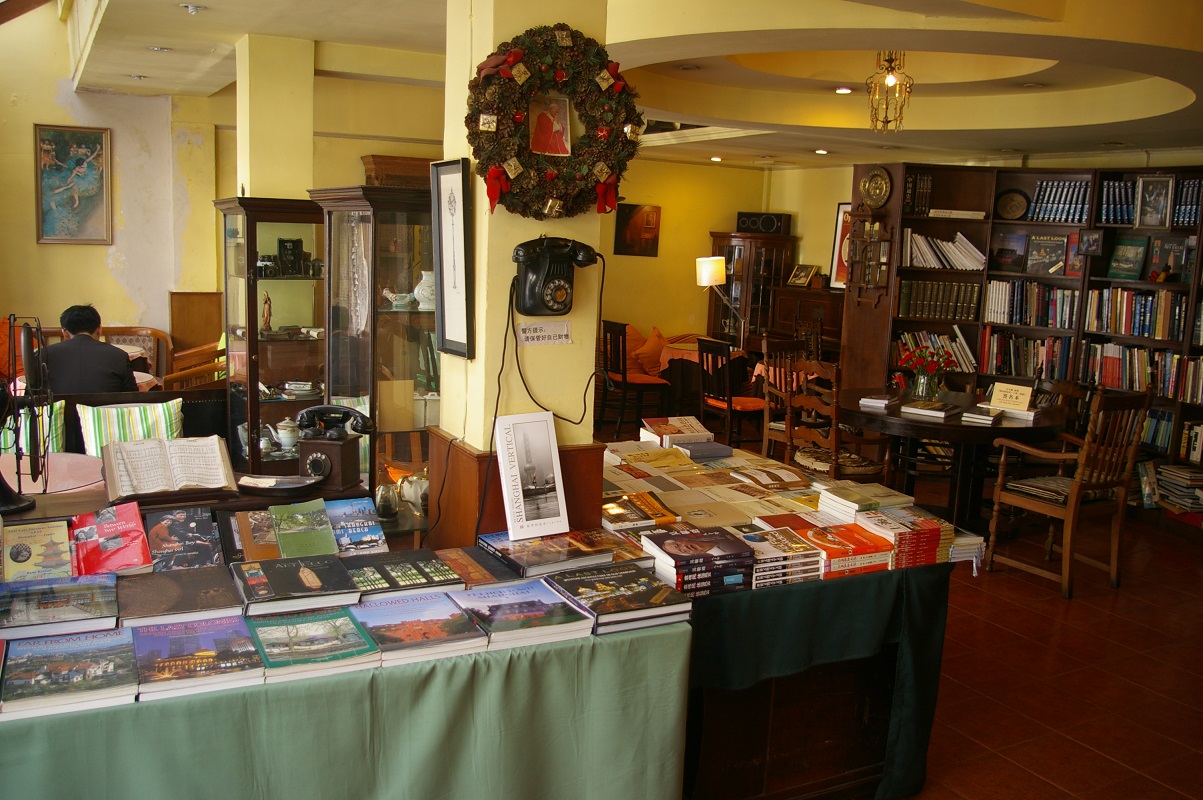
Yet, among all the splendour and chaos, the one place in China that is truly lodged in my memory is the Old China Hand Reading Room, a small antique book-cum-tea shop located in one of the quieter streets of the French Concession, another of Shanghai’s historical districts. It was founded by photographer Deke Erh and writer Tess Johnston and strikes the perfect balance between past and present, between Chinese and Western influences. Furnished with antique furniture and stocked with hundreds of old and new publications as well as many quirky trinkets of local and international origins, the shop is a must for all tea and book lovers. They also serve excellent cappuccinos in ancient porcelain cups. Just the thing after a long Sunday morning walk through the Concession, as André and I discovered.

Everywhere else we had what one really should have while travelling through China: tea. It is served at every opportunity, its distinct flavours and the rituals to bring them forth cultivated through millennia-old traditions. I have always loved tea but never appreciated it as much as after the visit to China. The souvenir I cherish most from our visit is my collection of exquisitely embroidered, colourful silk pouches from the Laoshe Teashop in Beijing which was recommended to us by our dear friend Alex Smith, the author of the travel memoir Drinking from the Dragon’s Well (2008). Inside the pouches conceal such wonders as Dancing Fairies, Love at First Sight, Birds of Heaven, and Whispering Flowers. If you put them in a transparent teapot and pour mild boiling water over them, the little green tealeaf bundles which are known by these fantastic names open up like blossoms and release a string of flowers – jasmine or lily – from their centre. The taste is as marvellous as the spectacle.

It is good to be back in Cape Town, where I’m truly at home, and to enjoy a bit of Chinese magic. Not all can be lost for a people who can create such perfect little artworks in a teacup. They may yet survive the dreams and visions of ‘Great Men’. And in spite of everything that is going wrong in our own country, I gain strength from the unsurpassed surge of creativity we are experiencing at the moment in South Africa. I just hope that my bones won’t begin to ache here, and I wonder whether I will ever be granted a Chinese visa again. Or will this article be placed in a file with my name on it, hidden away in some obscure cabinet?

First published in WORDSETC 8 (August 2010).

The Image of a Pie: Reflections on Open Book 2014

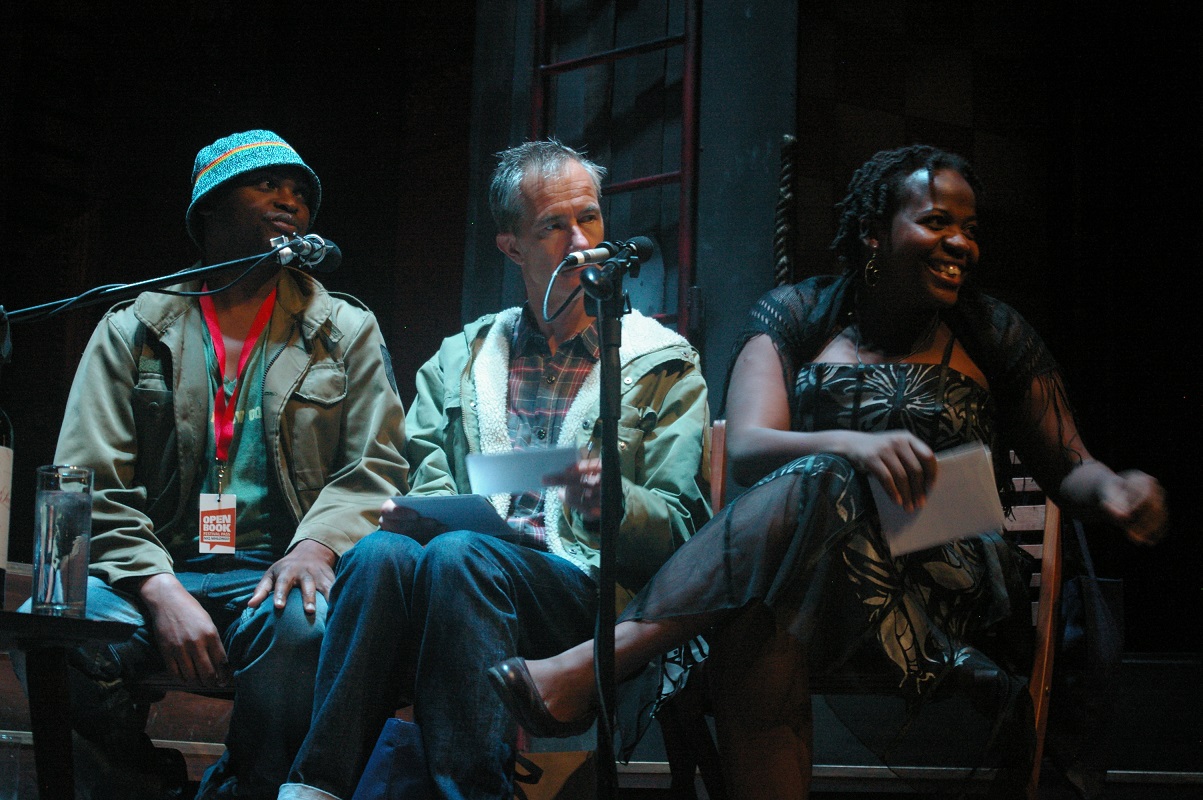
Niq Mhlongo, Chris Beukes, Malaika wa Azania and Natalie Denton
I cried twice. No matter how much I tried to control myself, the tears kept coming and I was grateful for the pack of tissues I had in my handbag. I should have started shedding tears at the beginning of the event, when the woman who is our national treasure, Sindiwe Magona, noticed that we were only a few people in the audience while the whole of South Africa should have been attending. But it was only when Sixolile Mbalo, the soft-spoken, beautiful author of Dear Bullet, Or A Letter to My Shooter (2014), pointed to herself with her most articulate hands and used the possessive pronoun “my” to refer to the man who raped, shot, and left her for dead, that the dam of anguish broke inside me. In my own personal reality I speak of “my friend”, “my brother”, “my husband”. To have to survive a reality where a rapist is internalised into “my rapist” is nearly unbearable to think of, and yet, as Ekow Duker, the third panellist of the Open Book Festival event presented by Rape Crisis, mentioned, “We get more upset when our soccer team loses than when a woman is raped.” That is the reality Mbalo lives, and courageously survives, every single day of her life. All of us should take note and salute her. Any moment, her fate could become that of “our friend”, “our sister”, or “our wife”.

“Women are ghost heroes in our struggle.” – Niq Mhlongo

This year’s Open Book unfolded over five days from 17 to 21 September in Cape Town. It was filled with insight and inspiration. Apart from the moment described above, laughter dominated. The second time I shed tears, they were also an expression of joy. Speaking about her touching Good Morning, Mr Mandela (2014), Zelda la Grange told Marianne Thamm that Madiba destroyed all her defences just by holding her hand when they met. La Grange’s life bears testimony to one of Thamm’s remarks: “Mandela made us better people; that’s what good leaders do.” The conversation between these two powerhouse women was undoubtedly a highlight of the festival. Judging by the faces and comments of people present at the event, most felt its magic.

“Let it all come out and let us talk about it.” – Mandla Langa

Sixolile Mbalo’s and Zelda la Grange’s life stories capture the immense span of the spectrum of South African everyday experience. And it is essential for our humanity to pay as much attention to the one story as to the other, even though it is in our nature to gravitate towards happiness and success.

“Memory is always a fiction we tell ourselves.” – Rachel Zadok

Continue reading: LitNet.

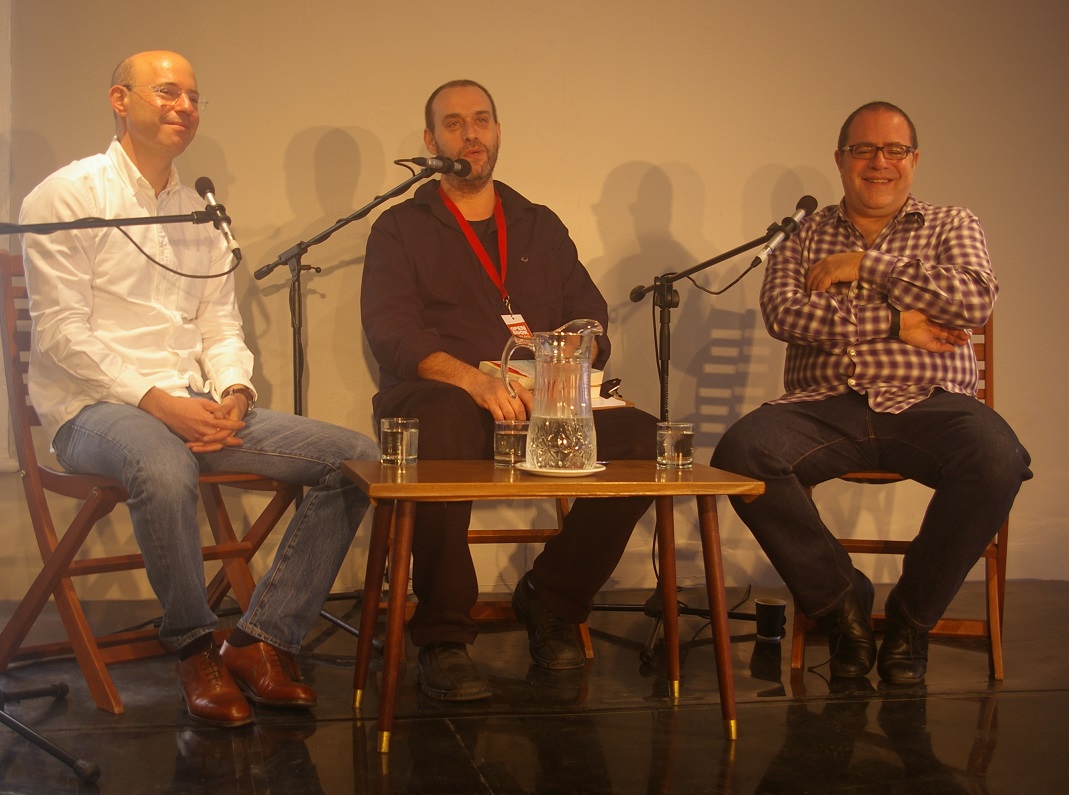
Jonny Steinberg, Mervyn Sloman and Mark Gevisser
Niq Mhlongo, Geoff Dyer and Zukiswa Wanner
Raymon E Feist, Deon Meyer and Andrew Salomon
Zelda la Grange and Marianne Thamm

Open Book Festival 2014

Between 17 and 21 September the literary community in Cape Town will gather for the fourth Open Book Festival.
Open Book
In past years, apart from attending as a passionate reader, I have had the pleasure of interviewing some of my favourite authors at Open Book: Craig Higginson, Rachel Zadok, and Kgebetli Moele among them.

This year, I am in for another treat: I’ll be talking to Andrew Brown, Ekow Duker and Jonny Steinberg about the impact that the content of their books has on them (OFF THE PAGE, Friday 19 September, 4-5pm, Fugard Studio).

The day before, I’ll be chairing Open Book’s TRIBUTE TO NADINE GORDIMER with Imraan Coovadia, Billy Kahora and Margie Orford who will read from Nadine Gordimer’s work and share stories about her influence on their creative lives (Thursday, 18 September, 2-3pm, Fugard Theatre).

And last but not least, I’ll be the ‘little rat’ (=szczurek) next to two literary greats: Michiel Heyns and Damon Galgut. Our session – WRITING SEXUALITY – will be chaired by Karin Schimke (Wednesday, 17 September, 2-3pm, Fugard Studio).
Emma-van-der-Vliet-and-Patrick-DeWitt
For the full festival programme click here: Open Book 2014.
Imraan-Coovadia-and-Sarah-Lotz
Photographs: Open Book 2013.

The Day We Became Delta

(An edited version of the following article was published in the Sunday Independent on 9 November 2008; a bit of the background story to the post I want to write next.)

New lifeThey thought that he was just another white man come to make their lives miserable. The previous owner of the Zandvliet Delta farm filed for insolvency. The new one announced himself to the farm residents, wanting to meet every family individually. Nico Jansen, an outspoken member of the community, remembers his first encounter with Professor Mark Solms: “We were scared that he would want us off his land. But I knew we had to stand up for ourselves, because we belonged here.” He told Solms straight out, “You’re not going to kick us off!”

Mark Solms had no such intentions. Namibian-born, he emigrated in 1988 in search of better career opportunities. After having made a name for himself as a world-leading researcher into the brain mechanisms of dreaming, in 2002, he decided to follow his own dream of returning to Southern Africa. His late relative, Friedrich 4th Prince of Solms-Baruth, knew that Zandvliet Delta had been lost to creditors and recommended it. “He thought I would recognise the value of this place,” Solms recalls. “I came to look at the land after the great veld fires of that year. I remember the smoke-heavy air and the rustling of leaves when I walked around the farm. No decision had to be made; it was exactly the place I was looking for.”

The land in question, which became known as the Solms Delta, is situated in the Franschhoek Valley just off the R45 between Franschhoek and Paarl. The sheer beauty of the region and the quality of the wines produced here are world-famous. But Solms knew that settling and making wine in the area required a sensitivity to the historical burdens embedded in the local communities living in the Valley: “Very consciously, on a local scale I wanted to contribute to the transformation which was taking place in the country. I saw the farm as an opportunity. Only after getting here, I realised how challenging the whole project would be.”

Mark Solms was unprepared for the lack of enthusiasm and engagement he met with on the farm: “There seemed to be no common purpose or hope. The lethargy and depression were overwhelming.” For centuries people had lived here with strictly predetermined possibilities and would not think beyond them. He had to confront the “deeply uncomfortable role of a white farmer” which he suddenly personified. The attitude of most people on the farm was that, since he was the owner, they must be scared of him; or, if he does not live up to the role, then he can be taken advantage of. “We had to work around layers and layers of scar tissue,” he says. Moreover, he had to confront “the racism that exists in oneself”, and the tendency to transform while maintaining one’s own privileges.

Jansen was very sceptical about the plans Solms had for the Delta. “It was very difficult for us to believe in white people’s good intentions,” he remembers. But then Prof, as Jansen refers to Solms, took them by surprise. He met with all the families on the farm and addressed their fears directly. He also recognised Jansen’s leadership qualities and the young man became a facilitator between himself and the community: “He told me the reason he liked me was that I said what I thought, about him and the situation. It wasn’t a smooth path. There was a lot of mistrust on our part at first. But then Prof did two things that made people begin to respect him. He told us to work on our houses at the same time as we worked on his. Then he asked us what we were passionate about. Our answer was sports, especially rugby. So he had DSTV installed in all our homes.” These events were “attitude changing, real eye-openers,” Jansen recalls. “From the beginning Prof treated us as humans, and we decided to meet him halfway. Prof told us that he wanted to set right the things his people had done wrong. And I felt I could guide Prof’s dreams. I am proud of the fact that he didn’t break any of his promises.”

Shortly after his first visit to the Delta, Jansen telephoned Solms to tell him that the residents of the farm had organised “a prayer meeting to thank the Lord for sending them an owner they didn’t have to be scared of.” Solms knew that transformation would take time. Given human nature and the injustices of the past, “nobody can take your word for it in this place, sincerity has to be proven.” The changes have been gradual, but if he had to define the turning point, it would be the Bastille Day parade in Franschhoek last year. Tokyo Sexwale suggested using the festivities to celebrate, not the storming of the Bastille, but our local freedoms: the Huguenots’ freedom from religious persecution, freedom from slavery, Mandela’s freedom. The Solms Delta people created a unique float for the parade: a pyramid of wine boxes, each representing an inhabitant of the farm. They walked with the float, wearing t-shirts with their hands imprints on them in the colours of the South African flag, making music and waving to the crowds. It was “nation building on a small scale,” Solms remembers, “That day we were one, we were Delta, all of us.” The farm workers suddenly felt that a commercial event for the elites had turned into a festival in which there was a place for them. And to crown their achievement, they were awarded the prize for the best float. The feeling of belonging made Solms realise that they had “genuinely transformed the farm, in structure and feeling.”

In 2005, the Solms family established the Wijn de Caab Trust to benefit all the historically disadvantaged residents of the farm and other employees of the Solms-Delta wine company. In due course, Mark Solms convinced a dear friend from Britain, Richard Astor, to buy an adjacent farm, Lubeck Delta, and the Trust was restructured in the process. With the help of loan funding secured by the Solms and Astor families, the Trust purchased a third adjoining farm, Deltameer. The three linked properties now became equal partners in a common enterprise.

Alex van Heerden with Richard Astor and the Gramadoelas

Alex van Heerden with Richard Astor and the Gramadoelas

Richard Astor first visited his friend on Solms Delta in 2003. He returned several times and the beauty of the place grew on him, but he never considered settling here. In 2005, because of personal misfortune he needed a change and that was when Mark Solms suggested he buy the adjoining farm: “Mark managed to communicate his passion to me. I have been looking for a cause I could get involved in and it was suddenly easy to see the opportunities to make a difference here.” There was only one obstacle: “I love wine, but I can’t take it seriously; I don’t have the palate or Mark’s passion for it. He sees wine as an art form. I told him that the one art form I can be passionate about is music.”

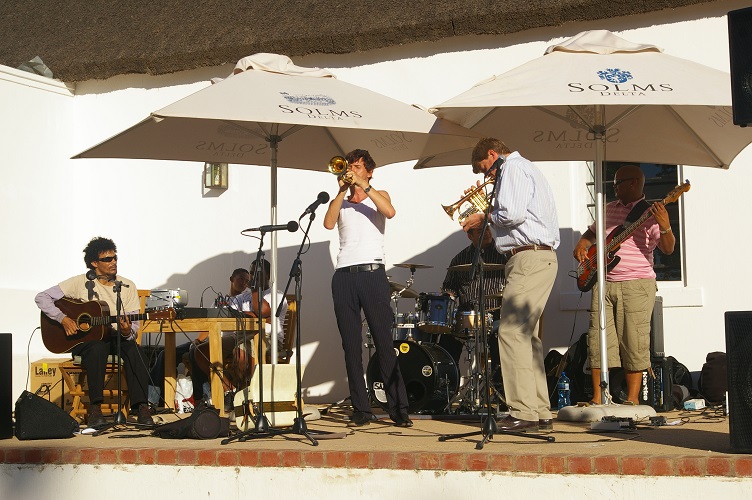
The idea for the annual Oesfees (Harvest Festival) was born. Celebrated for the first time in April this year, it was an enormous success. Farm workers from the entire area were invited to participate in the festivities, involving traditional music, local food and wines. Richard Astor, a cornet player, performed on stage with the likes of David Kramer and the Delta Optel Band, consisting of Solms Delta residents and led by the young Cape music enthusiast, Alex van Heerden.

Farm youth dancing

Farm youth dancing

“Alex fitted perfectly into the project. He brings music out of people,” Astor says in admiration. Employed by the Delta Trust (established by Astor), van Heerden can now pursue a lifelong passion: “I have always wanted to uncover the common musical heritage we Afrikaans-speaking people share in this area.” In the mid-1990s van Heerden founded the “Gramadoelas” band and began his field research work in the rural areas of the Cape to get material for them. The project was not financially viable; nobody was ever interested in getting properly involved. Coming to work for the Trust has been a dream come true for van Heerden. Forty people are now directly involved in the music projects on the farm. Two bands, the Delta Optel and a brass band, meet regularly for practice. Van Heerden and historian Tracey Randle are collecting materials for a music heritage centre which is to open on the farm in 2010. Van Heerden is also in charge of the Saturday evening concerts which will begin in December. “I feel healed by making music with my people,” he says, clearly moved, “There is a feeling of unconditional sharing involved.”

Mark Solms with David Kramer

Mark Solms with David Kramer

Richard Astor knows that “all these great people on the farm can’t be a coincidence.” He says of his friend, “Mark brings out the best in people in a realistic way. He builds confidence and helps people realise their potentials.” The pool of talented individuals involved in the Solms Delta projects attests to this.

Cathy Macfarlane began as administrator at the farm in March 2007. A former teacher with no experience in administration, equipped only with vast enthusiasm, she swiftly adapted: “Working here has been an adventure. It’s tough at times, but I love my job.” As Solms Delta’s administrator, she coordinates all the entities on the farm, interviews new staff members (mostly appointed internally), and until recently was responsible for the certification of wine. Her latest projects are a fynbos reserve and “Fyndraai”, a restaurant which from December onwards will delight farm visitors with traditional Khoi cuisine based on the dedicated research of food scientist Renata Coetzee.

Tracey Randle was fresh out of university when she came to work at the farm in 2004. Finding vast amounts of artefacts during the renovations of Delta, Solms had an idea for a museum on the farm and employed Randle to direct it. A passionate historian, she shares his vision on how history can be told in a multitude of voices, an idea inspired by André Brink’s novel A Chain of Voices. In 2005, Brink was invited to open the Museum van de Caab which became one of the most sought after tourist attractions of the region. The Museum is unique in that it seeks to present history from individual perspectives of all the people who have ever lived, worked and died on the farm. There is no attribution of blame, just a display of the resilience of the human spirit.

In 2004, Medwin Pietersen and Johan O’Rayn came to work at the Delta as security guards, but both had a passion for history, which they have been given the opportunity to develop at the Museum and by completing heritage management courses. Later this month they will be travelling abroad for the first time in their lives on an exchange program to Sweden: “We’ll be visiting museums and schools in Malmö and learning how best to teach children about history, heritage and culture at school,” says Pietersen.

At home, Pietersen’s wife is one of the teachers involved in supervising the farm children in their after-school activities. The after school is an initiative coordinated by Frances Semmelink, a social worker employed by the Wijn de Caab Trust to represent all its beneficiaries. She began working for the Solms family as an au-pair while studying social work at the University of Stellenbosch. Recognising her potential, Mark Solms invited her to invest her skills in helping the Delta community after she completed her degree. Her focus is education: “It’s crucial that we break the cycle of poverty and dependency, so that children can move on if they wish to in the future.” By providing financial assistance for education on all levels, private health care and encouraging independent home ownership, the Trust aims at broadening the horizons for its beneficiaries. Semmelink coordinates various other projects, including all sports activities on the farm: a rugby team coached by the cellar manager, Fanie Karolus, a young basketball team led by a noted American player, Kyle Ray, and a walking team participating this month in the Big Walk in Cape Town. Semmelink knows that one has to remain “realistic about change, it’s a slow process,” but people see that it is real and that they are truly making a difference. “There is still drinking and domestic violence, but it’s on the decrease. The community realises that they have the power to control and stop things. They recognise their responsibility.” She adds with a confident smile, “People are happy.”

Even though he swore early on in life that he would never work on a farm, today Nico Jansen is the estate manager of Solms Delta. “Before, I used to work for a construction firm. I never believed in farming because it had broken my people, but now I love it.” He is proud of all the achievements on the farm. “People started taking care of themselves, they drink less. They feel that they can uplift themselves and restore their dignity,” he says. “Every week people come to me asking for work here, and it’s not about money. It’s about the respect and equality we all share here.”

The cycle of fatalism has been broken. People on Solms Delta know they are the masters of their future and that their fates are interlinked. “If you can transform one farm, why not a valley or a province?” asks Solms. What is he happiest with? Being greeted with a smile by every person on the farm and hearing the spontaneous eruptions of music on his daily walks. He explains, “Music is a genuine expression of pleasure and cultural participation.”

As I leave Solms Delta inspired by these stories, the voices of all the people fuse into the words of Theresé Willemse, a young woman working at the Museum van de Caab: “We are a whole big family here.”

Wednesday

When I get a little moneyEver since the summer of 1993, I’ve had this thing about Wednesdays. Special things used to happen to me on Wednesdays. But when I came to live in Cape Town, for a while Wednesday became my least-favourite day of the week. Fortunately, routines can change and miracles do happen. About two years ago, Wednesday reverted to being an ordinary day like any other. But yesterday, Wednesday hit again with the full force of all its magic and I was reminded of kisses, falling stars, the Baltic Sea, literary lectures, and the colour blue. Yes magic.

Most of my days centre on books, but yesterday brought with it an avalanche of bookish delights.

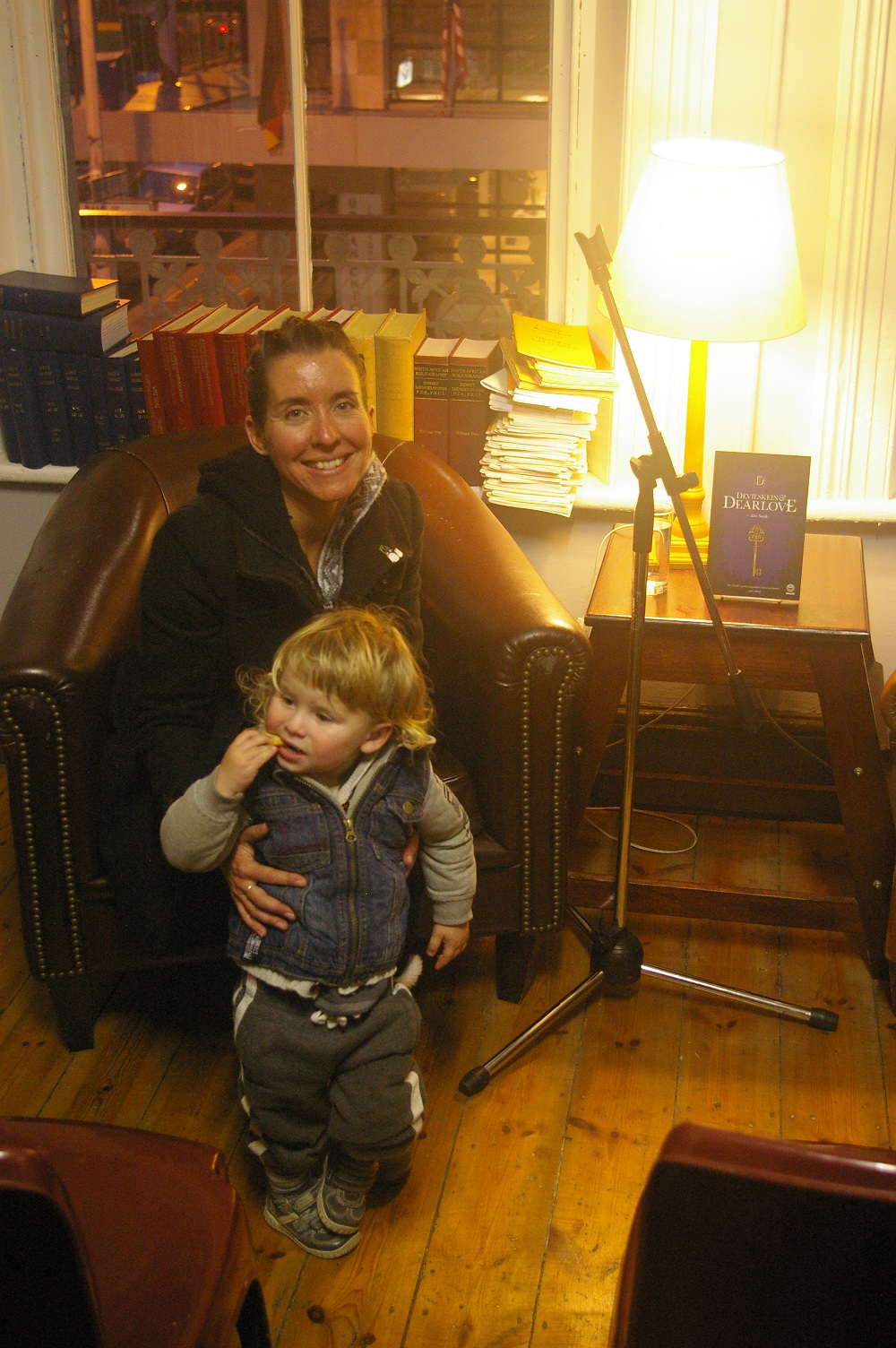
Beijing OperaRecently, I read a book which mentioned a dim sum restaurant in Cape Town with the glorious name Beijing Opera. I discovered my love of dim sum during a trip to China in 2008. It was soon afterwards that I met Alex Smith and read her wonderful account of travels in Asia, Drinking from the Dragon’s Well. She loves dim sum and tea as much as I do, so it was a no-brainer whom to invite to go with me on an exploration of Beijing Opera. We celebrated the recent publication of her latest YA novel, Devilskien & Dearlove, with some delicious gao, bao, and pu-erh tea.

I returned home already smiling to the fantastic news that one of my all-time favourite authors was longlisted for the Man Booker with a novel which I adore: Siri Hustvedt’s The Blazing World.

In the evening, on my way to Alex’s reading at Clarke’s Bookshop in Longstreet where Devilskien & Dearlove is set, I stopped at two of my other regular hunting grounds, the Protea Bookshop in Rondebosch and the Book Lounge, to pick up three books that have been waiting for me. I am struggling to finish Stephen King’s The Shining (I was expecting more creepiness; as it is, the only thing that creeps up on me on nearly every page is the word ‘overindulgent’), but I do not want to give up on him just yet, so I ordered the one book apparently every beginning writer should read: On Writing. I believe in second chances, and staying away from creepy hotels.

Divided LivesThe other two books were Astra Taylor’s The People’s Platform and Lyndall Gordon’s Divided Lives: Dreams of a Mother and Daughter. I have read all books written by Gordon. Her biographies of writers – Virginia Woolf, Charlotte Brontë, T.S. Eliot, Emily Dickinson, Henry James, and Mary Wollstonecraft – are simply brilliant. I don’t know how I would have survived many periods of doubt in the last few years without these insightful, empathetic, passionate, beautifully written books on lives of writing. Divided Lives (what a cover!) is different, because it is a memoir. I’ve been following its reception in the UK and have a feeling that I am in for a magical treat.

I found out about Astra Taylor’s The People’s Platform through the New York Times. I have been reading books about the internet for years in order to be able to participate more consciously in its evolution, i.e. to use it wisely instead of being stupidly abused by it. Not sure that I am succeeding, but in the words of Manuel (Fawlty Towers): “I learn, I learn!” Perhaps now that I have joined twitter I need the books more than ever, but so far, my experience with the service has been quite positive. I treat it like a radio station: I tune in and out when I feel like it. Occasionally, I tweet. I follow God and Jennifer Lopez, so I feel in safe hands. (I might even make it to Facebook one day – in the words of my compatriot Conrad: “The horror! The horror!”)

Alex with son Elias after her reading at Clarke's

Alex with son Elias after her reading at Clarke’s

So: There I was at Clarke’s Bookshop, still smiling from the dim sum lunch and the longlist announcement, with a handbag full of books I couldn’t wait to get into bed with, listening to Alex’s beautiful reading voice, surrounded by shelves and shelves of exquisite second-hand books, then chatting to friends and other book lovers about Stephen King and literary podcasts, when…DDDRUM RRROLL…I spotted a copy of Nadine Gordimer’s Face to Face (1949), the first book she ever published. And because my handbag was stuffed with only three books, and because after the shopping spree I was on the verge of being completely broke again (“When I get a little money…”), I bought it, of course.

I flew home on the wings of a booklover’s happiness and arrived to the news of winning a copy of Jane Austen by David Nokes in the Great Faber Finds Summer Reads Giveaway:

“We are about to shut up Finds Towers for the summer, pack a bag full of odd-sized vintage paperbacks and catch a plane to somewhere sunlit and contemplative. In case you haven’t got your own bag packed yet we can, perhaps, make it all a bit easier for you. We are giving away a copy of each of the following thirty (that’s 30) superior Faber Finds titles.”

What a way to end a Wednesday!

How did I find out about the giveaway?
On twitter.

I’m off with my own bag full of odd-sized books in search of a glass of sherry and a fireplace…

Happy reading everyone!
And have a great Thursday. (It’s Set Menu Dinner Club time at Beijing Opera tonight.)

Nadine Gordimer (1923-2014)

An edited Afrikaans version of this article appeared as “Die miesies hy skryf” in By on 26 November 2011.

The madam he write

At eighty-eight Nadine Gordimer is throwing some more logs in the fire. Karina Magdalena Szczurek spoke with her about “certain kinds of attention”.

‘Do you know this author?’ I ask a waitress, pointing at Nadine Gordimer’s name on the cover of a book I am reading.

She shakes her head.

I pay for my lunch and walk from the restaurant to Parktown West, Johannesburg. A jacaranda petal falls on my head as I approach the angular white house which Nadine Gordimer has called her home for the past fifty years.

The first time I arrived here in 2004, I’d felt sick with worry for a week beforehand, duly warned about Gordimer’s reputation as an interviewee who suffers no fools. And this was my first interview, ever.

With Nadine during our first interview in 2004.

With Nadine during our first interview in 2004.

But when she realised that I wasn’t there to ask about her breakfast (the type of personal question she usually refuses to answer), she let down her guard. It was an invaluable experience.

My present visit is a déjà vu in this and other respects. I’m again first met by a staff member and inspected by an eager Weimaraner before being invited into the house. I walk through the kitchen, down a passage and past the narrow, light-filled study where Gordimer’s typewriter squats proudly on a small desk. She is waiting in the lounge. As I enter she folds a newspaper and puts her reading glasses aside.

It is the same room where we first met, but the furniture is arranged differently. She settles in an elegant rocking chair. I sit on a sofa opposite with a coffee table between us.

I have seen her look her age in badly taken photographs, but never in person. Today she looks radiant in a gracefully long white kaftan dress with a soft blue pattern. Her grey hair is stylishly arranged. Delicate earrings adorn her ears.

This time I am more at ease, but I still notice my hands trembling slightly as I set up the voice recorder. I can feel Gordimer’s lively brown eyes on me. A beauty at her age – she turned eighty-eight this month.

Few literary oeuvres can match Gordimer’s. Between the publication of her first story as a child in 1937 and today, the world has seen fourteen novels, ten short-story collections, and six volumes of essays. In 2010, her stories and essays were collected in two large tomes: Life Times: Stories 1952-2007 and Telling Times: Writing and Living 1950-2008.

When in the beginning of 2006 Ampie Coetzee spoke to Gordimer at a literary breakfast organised by Die Burger Book Club in Cape Town, she told him that her memory no longer allowed her to think in novel-terms.

The collection of stories Beethoven Was One-Sixteenth Black was published a year later.

Now she’s finished writing another novel after all. I remind her of what she’d said at the breakfast.

She smiles. ‘I don’t know what was wrong with me then.’

Since 2001, when her husband Reinhold Cassirer died, all her books carry his life dates and the dates of their relationship on their front pages. The dedication moves me every time.

Throughout her writing life Gordimer has stuck to a strict routine, devoting the first part of the day to her work only: ‘I still feel in the morning when I get up now, I’ve got to be at my desk.’

André Brink recalls how many years ago, before he knew better, he tried to phone her before lunch. A staff member informed him that Gordimer was not available.

At André's 70th birthday in Johannesburg.

At André’s 70th birthday in Johannesburg.

‘The madam he write,’ he was told firmly, and he had to try again in the afternoon.

The statement is extremely telling, even if it was not intended as such.

Gordimer grew up into a position of privilege in apartheid South Africa. And yet, while many others went with the flow, she devoted her life to fighting injustice. Even though she is most uncomfortable about the designation, for decades she was considered the ‘voice’ and ‘conscience’ of South Africa in the world.

I first encountered her work at university. The story “The Moment Before the Gun Went Off” (1991) pricked my interest in South African literature, and eventually brought me here for research, then for life.

It tells the story of an Afrikaner farmer on trial for shooting one of his farm workers. The racial and political circumstances condemn him, but the last line of the story overturns all our expectations: “The young black was not the farmer’s boy; he was his son.”

Gordimer has often been accused of portraying Afrikaners unfairly in her work. Asked about it, she reminds me that when the time to protest came there was no prejudice. ‘We did it together!’

She is also quick to point out how Uys Krige was the first person who published anything of hers: ‘He encouraged me tremendously, gave me the most helpful criticism and was a very dear friend.’

She reads Afrikaans writers in translation, and regrets that she lost the Afrikaans she learned at school, or that she never learned any of the other indigenous African languages. ‘As I say, it’s terrible; I’m a very poor linguist.’

Gordimer’s work is not everyone’s cup of tea, mostly considered too political or / and too challenging. But both judgements rest more on hearsay than an engagement with her actual work.

Occasional stylistic density prevents a more leisurely read, but allowed to sink in, her thought-provoking stories can be inspiring, revelatory, and life-changing.

Many see her 1994 novel None to Accompany Me as a purely political reflection of the transition period in South Africa’s recent history. Rereading it now, I am stunned by the accuracy with which she prophecies the dangers facing the fledgling democracy. But for me personally, the novel is one of the most profound portrayals of a woman’s journey to selfhood.

This again brings to mind the statement with which André Brink’s morning phone call was fended off, and another quality which has defined Gordimer’s career – her ambivalence towards feminism. ‘All writers are androgynous beings,’ she states repeatedly.

She caused an uproar when she withdrew The House Gun (1998) from the shortlist of the prestigious Orange Prize for Fiction, reserved for women only.

‘I have been indeed and still am sometimes tackled, because I withdrew…and then I made this rather rude, I suppose,’ she reconsiders, ‘frank remark that we don’t write with our genitals.’

One of her stories, “A Journey”, was reprinted in the South African October edition of Playboy.

‘How do you feel about being published in the magazine?’

There is no issue for her. She does however make one crucial distinction. ‘I would hate to be published anywhere which was racist,’ she says. ‘I would refuse.’

Her parents were Jewish, but she is a self-declared atheist. She recently caused, in her own words, ‘great offence in America’ with her story “Second Coming” (2011) in which the son of God walks across a desolate, post-apocalyptic landscape. The possibility of life’s or humanity’s re-creation is rendered impossible, because as the last one-sentence paragraph tells us: “The sea is dead.”

‘What was the Americans’ problem with it?’ I’m curious.

‘Well, it’s not for me, sitting here in South Africa, this little unbeliever in any religion to say that Jesus is coming…using this as the ultimate example it should be, for people who revere Jesus and the idea of a second coming, that he should find the world destroyed. It’s a story about the environment.’

Gordimer’s Get a Life (2005) was probably the first green novel in South Africa. She is one of a handful of local writers who now consistently champion the environment in their work.

* * *

While she gets some tea, I glance around me. On three sides of the room shelves brim with books and CDs. A vase of strelitzias and a few sculptures of different origins catch my eye. A walking stick rests against the other side of the sofa. The room opens on a large patio and a magnificent garden in full bloom. The cushioned bay window looks like an ideal place for reading. It makes me think of something she’s just said:

‘I have recently reread Anna Karenina and War and Peace, and I have reread the whole of Marcel Proust and now I can read French sufficiently to read it in French. And there are so many others. When I look at my bookshelf, I say, my God I must read that again before I die.’

Bodo, the dog, appears at the same time as the tea tray. Marie biscuits are on offer.

‘How do you like your tea, weakish?’ she asks.

‘Strongish’

‘Oh good!’

Bodo is allowed one cookie while she pours the tea. As she lifts the heavy pot her fragile hands betray her age for the first time.

I cannot help but think of the three thieves who forced their way into her home in 2006 and brutally removed her wedding ring from her finger.

‘Did the attack have any lasting effects on you?’

‘You know, I hesitate to answer this because it sounds as if I’m saying that I am brave. I’m not… The only thing of consequence, practical consequence, is that I now have these wires around the house… But I’m not brave…I choose to go on living here…my reality is here.’

With Sontag at Wits in 2004.

With Sontag at Wits in 2004.

She has been accused of lacking courage to criticise the ANC. But following her late friend, the American intellectual Susan Sontag, Gordimer believes that ‘to be a moral human being, is to be obliged to pay certain kinds of attention.’

Very often she is the first to pay attention and fight with any means available to her for the causes she believes in.

Recently, together with André Brink, she drew up a petition against the planned legislation curtailing freedom of speech in South Africa and introducing ‘apartheid-type censorship all over again.’ The petition was not only signed by just about every writer in the country, but also many international writers whom Gordimer approached at the time during a visit in Sweden.

‘Let’s keep [the protest] going. Throw another log in the fire!’ she says.

The presidency was not impressed.

‘President Zuma didn’t have the courtesy to send us, representing so many others, an acknowledgement.’

In a recent HARDtalk interview she told Stephen Sackur that real loyalty to the ANC means the right to criticize the party, of which she is a member. She spoke of the disappointment she felt about the values that were being betrayed by the ANC. I prod her for more particulars.

‘First of all the fact that power is used in a very personal way.’

She is also deeply disappointed about the government’s handling of education.

‘The schooling is so bad.’ She is shocked at the discrepancy in entry requirements for university students from different backgrounds.

‘We can’t keep our black comrades out of universities. My God, who would want to? But what is the point of them coming in if they can’t cope. It’s humiliating for them…’

With Carlos Fuentes and André at home in 2006.

With Carlos Fuentes and André at home in 2006.

On the way to O.R. Tambo I ask the shuttle driver whether he knows the author Nadine Gordimer. I also ask a few SAA attendants. No recognition.

While awaiting my flight, I pose the same question to the middle-aged gentleman next to me. He is the only person to respond positively to my question. Does it matter that he is white and at least two decades older than the other people I’ve approached?

I am confident most Poles would at least have heard the name of the Polish Nobel Laureate Wisława Szymborska at school.

* * *

Still in Gordimer’s lounge, I dare ask a personal question.

‘What makes you really happy?’

A short silence; my heart stops.

‘André would say chocolate,’ I volunteer out of desperation.

‘Well, that’s an evasive answer… I’m also very fond of black chocolate, but of course that’s a taste happiness.’

Another pause.

‘I have been unbelievably lucky by having forty-eight years with the love of my life, and I have that to treasure. Sometimes it is painful to do so, but other times…it’s there, I had it.’

A man from our neighbourhood

In the thought-provoking and moving novel Revelations (2010), Mongane Wally Serote writes:

“In the white areas where we were, Cape Town flaunted its homeless like dirty petticoats peeping out. Bra Shope said it was like filthy underwear flung in your face. It did the same with its teenage prostitutes, who now lifted their dresses beneath the streetlights to show off their thighs and genitals to passing cars. On street corners children – little girls and boys like week-old puppies – knocked on your car window, plucked at your clothing, asking for bread. Other homeless people hung words on cardboard boxes in the still night of this pretty city, in the silence beneath Table Mountain where the whispering wind smells of the sea” (71, my emphasis).

It is a terrible thing to say, but after living in Cape Town for a while one can get immune to the “flaunting”; you either stop seeing it all together, or your heart does not bleed any longer when you do notice. Yet, there are two street people in Cape Town who make my heart ache no matter how many times I encounter them in the streets: one sells “Funny Money” leaflets with jokes near Cavendish, the other one used to sell bead necklaces, second-hand books and similar on Liesbeek Parkway, asking for money or food in exchange.
I found out this morning from our Neighbourhood Watch newsletter that the latter’s name was Steve Busse and that he died last Friday.
I’ve never spoke to him, I’ve never bought anything from him. (I have been duped so many times since coming to South Africa that I have adopted a ‘don’t get involved’ stance. I used to help anybody I could. A few unfortunate incidents caused me to stop.) But I’ve always wondered what cruel fate had brought this particular man to the intersection near our home where I saw him nearly every day and could never pass without hurting inside.
Only his death brought with it his story:

Documentary by Jonathan Sidego.